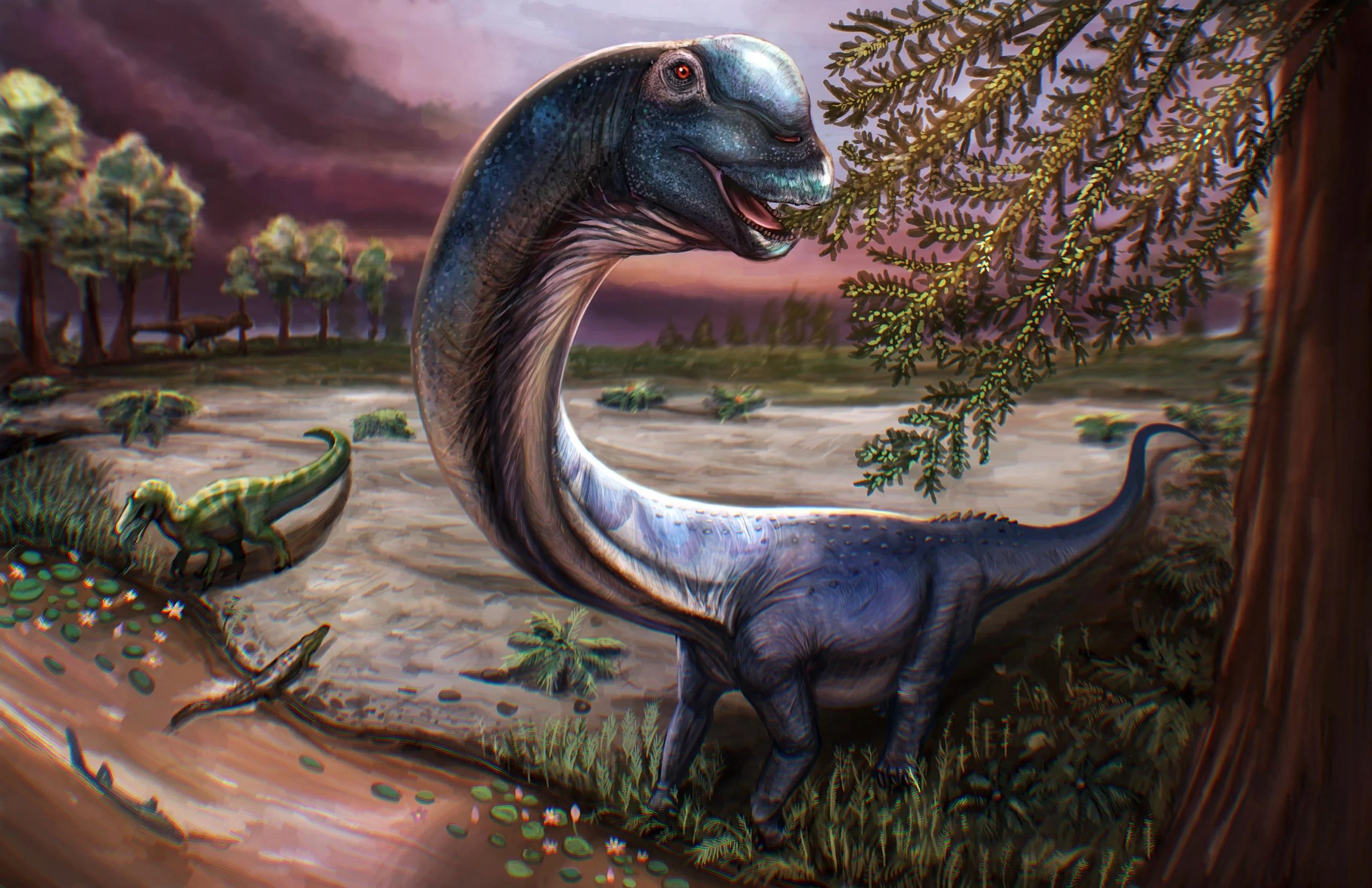
Southeast Asia has a new giant. It’s called Nagatitan chaiyaphumenser. And it’s huge. Like, really huge. Nearly 90 feet long. Roughly 27 tons. If you lined up nine adult Asian elephants side by side, that’s how heavy this thing was.
It lived a long time ago. We’re talking 100 to 120 million years back. The Early Cretaceous period. Back then, this wasn’t the humid jungle you picture. It was arid. Dry. Semi-arid even. The kind of heat where you’d want shade fast. But sauropods? They loved it. Their long necks and tails might have helped regulate body heat, a clever adaptation for surviving in what felt like a desert.
What is Nagatitan?
The fossils came out of the ground near a pond in Chaiyaphum province. Northeastern Thailand. Researchers dug them up about a decade ago. Since then, they’ve been piecing it together. Spine bones. Ribs. Pelvis. Leg bones. One front leg bone alone was as long as a human person. Just one bone.
Scientists from University College London joined forces with Thai teams from Mahasarakham University, the Sirindhorn Museum, and Suranaree University. They analyzed everything. The name Nagatitan mixes mythology from two worlds. “Naga” is the serpent god from Southeast Asian lore. “Titan” comes from Greek giants. A hybrid name for a hybrid discovery. It’s the 14th named dinosaur in Thailand. A steady climb.
Why “last”? Because of the rocks.
Thitiwoot (Perperth) Sethapanichsakull, a PhD student at UCL who led the study, calls it the “last titan.” It came from the youngest dinosaur-bearing rock layer in the country. After that? Shallow sea. The land turned to ocean. Dinosaurs don’t swim in those waters. So unless we find something older, or deeper, this might be the final large sauropod we spot in Southeast Asia. A curtain call.
“My dream is to continue pushing get Southeast Asian dinosaurs recognized internationally… This all starts with identifying specimens we have found.” – Thitiwoot Sethapanishsakul
He grew up loving dinos. Now he names one. That’s not just science. It’s personal. He promised himself he’d name a dinosaur. He kept the promise.
The World They Lived In
Imagine wandering through Chaiyapham back then. Winding rivers cut through dry plains. Fish swam in the current. Freshwater sharks hid in the depths. Crocodiles lurked at the banks. Pterosaurs swooped overhead, snatching fish.
Nagatitan shared the landscape. It wasn’t alone. Smaller plant eaters like iguanodontians were there. Early ceratopsians, distant cousins to Triceratops. Predators patrolled the area. Carcharodontosaurians. Spinosaurids. Big teeth. Bigger appetite. A messy ecosystem. Dangerous for everything but the giants. They had the height advantage. And the sheer bulk.
Unique Bones
This isn’t just any sauropod. It’s a somphospondyan. That subgroup spread widely around 120 million ago. Specifically, it falls into Euhelopodidae. An Asian-only branch of sauropods. You won’t find it elsewhere. The spine, pelvis, legs. A unique mix. Distinctive enough to earn its own name.
A full-size model stands at the Thainosaurus Museum in Bangkok. You can see how tall it really is. Towering over the crowds. Impressive.
Dr. Paul Upchurch from UCL likes the collaboration angle. 3D printing let them study bones without moving them across the globe. Lower carbon footprint. Same data. “We have had long-standing interest in these gigantic plants eaters,” he said. It’s great to see Thai researchers step up. Fourty years since Thailand’s first named dino, in 1986. Progress accelerates fast.
Young paleontologists are rising. Sita Manikoo from Mahasarakham sees it daily. High diversity. Third most abundant dino remains in Asia maybe? A small country with a big legacy.
Will Nagatitan hold the crown long? Maybe not. There’s plenty of bones waiting. More sauropod fossils sit undescribed. New species likely hidden in them. Who knows what’s next?