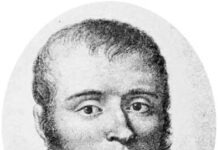
He wasn’t a professor. He didn’t have a title from Oxford or Edinburgh. John Bartram was a Quaker farmer who just loved plants. Yet, he ended up holding the title of botanist to King George III. That’s right. The man who taught himself botany became the official plant expert for the British Crown.
Born in 1699 near Darby, Pennsylvania, Bartram grew up to be the self-proclaimed “father of American botany.” It’s a heavy label. But he earned it. Not through books, but through dirt under his fingernails and eyes that saw what others missed. He hung out with Benjamin Franklin. He was one of the founding members of the American Philosophical Society. But his real workspace was the wild.
Crossing Oceans with Seeds
Bartram didn’t just look at flowers. He changed them. He was the first person in North America to successfully hybridize flowering plants. That’s a technical way of saying he mixed plant genetics before the science even had a name. He did this in his garden near Philadelphia. Today, that garden is a famous historical site. Then? It was a hotbed of botanical innovation.
He collected seeds. Lots of them. He shipped them across the Atlantic. European collectors went crazy for American flora. This trade did something important. It built bridges. Bartram became friends with the biggest names in European science. Carolus Linnaeus, the guy who basically invented our modern plant classification system, called Bartram a “great natural botanist.” That’s high praise from the guy who named everything.
The King’s Explorer
The British government paid attention. In 1743, they gave Bartram a mission. He was commissioned to visit the Six Nations Indian League. He needed to explore the wilderness north to Lake Ontario. Why? Probably diplomacy. Or maybe just curiosity. In the colonial era, the lines between science, spying, and trade were blurry. Bartram walked those lines.
He didn’t stay in Pennsylvania. He went deep. He treked into the Allegheny Mountains. He ventured into the Carolinas. He mapped the unknown. He wasn’t just collecting specimens; he was documenting a continent that Europeans barely understood.
A Father and Son’s Wild Journey
The story doesn’t end with John. His son, William Bartram, followed in his footsteps. They traveled together. In 1765 and 1766, they went to Florida. It was a grueling expedition. William wrote about it. His book, Travels, came out in 1791. It didn’t just record plants. It captured the mood of the land. It helped spark English Romanticism. Writers and artists read his descriptions of swamps and forests and saw beauty in the wild.
John Bartram died in 1777 in Kingsessing, Pennsylvania. He was 78. The American Revolution was raging around him. He never saw an independent United States. But his work outlived the empire that employed him.
Why do we remember him? Not because he had a formal education. But because he looked at a weed and saw a world. He proved that you don’t need a university to understand nature. You just need to pay attention.
We still