Heinrich Anton de Bary was more than just a botanist. He discovered that crop disease is not only caused by harmful reactions caused by the plants themselves, but actually by the microorganisms that attack them. He was born in Frankfurt am Main in 1831 and died in Strasbourg in 1888. His research laid the foundation for modern mycology and plant pathology. Before him? People had no real idea what was causing blights.
He taught at the universities of Freiburg, Halle and Strasbourg. But his classroom wasn’t the most important part of his legacy. The microscope was.
Fungi are the cause, not the effect
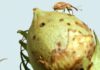
His breakthrough came early. In 1853 he published Untersuchungen über die Brandpilze. The title translates as “Researches Concerning Fungal Blights”. It’s a game changer. He correctly argued that fungi associated with rust and smut were the cause of these diseases. Not the effect. The cause.
This distinction is important. It meant you could target the enemy. You didn’t just treat the symptoms of a failing plant. You went after the invader.
Decoding the Life Cycle of Wheat Rust
He didn’t stop there. He became one of the first researchers to seriously study host-parasite interactions. He showed exactly how fungi invade host tissues. This is important for understanding plant disease mechanisms.
In 1865 he showed something counterintuitive in wheat rust. He showed that its life cycle includes two hosts: wheat and barberry. This is huge. It explains why this disease persists and spreads. You cannot ignore the barberry tree. They were the reservoir.
Coined the Term “Symbiosis”
De Bary also studied the lichen in more detail. In 1866, he showed for the first time that they consisted of closely related fungi and algae. They aren’t one organism. They are two working together.
He named this partnership. In 1879, he coined the term “symbiosis”. He defined it as an internal, mutually beneficial partnership between two organisms. It’s a term we use every day now. He invented it to describe nature’s collaborations.
Broader scientific impact
His work is not limited to deadly blights. He studied slime molds. He studied how algae reproduce sexually. He even wrote a book on the comparative anatomy of phanerogams and ferns.
He developed a classification system based on the life cycle of fungi. Modern mycologists still retain much of this framework. This is not just a guess. This is an observation. Rigorous, repetitive, detailed observation.
“The fungi associated with plant rust and blight are the cause of these diseases, not the result.”
This change in perspective changed agriculture. It changed medicine. It changes the way we see the relationships between living things. De Bary shows us the often overlooked small players driving big things.
His legacy isn’t just in textbooks. It’s in the way we approach plant health today. When crops fail, we look for pathogens. We look for the interaction. We look for the biology behind the blight. He taught