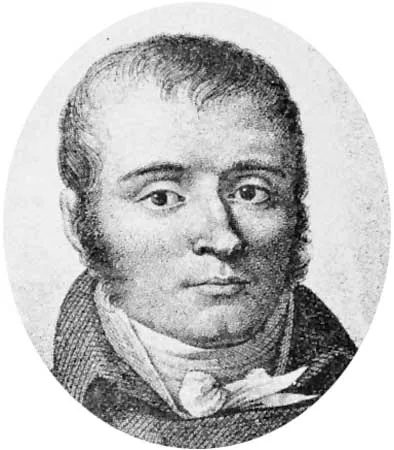
Marie-François Xavier Bichat didn’t have much time to change medicine. He lived only 31 years. He was born in Thoirette, France, in late 1771 and died in Lyon in 1802. It is hard to believe he accomplished so much in such a short time. But thanks to him we can understand the human tissue.
Bichat studied under Marc-Antoine Petit at the Hôtel Dieu in Lyon. The hospital was a gritty place. There, surgeons operate without modern anesthesia or sterile techniques. It’s very messy. Bichat learned the hard way. Then he moved to Paris. He became a disciple of the famous surgeon and anatomist Pierre-Joseph Desault. Desso died in 1795. Bichat took over and completed the fourth volume of Desault’s Journal de chirurgie. He added a biography of his mentor. He had already made a name for himself before the age of 20.
He has a different way of doing things. Most doctors in the late 18th century considered organs to be whole, solid objects. Liver is liver. A heart is a heart. Bichat saw something else. He looked at the patient’s bedside. He also examined bodies after death. He noticed that diseases change the organs in a certain way. However, he did not see them as blocks of matter. He considered them collections of smaller functional units. He called them tissues.
He had never used a microscope. This is the part that still surprises people. He didn’t need a glass lens to see that the body was made of layers and membranes. He used his hands. He used his eyes. He dissected. He could feel the difference in the stretching of skin and the pull of muscle. He distinguished 21 tissue types. This seems like a small number. This was revolutionary at the time.
Long before the cell theory existed, Bichat imagined that organs were formed through the differentiation of simple functional units or tissues.
In 1800, he published his discovery in the journal Traité des membranes. The title means “Treatise on Membranes”. This is a foundational text on Histology. He didn’t stop there. Later that year he wrote Physiological Studies in Life and Death. Explore what happens when life ends. The body begins to change immediately. Bichat documented the changes. He observed how the disease altered the structure of these tissues.
His major work, Anatomie générale, was published in 1801. This book brings it all together. He mapped the body not by its organs, but by the materials from which it was made. He published the first two volumes of Anatomie descriptive in 1801–1803. His students completed the 3rd volume after his death. He left a void. The young professor, barely thirty, redefined anatomy.
Napoleon Bonaparte noticed the impact. The emperor ordered a bust of Bichat to be made. It is in the Hôtel Dieu, next to which stands a bust of his teacher, Desso. This is public recognition of his contribution. But the real recognition came later. We still use his framework. We still break