Paleontologists found something odd in the ice. Well, not ice. Sediment. Three new species of multituberculate mammals. Tiny things. Roughly mouse to rat sized.
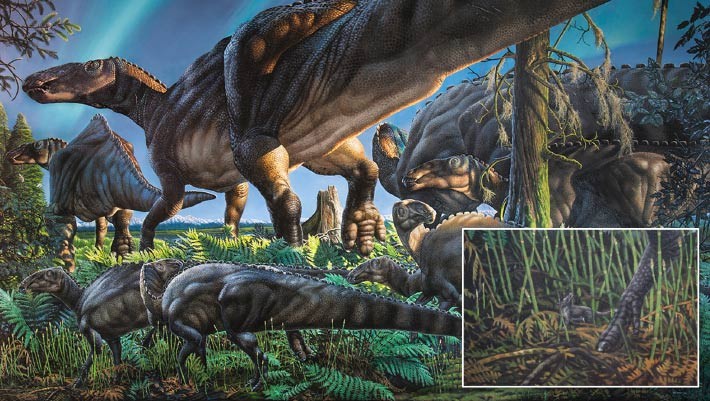
They lived in the ancient Arctic. About 73 million years back. The forests there were polar, harsh, dark.
Yet these little beasts were everywhere.
Meet the crew.
- Camurodon borealis
- Qayaqgruk peregrinis
- Kaniqsiqcosmodonis polaris
These fossils come from the Prince Creek Formation. Near the top of the world.
Here’s the kicker.
These aren’t just local oddities. Qayaqgruk looks suspiciously like something from Mongolia. Specifically, it’s tied to an Asian group. That changes things. Big things.
We used to think the Arctic was an evolutionary island. A dead end.
It wasn’t.
This is the earliest hard evidence we have of mammals migrating from Asia into North America. The journey likely happened around 92 million years ago. Before the new species even evolved. That’s early. Very early.
Professor Jaelyn Eberle calls it a land bridge. She says it was already active. Busy. A commute route for small mammals.
So why did multituberculates survive when so many others died?
They lasted a long time. Over 100 million years. Jurassic to Eocene. They walked the earth long after the dinosaurs vanished. Remember the Chicxulub asteroid? The one that ended the Cretaceous? Multituberculates made it through.
The answer lies in their teeth.
The fossils show distinct shapes. Different diets.
Camurodon ate plants. Straightforward herbivore.
Qayaqgruk was an omnivore. Probably snacked on insects. Maybe some plants too.
Kaniqsiqcosmon seems omnivorous as well but likely stuck mostly to vegetation.
In a place with seasonal darkness and freezing temps, food runs out. You have to specialize. You carve out your own niche. You don’t compete for the same crumb.
This adaptability is likely what saved them.
Dr. Sarah Shelley suggests this resilience might be why they survived the asteroid. They were used to stress. Used to change.
Deep time reminds us that a place is not simply a point on a map. It’s a history. Layers of landscapes and inhabitants.
That challenges how we view native species. If these creatures were hopping continents ninety million years ago… what is truly “native” now?
We like to think of borders as static. Fixed.
Nature doesn’t care.
The findings are published in PNAS. The paper details how Arctic ecosystems drove mammal dispersal. Long before the extinction event.
It forces a rethink. Not just of the past. But of the present.
Climes change now too. Stresses mount. Mammals move.
The ice covers it all again. Waiting.