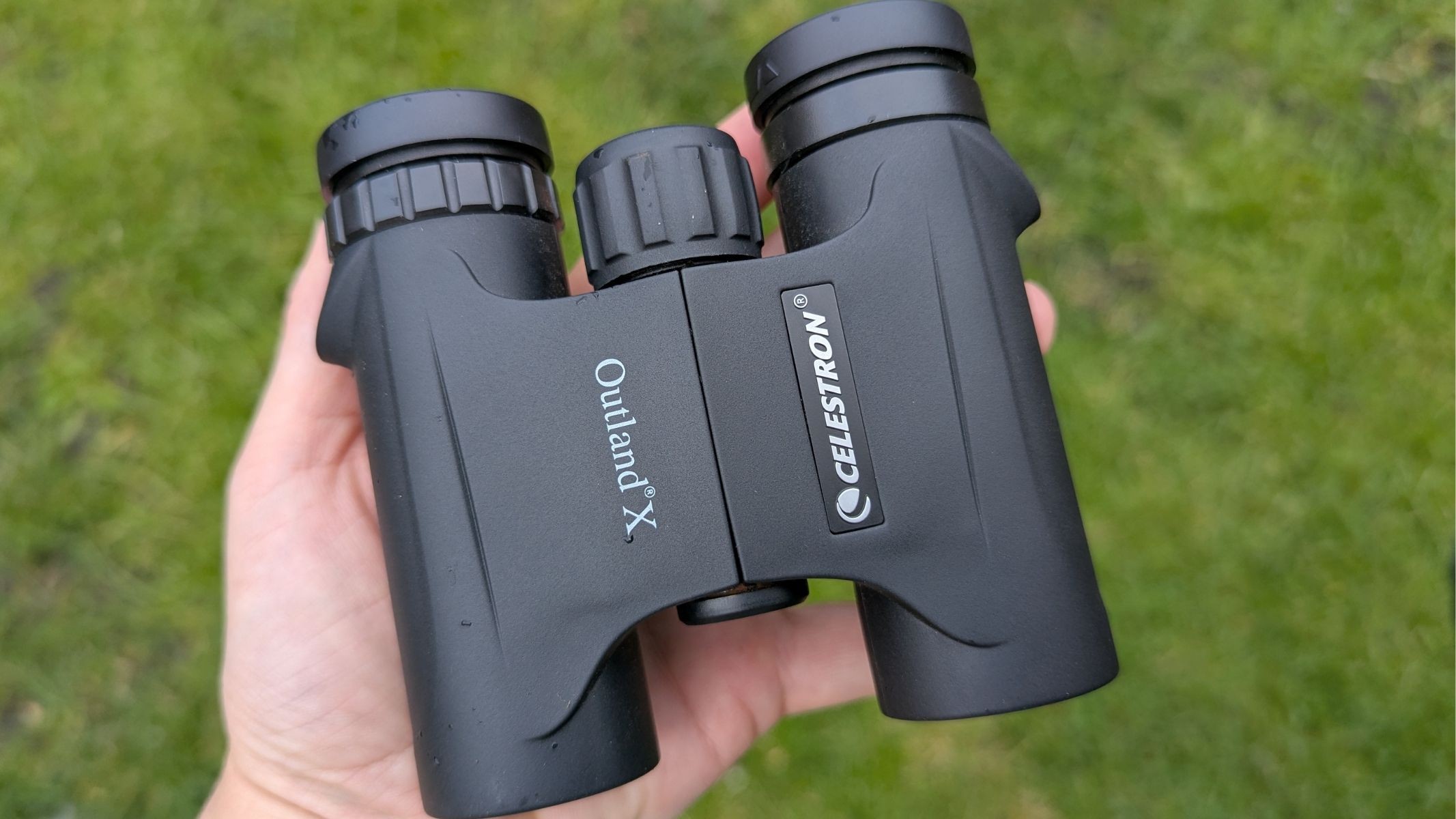
Tiny binoculars.
You know the ones. They sit in a coat pocket like a secret weapon for seeing things from further away, or maybe you just slip them into your rucksack because taking the big glass is too much of a hassle. The Celestron Outland X is one of these. Specifically, they are the 10×25 model, which means ten-power magnification with 25-millimeter objectives. Small.
They feel cheap in a good way, mostly because they cost around fifty bucks. That price point sits in an interesting middle ground: above the entry-level toys like the Occer, but a world away from premium compact units like our favorite Olympus 8×25. They are not serious optics for hunting or high-level astronomy, obviously, but for hiking? Boating? Maybe spotting a deer through some trees on a whim? Yes.
And yes, they are waterproof. Nitrogen purged. That’s unusual at this price.
Built like a tank (kind of)
First impression: light.
At just under 310 grams (about 10.9 oz), they are probably lighter than the smartphone currently glued to your hip. You’ll likely forget they are there until you need them.
The rubber armor is smooth. Some people hate this; the Hawke Endurance, for example, has that aggressive, textured grip. These don’t. But given their size, you hold them one-handed. There’s no need for extra grip texture when you are already enveloping them. The focus wheel is a highlight though—it turns with satisfying resistance, precise enough that it doesn’t drift while you’re trying to line up a shot. Big hands can operate the wheel with fingertips resting on thumbs. Elegant, in its own way.
Inside the box? A neck strap, a small hard case, and lens caps. Standard. Functional.
The view itself
Here is the thing: for fifty dollars, do you really have the right to complain?
Probably not.
But let’s talk about the glass.
It is… okay.
In bright daylight, things are sharp enough to identify a bird on a branch or follow action at a track event. You get close to the subject, which is the main selling point. The downside is color.
It lacks life.
There is a noticeable purple fringe around high-contrast edges. Think of a dark bird against a blue sky. The colors bleed, it distracts, it’s ugly. The specs claim multi-coated lenses, which should prevent this. Maybe the coating isn’t great. Or maybe, just maybe, physics demands a compromise when you squash optics this small this cheap. Colors generally feel washed out. Undersaturated. You have to remember, constantly, these are budget binos.
At night? They can show you the Moon. Craters and all, if you catch it when it’s bright. But don’t bother trying for Jupiter or Saturn. These aren’t telescopes. They won’t cut the dark sky noise. Not their job.
“Don’t expect magic. Expect decent.”
The quirks that bite back
Waterproof and fogproof, yes.
I took them from a heated house onto frosty morning walks, zero fogging. No moisture. Impressive durability for the cash.
But then there’s the ergonomics for glasses wearers.
Disappointing.
The eye relief is a scant 9.1mm. Most people wearing specs need 17mm or more to see the full field without vignetting (the “tunnel vision” black rings at the edges of the view). If you wear glasses, you are going to struggle with the Outland X. Twist up the eyecups if you have to, but it’s not a fix. It’s a physical limitation.
Focus distance is another snag. The closest they’ll focus is roughly six meters (20 feet).
Have you tried looking at a hummingbird? A lizard in the garden? Too close. If your primary goal is backyard wildlife or close-range macro work, skip this. The Celestron Nature DX can get within two meters, which is a completely different animal for casual nature watchers.
Are they worth it?
It’s a messy picture.
* Great price? Check.
* Waterproof? Check.
* Fits in your pocket? Check.
* Perfect color reproduction? Nope.
* Friendly for glasses wearers? Not really.
* Good for close-ups? Only up to twenty feet away.
They are fuss-free. You sling them in your bag, you forget them until you see something cool, and if you drop them in a stream? You’re probably fine. They won’t break your heart financially. They won’t break your wallet if you lose them.
They aren’t the best optics you’ll ever hold. Nobody would argue that.
But they are a tool. And sometimes you don’t need the best tool. You just need something small, cheap, and willing to survive the elements without complaining. If that sounds like your ideal compromise, go for it.
Just maybe don’t buy them if you wear glasses. 🤓