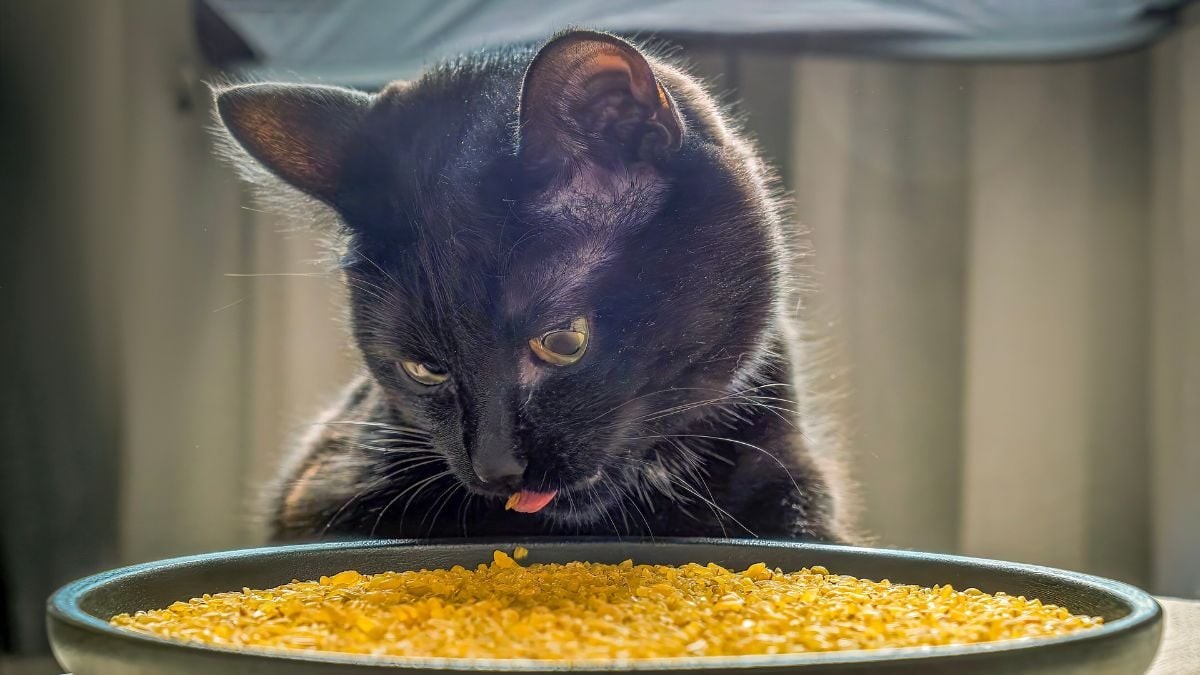
If you have ever watched a cat walk away from a full bowl of food—only to dash toward the kitchen the moment you open a different can—you are not alone. For years, pet owners and scientists have struggled to understand why cats often leave meals unfinished, even when they are clearly hungry.
New research from Iwate University in Japan has finally provided an answer. It turns out that cats don’t necessarily stop eating because their stomachs are full; they stop because they have become “bored” with the smell.
The Science of “Sensory Satiety”
The study highlights a phenomenon known as olfactory sensory-specific satiety. In humans, this is why we can feel completely stuffed after a large plate of pasta, yet suddenly find plenty of room for a slice of chocolate cake. Our brains become desensitized to one specific scent and flavor, but a new aroma “reboots” our appetite.
Researchers found that cats operate on this exact same biological principle. By studying the feeding habits of domestic cats, the team discovered that:
– Physical fullness isn’t the primary driver: Even after a 16-hour fast, many cats voluntarily stopped eating after consuming only about a third of their portion.
– Smell is the key trigger: A cat’s motivation to eat decreases as they become accustomed to the scent of a specific food.
– Novelty restores appetite: Introducing a new scent—even if the food itself remains the same—can immediately reactivate a cat’s desire to eat.
Evolution: Solitary Hunters vs. Pack Animals
This behavior is deeply rooted in the evolutionary history of the species. While dogs and cats both belong to the order Carnivora, their ancestral survival strategies were vastly different:
- Dogs (Pack Hunters): Descended from animals that hunted in groups, dogs often exhibit “voracious” eating habits, sometimes consuming large amounts of food very quickly.
- Cats (Solitary Predators): Descended from the African wildcat (Felis lybica ), cats are solitary hunters. Their natural rhythm involves hunting small prey multiple times a day, leading to a preference for numerous small meals rather than one massive feast.
This evolutionary distinction also explains why dogs are more effective at scent detection tasks, such as sniffing out explosives. Unlike cats, dogs do not experience the same rapid “olfactory habituation”—their interest in a scent doesn’t fade as quickly as a cat’s does.
Practical Applications for Pet Owners
Understanding that scent, rather than stomach capacity, dictates feline appetite has significant implications for pet health and management:
- Managing Obesity: For overweight cats, owners might be able to curb overeating by managing food exposure and scent, rather than relying on restrictive diets alone.
- Helping Sick or Elderly Cats: Cats that are losing weight due to age or illness may need “sensory stimulation.” Introducing different food aromas could provide the necessary motivation to help them maintain healthy nutrition.
- Dietary Variety: To keep a cat engaged with their meals, varying the olfactory profile of their food may be more effective than simply changing the brand.
“Sensory novelty, especially olfactory novelty, can reactivate feeding motivation in cats,” explains animal behavior scientist Masao Miyazaki.
Conclusion
Cats are driven more by their sense of smell than by a simple feeling of fullness. By understanding that “boredom” with a scent is often the reason for unfinished meals, owners can better manage the nutrition and weight of their feline companions.