Archaeologists didn’t find a simple altar in Tula. They found a macabre monument buried just meters below a dirt field that will soon host high-speed train tracks. The site sits in the ruins of Tollan—the Toltec capital—where the ground holds secrets the city’s builders wanted to keep.
Workers from the National Institute of of Anthropology and History (INah) were clearing the way for the Mexico City-Querétaro railway. Standard procedure. Look, document, recover, build. But this layer of dirt gave up something else entirely. A momoztli. That is the Nahuatl term for a small, community-level ritual altar. It is supposed to be a place for offerings to gods or ancestors. Pottery. Obsidian blades. Maybe a deer. Not people.
The altar dates to the Tollan phase, roughly 950 to 1100 CE. This is a blurry, transitional time in Mexican history. Teotihuacan was gone, rotting in its own glory. The Aztecs weren’t around yet, busy rising through the smog of future empires. The Toltecs were in charge, or so the legend went. Later cultures, especially the Mexica who founded Tenochtitlan, worshipped the Toltecs. They were the ultimate craftsmen. The original elite. This altar sits at the heart of that reputation, but it doesn’t look quite like the polished history books would like it to.
Did a Skull Detach Naturally?
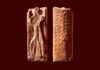
Here is where it gets physical. Roughly one meter square, the structure is stacked stone: a quarry base, maybe andesite; modular middle layers; a chaotic top layer of river rock and basalt. It is solid. It is permanent. Or it was supposed to be.
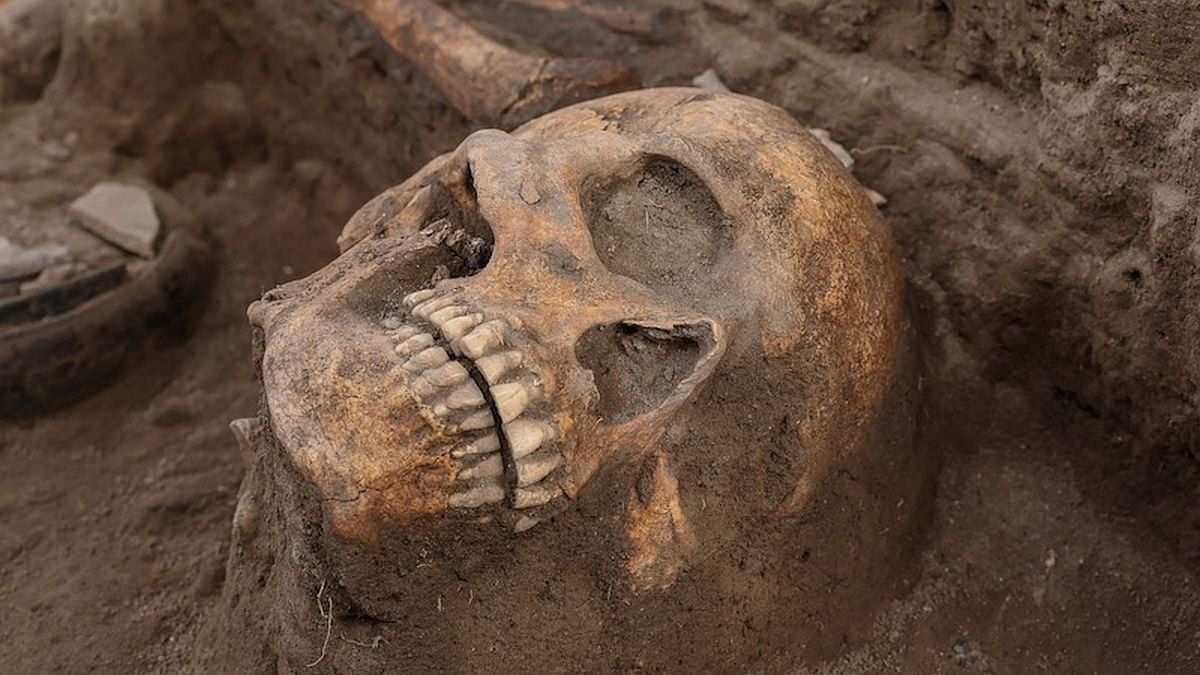
The team found obsidian blades scattered nearby. Sharp. Dangerous. Used for everything from surgery to slaughter. Then, they found four skulls.
Three were mixed with femurs under compacted stucco in front of this altar. Standard debris? Maybe. One skull told a different story. It sat near the base. Attached. But not connected the way a natural burial works. The neck vertebrae were there. The flesh, though long gone to time, would have held the head on. If this skull detached after burial, gravity and decay do the work. It usually slides off or lies separate. This one remained locked onto the spine.
Which implies a violent severance while the body was fresh.
“We know that at the outskirts of Tulas there were neighborhoods of the upper middle class, and much further away, common people,” said archaeologist Victor Francisco Heredia Guillen. He is careful with his words, but the implication is blunt. These elites had palaces. They had private courtyards. This altar stood in one. Inside an elite residence? A temple? A house with a backyard garden full of death?
“We assume that these were rooms or part of an elite context,” he said. Groups of high rank. Not the peasant quarter. If you were going to perform this act, you were doing it somewhere safe. Somewhere hidden from the lower classes who didn’t get invited to these private rituals.
Who Was Decapitated?
The question is no longer just if people died here. The obsidian and flint marks will confirm the tooling. Heredia Guillen notes that metals were in use by the Postclassic period, but stone still cut deeper into social rituals. Cut marks on bone don’t lie. They testify.
So, why four? Why this specific arrangement? The altar suggests a hierarchy. Two skulls at the base, one up, one to the southwest. Four at the feet. Was it a sacrifice to the earth? A feeding of the city’s foundations? The Toltec influence rippled across central Mexico long after they fell. The Aztecs later mimicked and amplified these rites, making human sacrifice the headline act of their religion. But the blueprint was drawn earlier.
This discovery forces us to look closer at how “civilization” builds its stability. We like to think of Tula as a center of trade, art, and philosophy. And it was. But it was also a machine for ordering life through death. The new railway will bypass the noise. It will speed through the timeline. It won’t stop.
Right now, the site is being measured. Photos. Drones. Sketches. The stones are lifted carefully. The bones are taken to labs for DNA and isotope analysis. We might see where these people traveled before they died. We might see who they ate or who served them. The altar stays buried until preservation strategies catch up with ambition.
The train keeps getting built. The dirt is being moved. Somewhere beneath the concrete that will soon form a bed for a speeding bullet train, a stone platform holds a neck and a head that didn’t belong apart. It’s strange, isn’t it? How we walk over history every day, assuming the ground is solid, when it’s mostly just compressed time waiting to speak. We won’t be listening when the whistle blows.