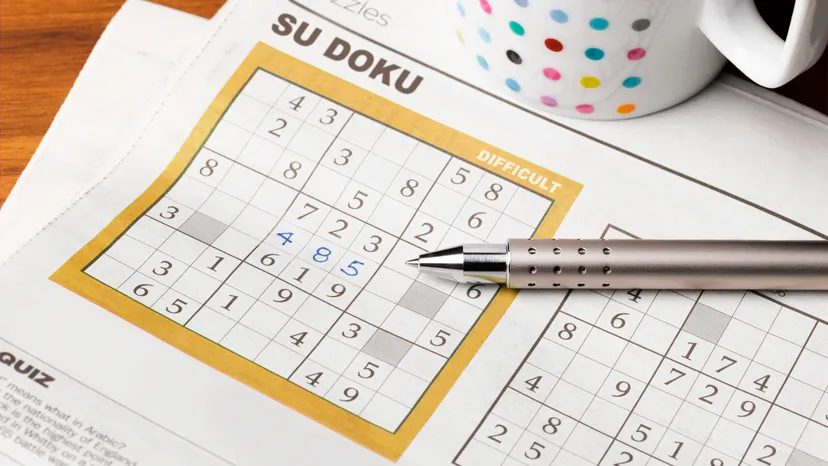
Check out your local bookstore. Or that airport gate. Or the lobby of a doctor’s office. You’ve probably seen someone staring at a grid of numbers. It’s everywhere. Some might joke that this obsession with logic is the new form of adult entertainment. it is not. This is just a puzzle. It’s simple. It’s difficult. Fashion is something you fall in love with and can’t turn down.
But where does it come from? Japanese? No, this is a common misconception. We need to clear up the misconceptions and look at the mechanism.
Grids and rules
Sudoku is usually written su doku and uses the numbers 1-9. Don’t start using a calculator though. This is not a math test. No addition. No subtraction. This is purely about logic. The numbers can be replaced by the first 9 letters of the alphabet. Or 9 different icons. The game remains exactly the same.
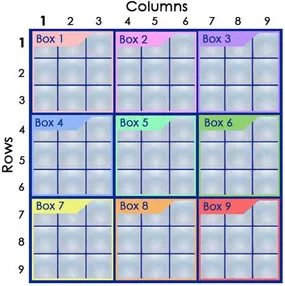
The base is a 9 x 9 grid. It looks like a complicated maze of boxes. To solve it, you need to track three distinct areas:
- Row : A horizontal line across the grid.
- Column : Vertical line down.
- Box : Small 3×3 squares that form a larger grid.
If you keep those three elements in mind, the chaos starts to make sense.
How Sudoku logic actually works
The goal is simple. Write a number from 1 to 9 in each row, column and 3×3 box. Do not repeat. The real challenge is in the overlap. The interaction between these three constraints forces your hand. It’s not enough to put numbers wherever you want. You have to look where it can go.
Imagine starting from scratch. You are trying to follow three different rules at the same time. The first row requires 5. The second column must have 5. The fourth box has 5. When you put 5 in the first row and column 2, all three are filled at once. This is the hook. The geometry of the puzzle does the heavy lifting.
An empty grid is fine, of course. It’s just a canvas. Real Sudoku has hints. Some numbers are already printed on the board. It’s up to you to fill in the gaps. You look for the intersections. If the cell is in row 1, column 2, box 4, check what already exists. If you see in rows 1, 2 and 3 and columns 4, 5 and 6, start narrowing down the possibilities.
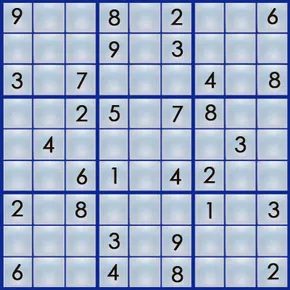
The real puzzle looks like this. This is taken from Michael Mepham’s Book of Sudoku 3. The printed numbers are your anchors. Everything else is deduction.
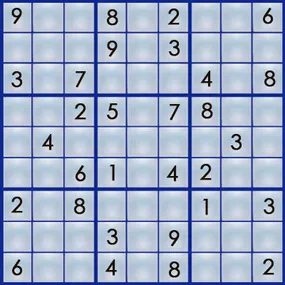
The difficulty level of the Sudoku grid is not random. Depends on the starting number. More specifically, how many of them you get and where exactly they are placed. Michael Mepham, puzzle creator for London’s Daily Telegraph, doesn’t mess with labels like “moderate.” He uses Mild, Mild, Tough or Diabolical. Easy puzzles provide enough clues in strategic places to solve with basic logic. There is only one correct solution. every time.
The fastest way to learn sudoku? Solve only one. We use a simple grid to get a feel for the process. Once you master the easy puzzles, you can solve the logic of the harder puzzles. Difficult means more patience is required.
The History of Single Numbers
Sudoku didn’t come out of nowhere. This is close to the mathematical concept of the Latin square. It started with a 1970s Dell puzzle book called Number Place. America hardly noticed.
Then in 1984 came Japan. The puzzle exploded. Nobuhiko Kanamoto, editor of the publishing company Nikoli, called this “Suuji Wa Dokushin Ni Kagiru”. Does it translate? “The number must be unique.” This was shortened to Sudoku. Single number.
New Zealander Wayne Gould noticed this trend while traveling in Japan. He wants to share it with the world. He spent several years writing a program to create puzzles. He pitched the idea to USA Today. they said no.
But in April 2005, the New York Post said yes. The boom was on.
Solving Sudoku: simple logic
Advanced math is not required. Requires pattern recognition. Start with the row and column with the most numbers. Look for the missing digits. If the row has 1, 2, 3, and 5, the missing numbers are 4, 6, 7, 8, and 9. Next, notice the intersecting columns. If a cell is blocked by a 4 in the column, it can’t be a 4 in the row.
This is how you eliminate choices. It’s not a guess. You’re deducing. The grid shrinks as you move. What started as a confusing possibility turned into a clear path.
Why am I so happy? Maybe it’s pure logic. No luck. Just you and the numbers.
How to deal with stuck cells? Scan 9 squares. If the number is already in the box, you cannot put it there again. It’s that simple. However, finding these limitations takes practice.
The puzzle is not over until the grid is filled. Each filled cell is a small victory. This logic works. The answer is unique. And then you’re done. Or are you?
The next one is waiting.
There are no holy places in the Sudoku grid. You can blindfold yourself, stab your finger at the page and start solving at that intersection. This works just like any other strategy.
Most experts recommend a more deliberate approach. Look for crowding. Rows, columns, or boxes packed with filled cells provide the most direct clues.
Let’s look at the previous example. Columns 4 and 6 are already heavy hitters, each containing six filled digits. A logical move? Choose one.
Let’s start with column 4. Column 4 is already cluttered with a 1, 3, 4, 5, 8, and 9. There is little room for mistakes.
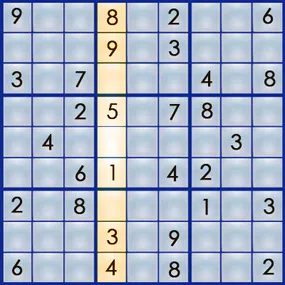
We are in a difficult situation now. On paper, the goal is simple. Use each number in the grid from 1 to 9 once. But the reality is messier. Look at column 4. We really need three special numbers: 2, 6 and 7. These numbers cannot be placed in empty spaces. There are rules. Strict and ruthless rules.
Where did they actually go? We need to focus on interaction. Not only the columns themselves, but also the rows and boxes that cross their path. In particular, notice the only empty square in column 4 of row 3.
Why Row 3 Blocks the 7
Let’s start with the 7. Sounds simple, right? We usually lock first. But check line 3. You can’t put another 7 on the square (3,4) if there’s already a 7 on that line (3 on another line). Sudoku’s logic is brutal. One per row. Period.
If row 3 already has a 7, the square (3,4) will not work for that number. This means that number 7 must belong to a different place in column 4. Is it row 1? Maybe row 6? You need to scan the other rows that intersect column 4 to see where the 7 is already claimed.
The Box Constraint
It’s not just rows. Look at the 3×3 box containing the square (3,4). The box contains its own series of already existing numbers. You cannot put a 2 or 6 in (3,4) if it is already hidden in the same box. You either have to push it into another column within that box or accept that (3,4) is some other number.
Deduction in Action
Here’s how to resolve the issue:
- Check for 7: Is there a 7 on the third line? If so, (3,4) is not 7. Is there a 7 in the box containing (3,4)? Same question if yes.
- Check 2: Does row 3 have a 2? Are there 2 in the box? If so, cross it (3,4).
- Check the 6: Same exercise. Scan line 3. Scan the box.
If row 3 has a 7 and a 2, square (3,4) is always 6. This is not a guess. This is a process of elimination. There is only one option left.
If there are 6 in the box and 2 in row 3, then (3,4) is 7.
This is how the column is solved. It’s not just about filling a gap. Eliminate the possibilities until only the correct numbers remain.
What About the Rest of Column 4?
Identifying one number in (3,4) simplifies the rest of the column. There are two places and two numbers left. Look at line 6. Is there a 2 in line 6? If so,
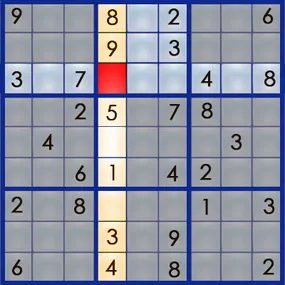
You don’t need fancy algorithms or pencil marks to solve basic Sudoku puzzles. The Simple Logic approach keeps the game stripped down to its essential features. It is completely based on visual scanning and process of elimination.
Start with a blank square. Ask yourself a simple question. Does number 2 fit here? Check the box. If box 2 already contains 2, the answer is no. A standard Sudoku grid only allows one of each number in each 3×3 block.
Then find the next candidate. 7. Scan the horizontal row. If you already have 7 on the third row, you are out of luck. This number has been blocked.
What is left if we remove these options? Probably 6. Check the restrictions again. Is there a 6 on the row 3? No. Does box 2 contain the number 6? No. 6 is fine because there is nothing blocking it.
You’ve just placed the first number. It may seem trivial, but it is a foundational move. All complex solutions end up repeating the same checks.
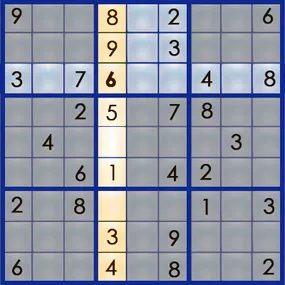
Find the last two numbers in column 4.
In the fourth column, the puzzles get even harder. Two positions are still open. One is 5,4 and the other is 7,4. The missing numbers are 2 and 7.
From 5,4. It doesn’t just exist in columns. Connects to the 5th row and box five. Check for a 2 and a 7 in those areas. If the 5th row already has a 7, then 5,4 must be a 2. If the box five blocks the 2, you know which number is where.
Next see 7,4. This square interacts with the row seven and box eight. Use the same logic. Is there a 2 in the 7th row? Is there already a 7 in the box eight? This constraint forces one number into this slot and another number into the first empty square.
This is not a guess. This is a process of elimination. The layout becomes clearer when you see how the rows and boxes limit your options.
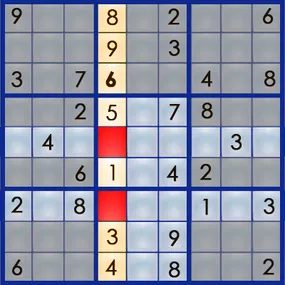
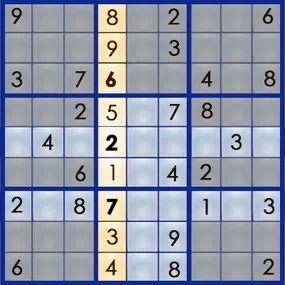
When I stopped guessing, the fourth column became easy. Box number 5 already fills number 7. This means that 5,4 cannot fit 7. It’s a simple process of elimination. I made 2 people 5.4 and seven into 7,4. column four was complete. No complicated calculations required. Just basic logic.
Simple puzzles often produce such straightforward conclusions. Scan the line. Check the box. You fill the gap. It feels good. But real life is not always a simple puzzle. Sometimes the board looks at you with a blank, mocking look. Clear movement disappeared. you are trapped.
This is where people give up. Or they guess. Don’t guess. Guessing is how you break the board. If the path is unclear, you need tools. A modest tool. It’s a pencil mark.
The Art of a Credible Candidate
Pencil marks are more than just drawings. They are notes. They are opportunities. You look at the cell and ask what can “go” here. Not what should. What do the rules allow?
If a number is visible in the row, it’s banned from that cell. The same applies if it is in a column. If it’s in the 3×3 box, it’s out. The rest are candidates. I write it very small. small. Inconspicuous. This is not the final answer. This is a map showing where the numbers “could be”.
Why do we do this? Because it reveals patterns. You won’t see it if the board is blank. If you’re staring at an empty square, you won’t be able to spot naked pair or hidden singles. You need data. Pencil marks are your data points.
Find hidden singles
It’s magic. The hidden single. It sounds fancy, but all you have to do is find a number that has nowhere else to go in row, column, or box.
Imagine line 7. Six numbers have been entered. The last cell is empty. Check the candidates. The pencil marks indicate that 1, 2, 3, 5, 6, 8 and 9 are possible. But wait. The column passing through this cell already contains 1, 2, 3, 5, 6, 8 and 9. All other candidates are blocked. Only one number left.
That number must be the answer.
This is not a guess. It’s a deduction. The pencil marks did the heavy lifting. They showed you that all other options are impossible. The solution is hidden in plain sight, buried under many possibilities.
Why pencil marks are important
They turn chaos into order. Without them you have to rely on memory. You remember you can’t put a 5 in box 9. Then put a 5. Then you realize you were wrong. Then remove. Then you panic.
Marking with a pencil reduces the cognitive load. You don’t need to know the whole board in your head. Let’s look at cells. You look at the marks. You make the decision. This is systematic. Repeatable.
Beginners skip this step. They think it’s boring. It is. It’s also the difference between solving
Stop guessing. Seriously. If you start throwing random numbers into the grid, you’re just digging yourself a hole. All Sudoku numbers are connected. If you get one number wrong, the whole puzzle falls apart. You get stuck and have to delete everything and start over.
The actual work is done in the margins.
Pencils don’t guess. This is a process of elimination. You list what could go in the square, not what should go in it. As the puzzle becomes more difficult, this step is non-negotiable. All possible placements in rows, columns or boxes must be taken into account.
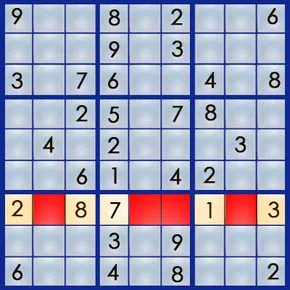
Let’s look at row 7.
It’s very messy. Four empty squares left. The missing numbers are 4, 5, 6 and 9. You have to understand where each number fits.
Take square 7.2.
Which of these four numbers belongs there?
The 4 is out. Column 2 already has 4. It cannot be duplicated.
Number 6 is also out, and Box 7 already contains a 6.
5 and 9 left.
The second row does not have a 5. Box 7 does not have a 5.
There is no 9 in the second row. There is no 9 in the 7th square.
So write “5 9” a tiny in that corner.
You’ve narrowed it down.
This is how you solve the sections. Not by luck. By logic.
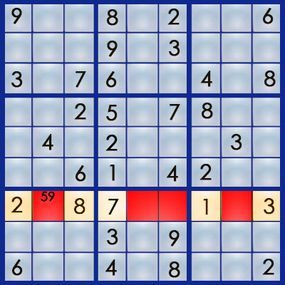
Fill in the bottom line
The logic of 7.5 square meters is simple. Remove 4 and 9. Why? Box 8 already contains one of them. This way you can draw with 5 and 6 pencils. Go right to 7,6. It’s the same game. Write in pencil 5 and 6. This is a copy. it works. Next, press 7 and 8. Everything happens. Any number can be entered here. There are no limits yet.
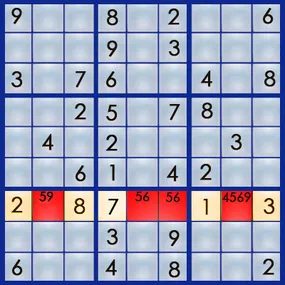
Check the grid again. Look especially at the pen marks. You find patterns, not just random noise.
Two squares have the same number pair. It’s interesting. But there is more. This number stands out because it is unique.
It only appears once. Squares 7 and 8.
This is where the “single outbreak” strategy comes into play. This is nothing fancy. This is basic logic. If a given number has only one possible home in a row, column or box, it belongs there. period of time.
4 can only go to 7.8 so problem just solved. No need to guess. You left out four.
Line 7 should look like this:
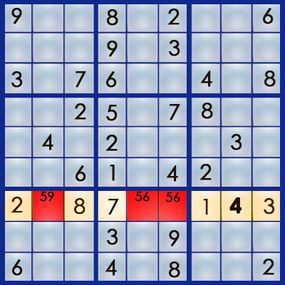
The power of Sudoku matching
Look at the grid again. You can see that there are patterns that appear only once. Squares 7,5 and 7,6 are locked in a dance with candidates 5 and 6. This is what the solvers call the matching pairs scenario.
Only these two numbers belong there. There are no other squares in this row that can contain a 5 or 6.
The logic is simple. If the 5 must be in either of those two spots, it cannot be in square 7,2. Elimination is immediate. This possibility can certainly be ruled out.
This is not a guess. It’s a deduction.
If we remove 5 from 7,2, we can solve another square. The grid tightens. The path you should follow becomes clearer.
“Removal is as effective as placement.”
One move down. The board moves a little. It’s not just about filling a gap. You are narrowing the universe of possibilities.
What happens next? The answer is hidden in plain sight.
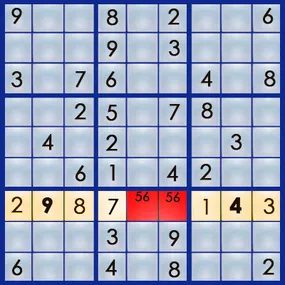
This logic goes beyond two points. The “matched pairs” elimination strategy can be extended to triples. If you find three squares with exactly the same three candidate numbers (and nothing else), you can treat the group as a unit. The principle is the same, just one more number.
Now looking at the grid there are still unclear areas. Specifically, we don’t know which squares contain a 5 and which contain a 6. The candidates are floating. Therefore, you need to consider more possibilities to narrow down your search.
Notice box 8. Very strict. All four boxes are empty. This box requires four special numbers: 1, 2, 5 and 6.
The boundaries are clear: 4 holes, 4 numbers. There are no additional options.
This sets up a possible bare pair or triple scenario in that box. See how these candidates interact. If two squares only share two numbers, you’ve locked them in place. The remaining numbers must be taken from the other two squares.
It’s boring. Pinpoint. But here’s how to break the ice.
Where did 1 go? This is the next puzzle.
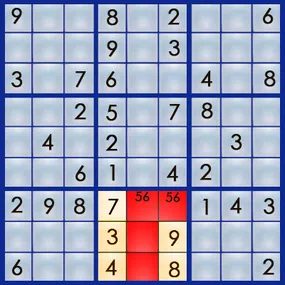
These two cells are marked with corresponding pairs of 5 and 6. This locks the value into a specific position. This means you can safely cancel the value for other empty boxes in the same unit. The only numbers in the air are 1 and 2.
Consider the square located at (8,5). Row 8 and column 5 have no 1s or 2s, so technically you can enter either number there. This is an eligible candidate.
But look at row 9. There’s already a 2 on that row. You can’t put another 2 in the square (9,5). This limitation forces the issue. If 2 is not possible at some point, the logic moves elsewhere.
This is our position.
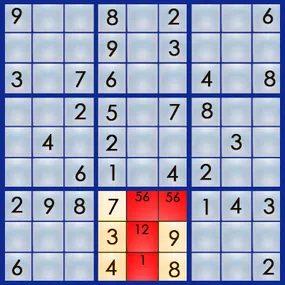
Look closely at the grid. Especially row 9, column 5. Only one candidate number remains in the cell. Mepham calls this the “isolated number” strategy, and it’s actually a gateway for beginners to solving “Sudoku” puzzles. If there is only one possible number left in the box, it must be that number. In this case, the solution is 1.
This arrangement causes a chain reaction. 1 is locked at 9.5 in box 8, so the penciled 1 in box 8.5 directly above it is removed. If you remove this option, only 2 will remain out of 8.5. Another square will fall into place. This is very simple, but it’s also a way to get out of a tight grid when you get stuck on basic sudoku techniques.
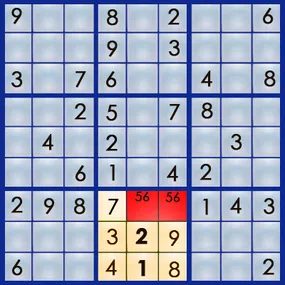
The mystery of the five and six is still unsolved. We are stuck in a loop and figuring out column six is the only way to break through the square at 7,6. This is a bottleneck.
The sixth column has three empty squares. Only one of them has all its possible solutions penciled in. This is our entry point. The logic is based on this single constrained cell. Once we define what’s there, the ripple effect will make the other numbers fall into place.
Until then, it’s just guess. Rather, eliminate until there is only one option left. square at 7,6 doesn’t care about our uncertainty. It just waits for the information.
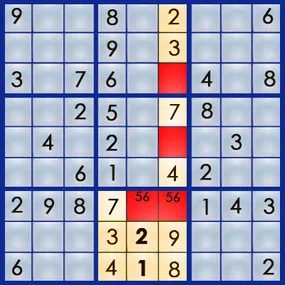
Unscramble the logic in column 6.
This puzzle requires accuracy. 列 6 doesn’t have 3 specific values 1, 5, and 6. To check where each number actually belongs, you need to check the constraints in the intersecting rows and boxes.
Take the square at position 3,6. It’s tight. Both 1 and 5 are strong candidates. Row 3 already has a 1 and its door is closed, so the 6 is not on the table.
But look at 5,6. This is very simple. Box 5 already contains 1 and 5. There is only one option left.
square at 5,6 must be 6.
Why other options are not suitable
It’s not just exclusion. It’s about what’s left when you eliminate the impossible.
In column 6, 1 and 5 are still floating in squares 3,6. How about square 5,6? I have nowhere to go.
- Square 3.6 : Can be 1 or 5.
- Square 5.6 : Must be 6.
Once you lock in that 6 at 5,6, the rest of the column will fall into place. No need to guess. All you have to do is follow the numbers.
“Sudoku is less about intuition and more about recognizing where things can’t be.”
Once position 6 is assigned, only positions 1 and 5 remain. This is a small win
Is this logic clear or should we move to the next column?
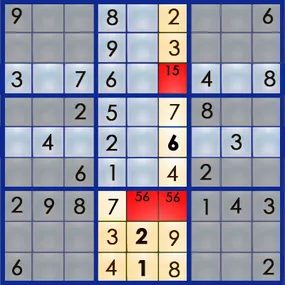
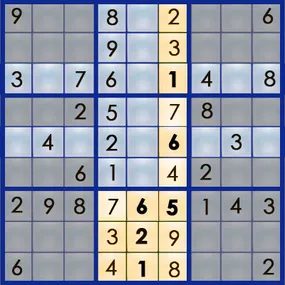
The puzzle is tight. We’ve confirmed that 7.6 is 5. 3.6 must be 1. What about 7.5? It’s 6.
Sometimes it feels like magic. Set the numbers. There’s only one thing. Suddenly, five more squares lit up and were resolved. This is a Sudoku trap. Rows, columns and boxes are more than just constraints. These are interlocking levers. When you move to one place, everything else changes.
So far we’ve been on the offensive. We look at the square and ask, “What number should go here?” It’s simple. It’s very direct. But there is another way. Perhaps that is a wiser approach.
Instead of searching for an empty space, search for a specific number. We look at a number (e.g. 9) and ask: “Where exactly does this 9 live?”
Where can I put the numbers?
This flips the script. No more searching the grid for vulnerabilities. I’m looking for houses with certain values.
Think about it. Numbers appear only once in a given row, column or 3×3 square. So when you see a 9 in the upper left corner, you immediately know that there are no other squares in that row, column, or box that can fit a 9.
This is where the real pruning begins.
When you focus on individual numbers as a whole, you begin to see patterns that are not present between individual quadratic analyses. You can see that a particular 3×3 box has only two squares still open. If one of the squares is blocked in a column with a 9, the other must be a 9. No guessing. Just remove it.
This approach is especially deadly in the mid game. If simple padding disappears and you’re left staring at a grid with what appears to be a large number of candidates, switching to number-centric logic removes the noise.
The power of exclusion
There is no need to calculate every possibility for every empty cell. Just pick a number and you’ll see where you can’t do it.
- Scan rows: If a row already has 4, ignore all squares in that row when searching for 4.
- Scan columns: Same rules. Number 4 in the center column prevents any vertical movement.
- Scan the box: The 3×3 grid is the ultimate jailer. Once the number is set, the range will decrease.
This approach requires lateral thinking. Instead of focusing on individual intersections, start focusing on a specific stream of numbers all the time. Instead of saying, “What goes with this?” think, “What does this belong to?”
This is a subtle change. But it changes the way you look at the grid.
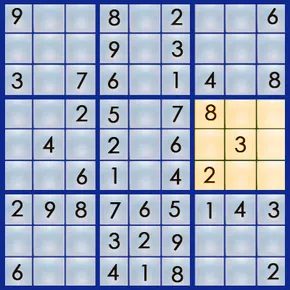
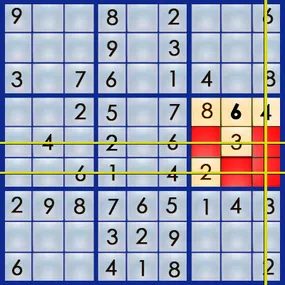
Forget about searching for the right number in the blank. Sometimes you have to find a suitable space for the numbers. It starts by drawing a line. See Box 6.
4 is required.
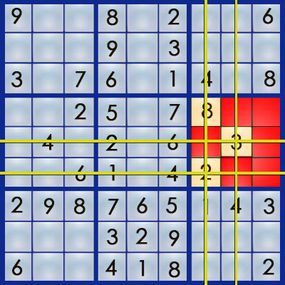
We remove the places we can’t go. The fifth line has a 4. Draw a line through this line. There is also a 4 in the sixth row. Let’s delete this too. Columns 7 and 8 also have 4. Delete these columns.
Why elimination is more effective than guessing
When you’re stuck, guessing can lead to dead ends. The elimination takes place systematically. You eliminate that possibility. Narrow it down. The right rectangle will appear. This is not magic. This is logic.
“Eliminate all impossible options. The truth remains.”
This approach saves time. Prevent mistakes. It keeps the puzzle going. You don’t need to know the answer yet. You just need to know where it doesn’t belong.
Lock 6
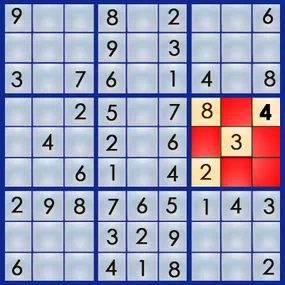
Box 6 at 4.9 has one space left. Fill it with number 4.
I’m hunting six of them now.
Look at row 5, row 6 and column 9.
Each row is blocked with an existing 6. This means that the only place in this box where 6 can survive is 4.8.
Please put it down.
Logic only rules out the impossible.
The box is full. The grid tightens.
The basics have been covered. simple logic. standard strategies. Now let’s look at the rest of the grid. There are thousands of other techniques developed by hobbyists who have fallen in love with the 9×9 grid over the years. you will use them. You will solve just about any puzzle thrown your way.
But the difficulty changes things. The rules remain the same. It just changes the time.
Some obstacles cannot be solved immediately. You cannot fill in other squares until you have solved them first. In some cases, you may have to solve the entire grid area before touching a single cell in a corner. This is a chain reaction. There are more puzzles to solve. Build your own methods. You develop your own logical sense. This is personal.
Then there are many other things.
Sudoku should be pure logic. No need to guess. However, some puzzles break this. They ask you to guess. Pick a number and hope. This is where the purists cry out. They call it cheating. They call it dirty. It is the horror of the purist.
When your logic hits a wall
Most solvers stop at “hard”. On the Internet, certain puzzles are called “diabolical” or “experts”. They’re just hard. You run out of obvious pairs. You run out of hidden singles. You stare at the grid. The numbers stare back.
In these cases, you might need a technique that is not included in the basic toolkit. Look for the “X-wing” pattern. Look for “Swordfish”. They are named after their shape on the grid. This allows you to eliminate candidates from multiple rows or columns.
“Sudoku is a logical game, but some puzzles defy logic and require guessing.”
If you get stuck, check if the suggestions appear exactly twice in 2 rows and 2 columns. It’s an X-wing. You can remove numbers from intersecting columns or rows. It is clean. This is logical. it works.
The forbidden guess
What if there are no patterns left? What if, after trying all known techniques, there are still two squares left with two possible numbers each?
You have to guess.
Choose one. Write it down. If the puzzle is well designed, conflicts will quickly arise. A number will have nowhere to go. Two same numbers in a row. The puzzle breaks.
If the puzzle is broken, you made a good guess and the puzzle is faulty. If you find a discrepancy, cancel your guess and try another number.
This is the “transcendence” part. It doesn’t apply to everyone. It feels wrong. It feels like giving up. But it still makes sense. You are testing a hypothesis. You are using the process of elimination in its most extreme form.
Finding your flow
Every person has a different rhythm. Some people work from left to right. Some work by block. Some work with numbers and hunting all the 1s before moving to the 2s.
There is no right way. Only the way that works for you.
As you solve more problems, you begin to see patterns before you consciously think about them. When you look at a 3×3 box, you can tell where the 7 belongs without counting. It will be visual. It becomes
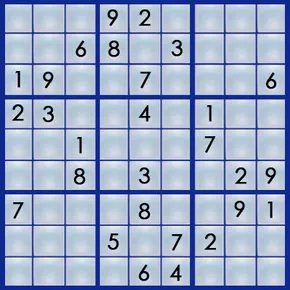
London’s Daily Telegraph A small group of sudoku enthusiasts have been living in fear of Michael Mepham’s “diabolical” grid. These are not only difficult; They were broken. At least that’s what the purists say.
What is the problem? Some of Mepham’s puzzles cannot be solved by reasoning alone. You hit a wall. No more logical moves. Just empty space and a prayer. To complete the grid, the solver must make guesses. In the world of Sudoku, guessing is a cardinal sin.
There was an immediate backlash. Hate mail flooded in with hate mail. Puzzles that require pure logic are being corrupted. The controversy didn’t just rattle Mepham. It changed his output. He stopped publishing puzzles that required such a gamble.
But what about the technique itself? This is very interesting. If you enjoy the mental gymnastics of high-level puzzle design, Mepham’s approach provides a unique window into how far a puzzle can stretch before it breaks.
“Before we start the guessing process, we need to know enough information to be sure there are no more leads.”
Mepham calls this strategy “Ariadne’s Thread.” This is a nod to Greek mythology where Theseus uses a ball of thread to navigate the Minotaur’s labyrinth. Here the maze is a 9×9 grid. The thread is your guess.
How Ariadne’s Thread really work
Let’s look at a concrete example from Mepham’s Book of Sudoku 3. It starts standard enough. Some clues have emerged. Use basic elimination. rows, columns, boxes. You’re cruising.
And you hit it.
**Logic will lead you here. **
So what? there is nothing.
No naked singles. There are no hidden pairs. There’s nothing on the board that can be fixed by looking at what’s already there. you are trapped.
This is where Ariadne’s Thread come into play.
Select a square. There are two candidates. Choose one. Let’s say you write 4 in row 5, column 5. Not because you know it’s right. Because you have to start somewhere.
Now you can follow the thread.
Does that 4 create a contradiction elsewhere? Maybe it can force a number into a box that is already full. Or maybe it leaves a cell with no valid options. Even if you hit a dead end, don’t scrap the puzzle. retrace.
Back to that guess. Select another number. 5 instead of 4.
Follow the thread again.
If you reach a solution? Great. You have solved a diabolical puzzle.
If you hit another dead end? The puzzles are flawed. Or maybe you missed a subtle logical step earlier. But assuming the puzzle is valid, one path must work.
Why this is important for sudoku fans
You might wonder, “Why do I risk failure?”
Because it reveals the structure of the puzzle. A real “diabolical” Sudoku should be logically solvable. If not, the design flaw becomes apparent. Mepham’s approach forces the solver to behave like a debugger. You’re not just filling
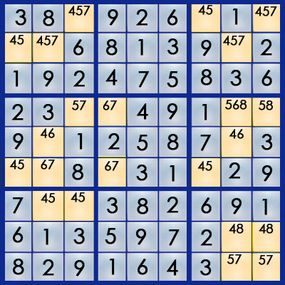
The logical chain ends here. There is no more obvious moves. We are staring at a blank grid with no clear next step. The only way forward is to guess.
That’s right. You have to trust your intuition and make a choice. Mark lightly with a pencil. If this choice leads to a dead end, you need a way to get back to where you started. Think of it as Ariadne’s Thread. If your guess fails, you can follow the string back and try another number.
Choose a square with only two options. This gives you a fifty-fifty shot. It’s a coin flip.
Look at row 2, column 1. Only two numbers remain. Choose the 4.
Now let’s see what happens. Assuming that 4 is correct, the rest of the puzzle starts to click into place. You can fill in other squares by extension. The logic spreads outward.
But then it breaks.
You hit a wall. A contradiction arises. 4 The right assumptions force situations that are impossible elsewhere on the board.
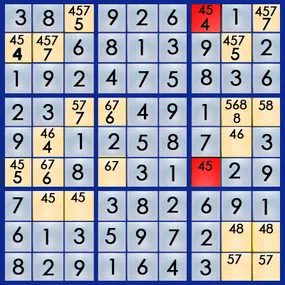
So in cells 1,7 sits 4. It feels good. It should feel right.
But this is where the logic breaks down. If 4 is true, there are only 5 items left in the column 6, 7. Write it down. You circled it. you commit.
Next, see line 6.
It was filled with water for 5 seconds. Just one of them. One number makes new hypotheses impossible.
game over.
Take the guesswork out. Wipe the tile clean. Back to square 2.1.
This time choose 5.
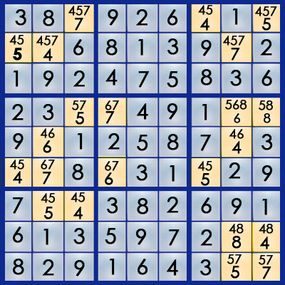
The 5 in the 2,1 position is not just a random guess. This is the key. Once in place, the entire grid snaps into place. Simple. elegant.
For years, Howard Mepham refused to publish guessing puzzles in his column. If you have to take a leap of faith, he won’t touch it. You can still find these “guess-necessary” grids on his personal website sudoku.org.uk. The man insists on pure logic, even if he no longer writes about it.
However, the popularity of puzzles has grown exponentially. People want something harder. They wanted more. And developers responded with the Extreme Sudoku variants. The crown in the crown? 3-D Sudoku.
Building a Cube of Numbers
Forget flat grids. Imagine nine perfect 9×9 Sudoku grids stacked in a cube.
It sounds insane. It is.
The rules remain the same. Each row, column and 3×3 square must contain the numbers 1-9 only once. But now you’re managing three interconnected axes. You don’t just look left and down. You look up and look back.
To solve the cube, you technically have to solve each of the nine individual grids. But they are related. The numbers of one layer affect the vertical columns of the other layer. It’s a multi-plane nightmare.
Digital Solutions for Complex Puzzles
You can also solve this problem manually. It’s just tedious. The vertical connections mean that one typo can cause the entire structure to collapse.
Most people use software. There are dozens of 3-D Sudoku computer programs on the web. They render the cube in full 3D glory. Rotate the grid. You view the hidden intersections. You can see the logic unfolding in space rather than on paper.
“All the same rules apply, but now you’re working on multiple planes.”
It’s the same logic. Only harder.
Why choose 3D?
Standard Sudoku tests pattern recognition. 3-D Sudoku tests spatial reasoning.
You have to visualize how the columns are arranged across levels. You have to track numbers that do not share rows or columns in the same grid. This is a different kind of brain workout.
If you are tired of flat puzzles, try the cube. You need a screen. And patience.
The puzzle on yesterday’s page? Check it if you missed it. Otherwise, jump into the cube.
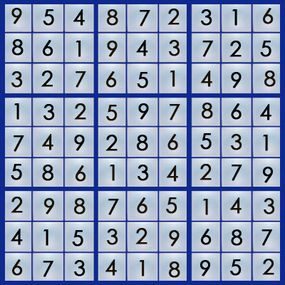
Unraveling the logic behind the grid
Forget the trauma of math class. Breaking a Sudoku grid requires no knowledge of calculus. This is pure logic disguised as arithmetic. Numbers 1-9 are just labels. The real battle is in elimination, pattern recognition and quiet victory when the cells finally click into place.
Do you have a secret formula?
There is no magic formula. No algorithm can give an answer all at once. The aim is precise. Fill all rows, columns and 3×3 squares so that each number from 1 to 9 appears only once. There are no duplicates. No omissions. This is a constraint satisfaction problem, not a calculation. You win by finding the places you can’t go, rather than forcing the places you have to go.
Why does it seem impossible?
Because that’s how it’s designed. Empty grids are boring. The challenge lies in the initial clues, scant and misleading clues that force you to dig deeper. You’re not just placing numbers. Rebuilding a logical structure from fragments. The difficulty rises when the obvious moves are exhausted and you have to look three steps ahead.
Etymological trap
Technically it sounds Japanese, but it is. However, the name is a translation of a Japanese phrase. Nikoli editor Nobuhiko Kanamoto coined the phrase “Suuji Wa Dokushin Ni Kagiru”, meaning “numbers must be unique.” Abbreviation for Sudoku. “Single number.” Clean. Exact. It is misleading to think that this implies complexity beyond simple uniqueness.
“Devil” myth and mystery game
This is where the purists draw the line. For many years, the most difficult sudokus were considered the gold standard, such as the version of Sudoku that Michael Mepham called “diabolical” in London’s Daily Telegraph. But there’s a problem. Some puzzles require guessing. Logic alone is not enough. You have to pick a number, check if it matches and cancel if not. For true Sudoku purists, this is a cheating. This is not problem solving. It’s trial and error.
“Actually you have to guess at some point, but sudoku purists think that’s a no-no.”
If you can solve it without picking numbers out of thin air, you’ll be fine. If you can’t do that, it’s not a real puzzle. It’s a test of patience against a broken rule book.
Ariadne’s Thread: A Better Way
No need to guess if there is a way. Remember Theseus in the Labyrinth? King Minos wanted a sacrifice. Theseus wanted to kill the Minotaur. Ariadne loves Theseus. So she gave him a thread.
He laid it down step by step. He didn’t panic even when he was cornered. He followed the thread back. He tried another route. That thread is his memory. his logic. His “undo” button.
Sudoku is the thread. Each pen mark is a step. Every elimination is a path closed. You don’t have to guess the ending. Just follow the logic back to the beginning.
Next page
Click the link to learn more about how the grid works and the myths surrounding it. try the grid