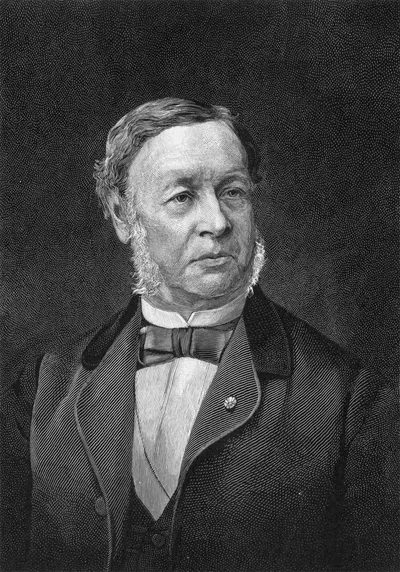
Theodor Schwann did not just study cells. He made them matter. Born in 1810 in Neuss, Prussia, and dying in Cologne in 1882, this German physiologist laid the groundwork for modern histology. He defined the cell as the fundamental unit of animal structure. Before Schwann, biology was messy. He brought order.
Why Schwann’s Cell Theory Changed Biology
You might ask why one German professor’s work mattered so much. Because he connected two separate worlds. In 1839, Schwann published Microscopical Researches into the Accordance in the Structure and Growth of Animals and Plants. In it, he took the cell theory developed for plants by Matthias Jacob Schleiden and applied it to animals.
Schleiden was at the University of Jena. Schwann knew him well. They were cofounders of the cell theory. That unification changed how scientists viewed life. It was no longer just “animal stuff” and “plant stuff.” It was all built from cells.
“The cell is the basic unit of animal structure.”
That sentence is the core of his contribution. It sounds simple now. Back then, it was revolutionary.
The Discovery of Pepsin and Early Enzymology
Schwann’s work extended beyond theory. In 1836, while studying digestion, he isolated a substance in the stomach. He named it pepsin. It was the first enzyme prepared from animal tissue.
This was not a minor footnote. It proved that digestion involved specific chemical agents. It set the stage for understanding how the body breaks down food at a molecular level. Schwann was not just an observer. He was an experimenter.
From Leuven to Liège: Where His Career Peaked
After graduating from the University of Berlin in 1834, Schwann worked under Johannes Peter Müller. Then, in 1839, he moved to the Catholic University of Leuven in Belgium. There, he observed yeast spores. He concluded that fermentation of sugar and starch was a life process.
This was a key step toward the germ theory of alcoholic fermentation. Louis Pasteur later elucidated these ideas. Schwann helped build the bridge.
In 1848, Schwann accepted a professorship at the University of Liège. He stayed there for the rest of his career. At Liège, he made several lasting contributions:
- He discovered the myelin sheath covering peripheral axons, now known as Schwann cells.
- He identified striated muscle in the upper esophagus.
- He coined the term metabolism to describe chemical changes in living tissue.
- He established basic principles of embryology, observing that the egg is a single cell that develops into a complete organism.
- He identified the role of microorganisms in putrefaction.
How His Work Shapes Modern Science
Why does this matter today? Because metabolism is the engine of life. We use the term daily. Schwann cells are essential for nerve function. Pepsin is a standard example of digestive enzymes. The cell theory is the foundation of biology.
Schwann’s later years focused on theological issues. But his scientific legacy is concrete. He turned observation into doctrine. He moved biology from description to mechanism.
The next time you learn about a cell, remember the man who made it the center of the story.