It isn’t about cutting through muscle or drilling into bone.
Just beads.
Tiny, tiny beads that block the flow.
For Cynthia Schraf-Fletcher 74 it was a lifeline.
After her first knee replacement left her with complications and lingering issues she looked for an out. She found it in Genicular Artery Embolisation.
Or GAE as the specialists call it.
Nearly a year later she says the treated knee feels almost identical to the replaced one.
Almost.
How it actually works
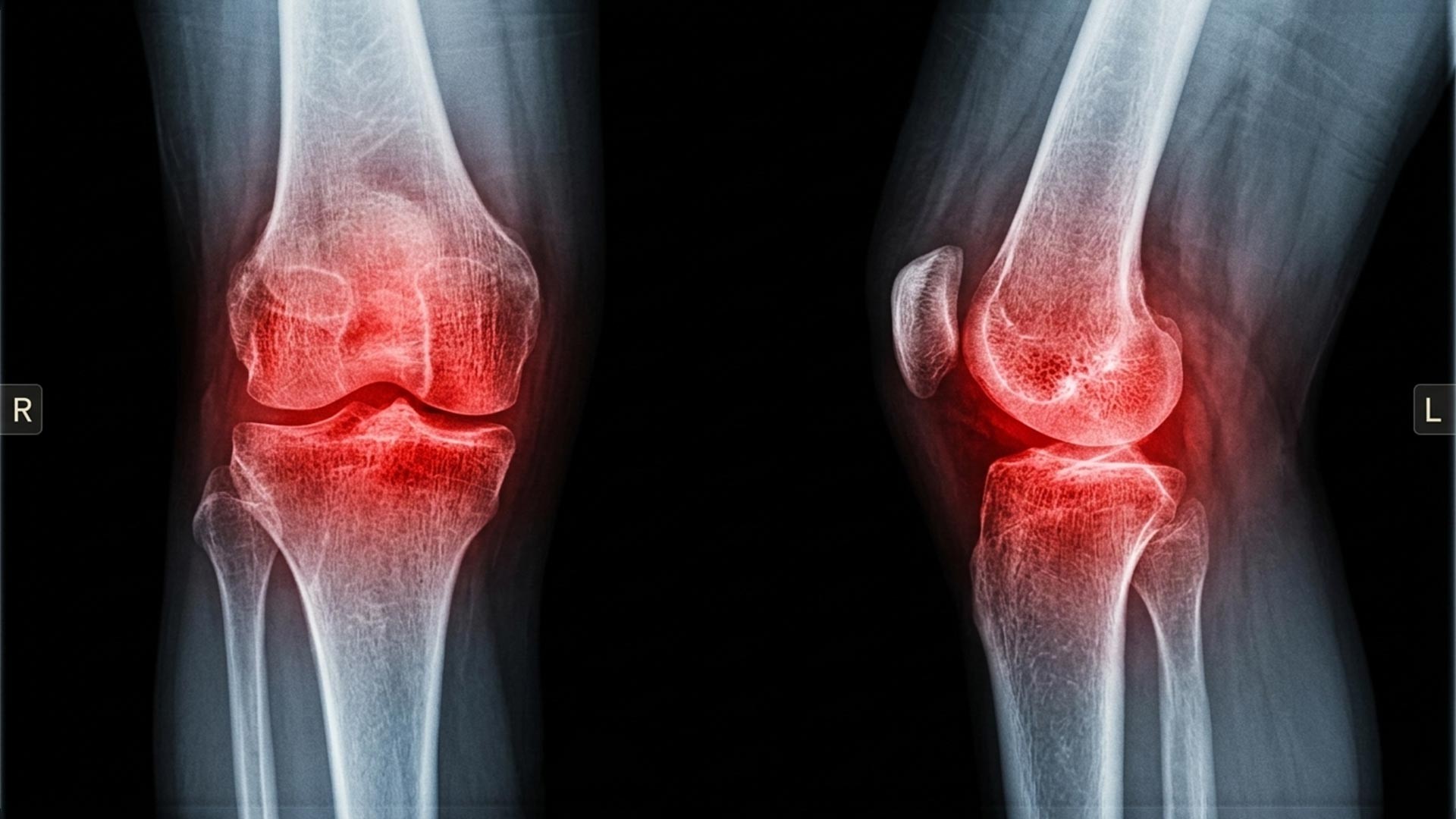
The pain isn’t always the joint itself grinding away.
It’s often the inflammation. The angry, swollen blood vessels that cluster around the knee capsule when osteoarthritis strikes.
Leigh Casadaban MD an interventional radiologist at the University of Colorado explains the logic simply.
Most treatment paths are blunt instruments.
Pills. Steroids. Physical therapy. And if those fail you get a new knee.
Total replacement.
“There really hasn’t been anything for patients in between.”
GAE sits right there in the middle.
It blocks the genicular arteries that feed those inflamed tissues. No blood flow means no fuel for the inflammation.
The swelling drops.
The pain recedes.
Casadaban calls it promising but precise.
Best for mild to moderate cases though it works on severe pain too. Just don’t expect miracles if the bone is ground to dust.
About 70 percent of patients report phenomenal results.
Some see their pain scores halved. Others wake up and realize they aren’t hurting at all.
Schraf-Fletcher got back to gardening. To stationary cycling.
Life without the white-knuckle grip of chronic ache.
Inside the catheter
The procedure is short.
One to two hours. You stay awake but relaxed under sedation.
A radiologist finds the femoral artery usually in the groin. Guides a thin catheter up to the knee. Uses X-rays and contrast dye to map the territory.
Then the beads go in.
They settle in the tiny arteries feeding the inflamed zones. Block the flow.
It’s mechanical. Quiet. Efficient.
You go home the same day.
Rest for a few days. Let the body adjust to the new circulation map.
The technique originated in Japan over a decade ago.
The FDA noticed. Since 2019 breakthrough device status has been granted for several GAE tools.
It’s no longer experimental fringe medicine.
It’s mainstream orthopedics trying something new.
Will the relief hold?
Time will tell but the early data looks strong.
Casadaban points to Japanese studies spanning four years.
One outpatient procedure. Four years of manageable pain.
In the US two-year data backs similar trends.
If the knee responds at first it tends to stay happy.
“We’re hopefully modifying something in the joint.”
He’s running trials right now to prove exactly what changes. Looking at joint fluid chemistry. Testing new devices like Nexsphere-F which aim to block the inflammatory vessels even more effectively.
“Symptom relief can last years.”
Is this the future for every joint?
Maybe.
Researchers are already eyeing the shoulder. Tennis elbow. The bottom of the foot.
Frozen shoulder causes misery just like knee osteoarthritis. Plantar fasciitis ruins mornings.
Why stop at the knee?
The biology is similar. The inflamed vascular network might be the common denominator across a dozen painful conditions.
Schraf-Fletcher looks back on her surgery and regrets only the delay.
She wishes she had tried GAE sooner.
Others are watching her walk out of the clinic.
Hoping it’s not just one good year.
But who knows.