It is confusing. It is beautiful. It makes no sense.
Astronomers have found a world that refuses to sit in its box. This isn’t a planet. It isn’t quite a star. It might be the biggest moon in the universe.
The system is CD-35 272. Or TIC 201426. They use different names, but it’s the same place. It sits 73 light-years away. You have to look toward the constellation of Columba to find it. It’s quiet there. Or it was.
Why Is This Brown Dwarf System So Complicated?
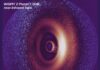
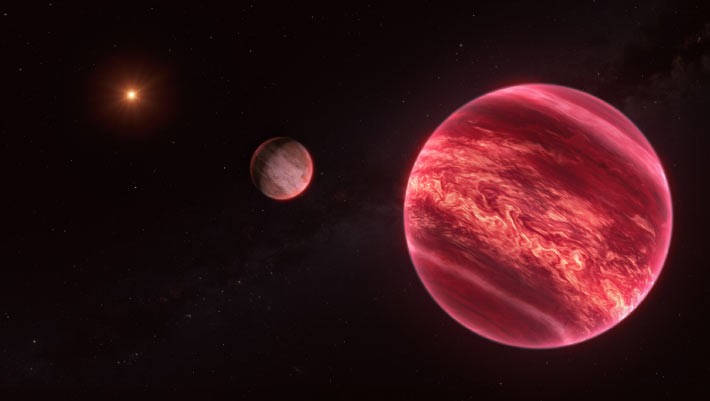
There is a star there. It orbits a brown dwarf. That brown dwarf is heavy—37 times the mass of Jupiter. And circling that? A gas giant.
Yes, you read that right. A gas giant circling a brown dwarf, which circles a star.
This object has a minimum mass of 0.9 Jupiter masses. That is planetary. It is huge. It has an orbital period of roughly 170 days. It wobbles the brown dwarf. Scientists detected these subtle shifts in motion using the CRIRES+ instrument on ESO’s Very Large Telescope.
But here is the rub.
In our Solar System, definitions are simple. The Sun is a star. Planets orbit stars. Moons orbit planets.
Here? The rules break.
“The exosatellite is clearly massive enough to call it a planet, but it does not orbit a Star. It orbits an object that orbits a Star.” — Kevin Hoy
Hoy is an ESO astronomer. He finds the language frustrating. He calls it a third wheel. A “giant gaseous body” orbiting a “highly massive companion.”
Is it a moon? It’s massive. Is it a planet? It doesn’t orbit a star directly.
“Being the third wheel… makes us want to call it a moon. Even if it is nothing like the small rocky moons we have here.”
Alice Zurlo from Universidad Diego Portales sees the same problem. She points out the clarity of our own backyard. We have clear delineation. Sun vs. planets. Planets vs. moons.
CD-35 27 22 blurs those lines until the ink runs together.
How Did We Actually Find This Object?
You cannot see this with a casual glance. You need tools.
The team applied the radial velocity method. It’s not about taking a picture. It’s about watching the dance. The brown dwarf wobbles slightly as the unseen partner swings around it. The instrument measured these wobbles. The data was undeniable.
This is the first plausible detection of such an object. An exosatellite.
Dr. Zurlo calls it exotic. She calls it a breakthrough.
The paper is out in Nature. Volume 655. 865-86. It’s real.
What Does This Mean for the Search for Exomoons?
Most searches look for planets around stars. Easy targets. Bright stars. Clear signals.
This discovery suggests we should look at brown dwarfs. They are substellar companions. They are abundant. They are messy. And they might host giants.
If you are hunting for these objects, where do you look? Look for wobbles around failed stars.
The system CD-35 2222 challenges our taxonomy. It forces us to rethink what “planet” and “moon” mean when gravity gets complicated. We define things by orbit. But what if the orbit is nested? What if the hierarchy collapses?
The sky is full of exceptions. We are just learning how to name them.
There are still so many objects we cannot classify. So many worlds that refuse to be one thing or another. Maybe that’s the point. The universe doesn’t care about our labels.