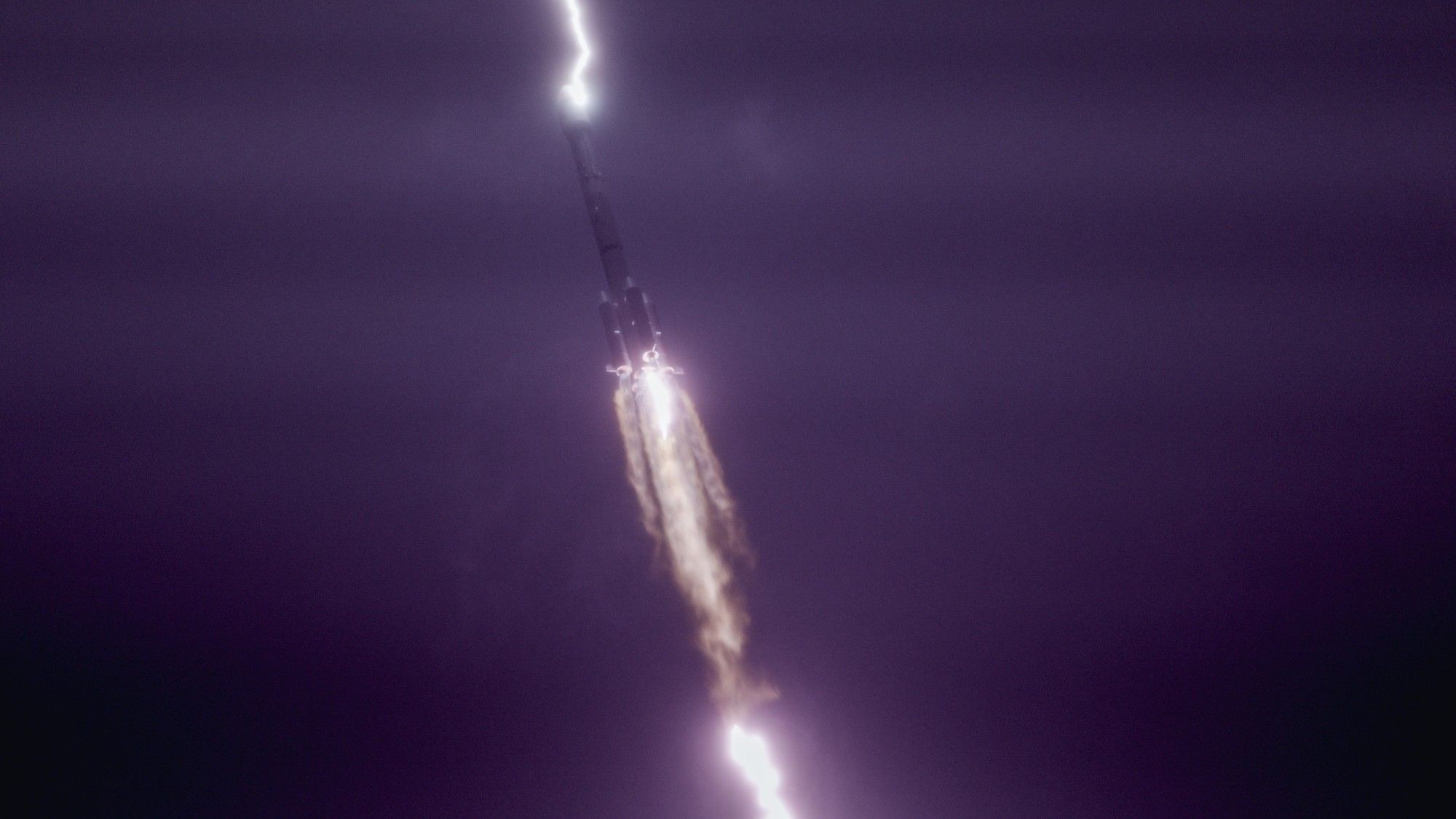
It was supposed to be a standard launch. Just another Thursday evening in Xichang. The Long March-3B cleared the tower, engines roaring against the humid air. Then, thirty seconds in, nature threw a curveball. A bolt of lightning struck the rocket mid-flight.
People watching from the ground didn’t just see a streak of light. They screamed. The video circulating online is chaotic, bright, and terrifyingly close.
But here is the part that usually doesn’t happen. The rocket kept going. It didn’t explode. It didn’t tumble into the ocean. The China Aerospace Science and Technology Corporation (CASIC) confirmed the payload—a communications relay satellite—made it to geostationary orbit exactly on schedule.
Why lightning strikes rockets (and why they usually survive)
You might wonder why a metal tube filled with explosives gets zapped so easily. It’s simple physics. Rockets create massive ionized plumes as they leave the atmosphere. They basically become lightning rods on steroids.
This isn’t a unique glitch. In fact, surviving a direct strike is more common than you think.
The satellite will relay communications for China’s Tiangong Space Station.
The recent Long March-3B launch on July 23 proved the modern Chinese space program is built to take a hit. But look back at the archives. NASA’s Apollo 12 mission got hit twice by lightning during launch. Twice.
The Saturn V rocket absorbed both bolts. Sure, some non-essential sensors took “permanent effects,” according to post-flight reports. But Charles Conrad, Alan Bean, and Dick Gordon still landed on the moon. The mission proceeded.
Then there is the Russian Soyuz in 2019. Lightning struck shortly after liftoff. The Glasnost communications satellite? Deployed successfully.
Which rockets fail after a lightning strike?
So why does this one matter? Because sometimes, it doesn’t go well.
In 1987, the Atlas/Centaur-67 took a hit. A single bolt. But this time, the lightning fried a guidance computer. The vehicle didn’t just veer off course; it broke up in the sky. NASA’s analysis of that disaster notes the strike ultimately caused the vehicle’s disintegration.
The difference? Redundancy. Modern systems like the Long March-3B and the Apollo Saturn V had enough backup or shielding to ignore the noise. The 1987 Atlas didn’t.
We still don’t fully know which variable tips the scale. Is it the angle of the strike? The phase of flight? Or just luck?
For now, the Chinese satellite is humming in orbit, talking to the Tiangong station. The lightning did its job, the rocket ignored it.
That’s about as close to a miracle as engineering gets. We keep building them higher. The sky keeps trying to bring them down.
Who’s winning?