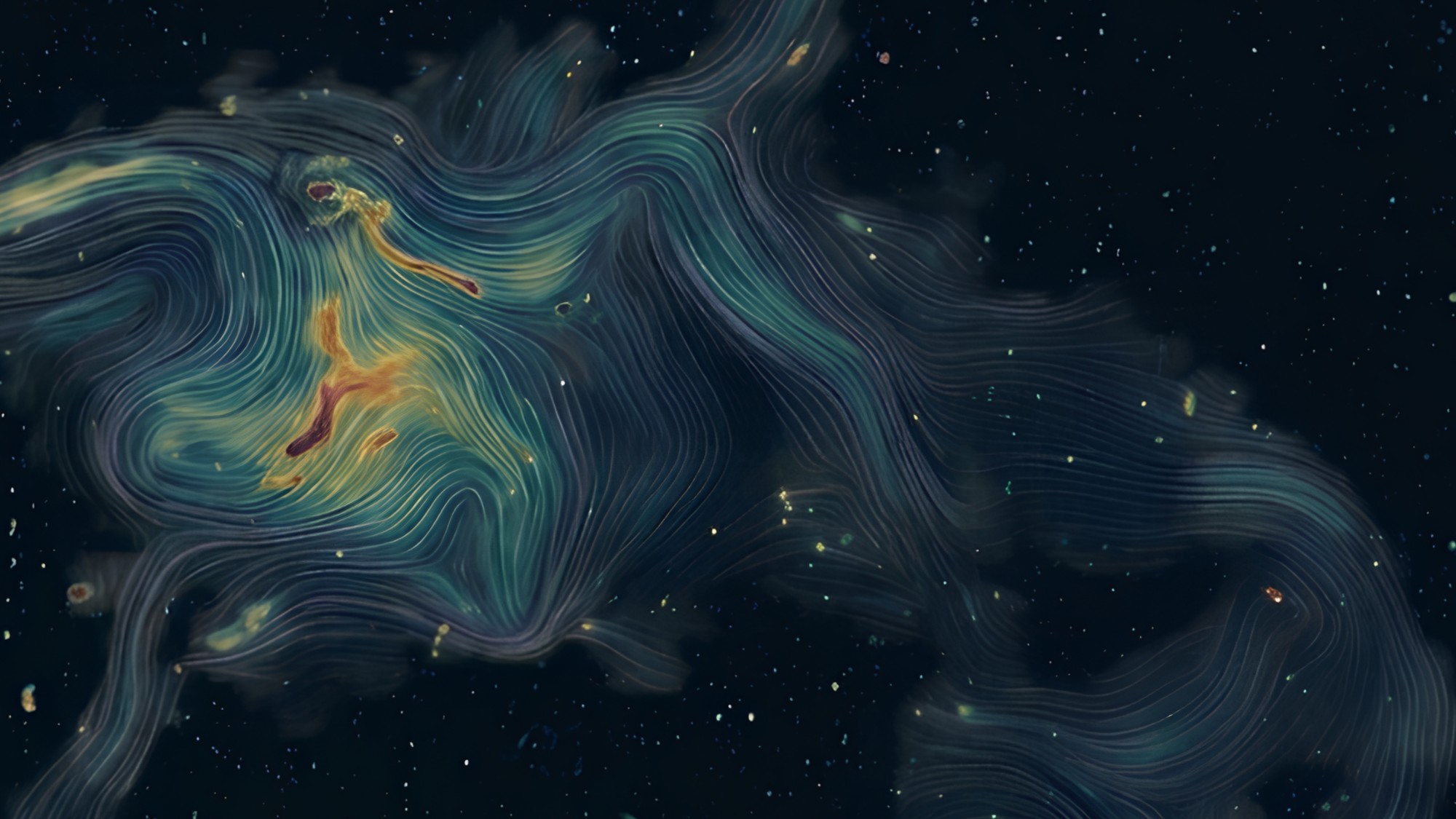
Astronomers have done it. They mapped the magnetic field of the galaxy cluster Abell 2025.
Wait, not 2025. Abell 2255.
It sounds like a typo, but it’s a real, massive cluster of galaxies sitting about a billion light-years away. And for the first time in history, we have a reconstruction of its magnetic field. All the way from the center out to the edges.
The tool that made this possible? LOFAR. The Low Frequency Array, based in Europe. It’s a radio telescope. And it just took the deepest look at the universe ever recorded for this specific target.
How radio waves unlock hidden magnetic structures
You can’t see magnetic fields with your eyes. But you can see what they do.
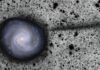
In Abell 2255, electrons are screaming along at near-light speed. These relativistic particles dance with the cluster’s magnetic field. This interaction creates vast, diffuse clouds of radio emission. It’s like watching dust motes swirl in a sunbeam to figure out where the air currents are.
The LOFAR Galaxy Cluster Ultra-Deep Fields project used 224 hours of observation time. That’s nearly a full day of staring at the same patch of sky. They collected data so rich it revealed that the magnetic field isn’t just noise. It’s structured. Organized.
“Obtaining very sensitive images… is crucial to understanding how electrons are accelerated… and magnetic fields are amplified,” team leader Andrea Botteon from the Italian National Institute for Astrophysics explained.
The signal is elusively weak. Detecting electrons moving in faint fields is notoriously difficult. But Botteon and his team didn’t just collect data. They applied a novel analysis technique to it. A new way of seeing.
Why the orientation matters for galaxy cluster formation
So what did they find?
The magnetic field lines aren’t random. They mirror the motion of gas. Gas that moved during the cluster’s formation.
Think of the cluster as a cosmic sculptor. As gas rushes in, it stretches and compresses the magnetic fields. It carves them into specific shapes.
In some zones, the field lines stretch radially. They follow the long tails of radio emissions like spokes on a wheel.
In other zones, dominated by shock waves? The lines orient tangentially. Perpendicular to the flow.
The coherence of the magnetic field lines suggests the morphology is intimately linked to the dynamics of thegas… where it can be ‘stretched or compressed’.
This matters. Because it provides the first direct observational evidence linking two massive phenomena. The growth of the largest structures in the universe—the clusters themselves—and the amplification of their magnetic fields.
They are linked. You can’t have one without the other shaping up.
Where the field lines point next
This isn’t just academic geometry. It’s about how the universe builds its skeleton.
Galaxies cluster together. Gas accretes. The largest structures grow. And somewhere in that violence, the magnetic field gets woven into the fabric of space.
The study suggests that the mechanism turning on these gigantic radio emissions is tied to the very process of cluster formation. It’s not a byproduct. It’s part of the engine.
We’ve spent years looking at radio waves as static background noise. Or as isolated sources. But this map changes the context. The field is dynamic. It reacts. It remembers the movement that created it.
Botteon’s team has shown us that if you look hard enough, the universe reveals its wiring.
But it raises more questions than it answers. Which other clusters hold similar secrets? Are these radial patterns universal, or unique to Abell 2255? And how does this magnetic architecture influence star formation within the galaxies themselves?
The map is drawn. The field is traced. But the story of how these giant structures truly grow is still being written, line by magnetic line.