The story is changing.
We used to think early land-walking ancestors lived like frogs. Swim in the water. Hatch with gills. Then, one day, morph into adults. A classic metamorphosis. A bridge across the evolutionary gap.
It makes sense intuitively.
“We have for a very long time assumed… that this life cycle would bridge the gap,” Jason Pardo told the Chicago papers. Or maybe it just didn’t happen.
Jason Pardo and his colleague Arjan Man dug through fossils from Mazon Creek. South of Chicago. Digged up between the ’60s and ’90s but only recently really studied. They’re from the Carboniferous. Roughly 307 to 309 million years old.
They found Embolomeres. Big things. Two meters long as adults. Top predators. Mostly aquatic. Small legs. Good for clambering out, maybe, but they spent most days underwater.
Here’s the kicker.
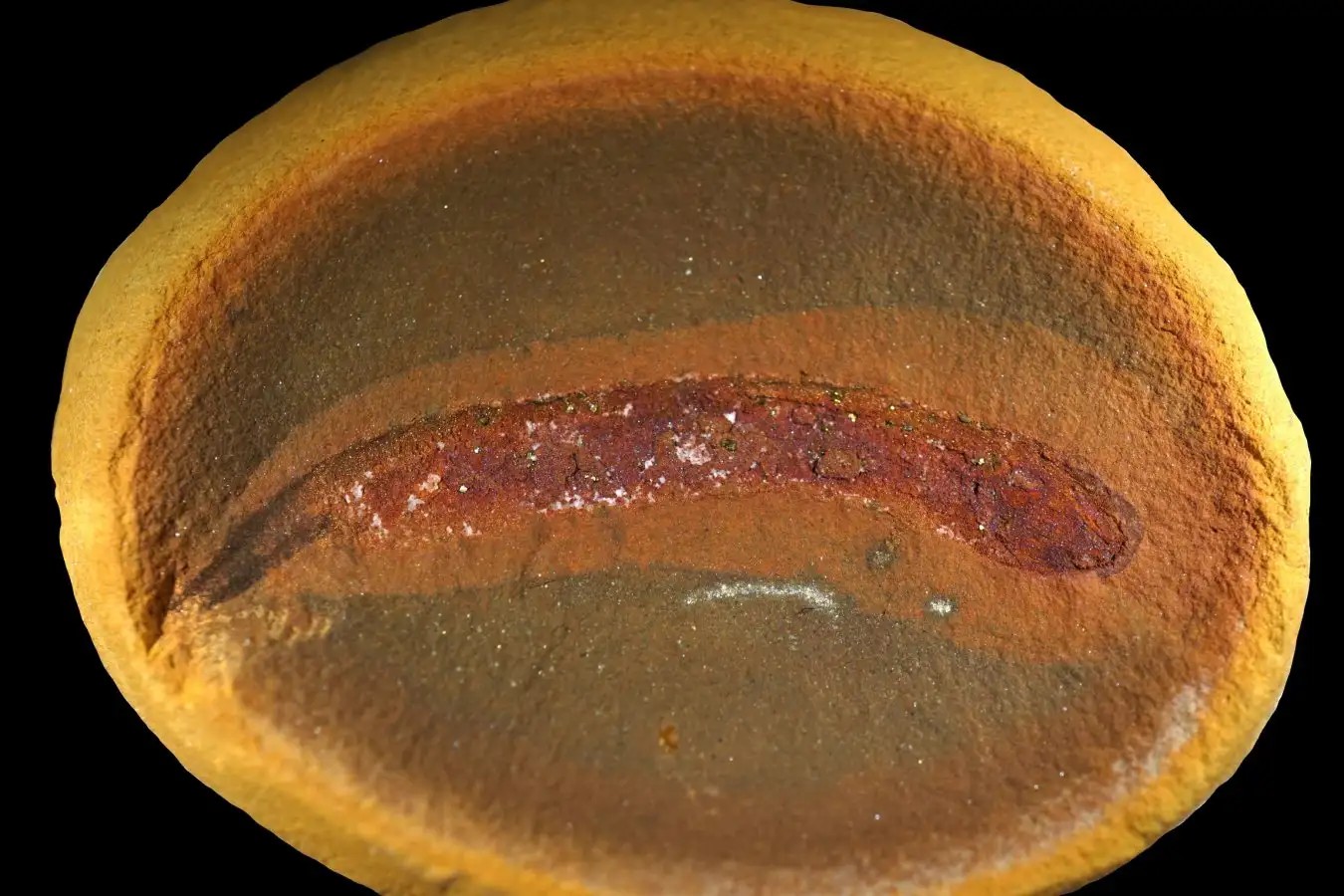
They found two babies. Just two centimeters long. Exquisitely preserved. Soft tissues visible. Even yolk sacs.
In a frog? The yolk sac stays inside after hatching. Energy store. Gone in a few days.
These Embolomere kids? The yolk sack hung outside. Like young fish. Like lungfish.
But no gills. No external filaments hanging from their heads. Amphibian larvae have them. They need them. To breathe the water while they grow.
Pardo calls the missing gills the “smoking gun.”
No gills. Outside yolk. A skeleton that looked like a mini-adult. Not a tadpole. Not even close. The skull, the limbs, the spine—all the parts were there. Just scaled down.
“Our bodies basically work the same way… we don’t undergo the sort of fast… change you see in a frog,” Pardo explains.
Human babies look like little adults. Proportions shift. Size explodes. But no drastic biological reboot.
This suggests the earliest terrestrial ancestors skipped the dramatic makeover. They just grew.
Was this an exception? Maybe. The team checked two other tetrapod species from the same place. Same time.
Nothing.
No tadpole stages anywhere. Early lungfish? Same. Coelacanths? Same.
“So is it impossible that a tadpile stage showed up… and was subsequently lost? Maybe.”
It’s vanishingly unlikely though. The data just doesn’t support it.
John Long from Flinders University sees this as a necessary patch on our understanding. For a while, some scientists argued you had to go through a tadpole phase to invade the land. A mandatory biological rite of passage.
The fossils say: you didn’t need the intermediate step.
So how did they actually conquer the dry land? That part remains… well. Quiet. 🌿