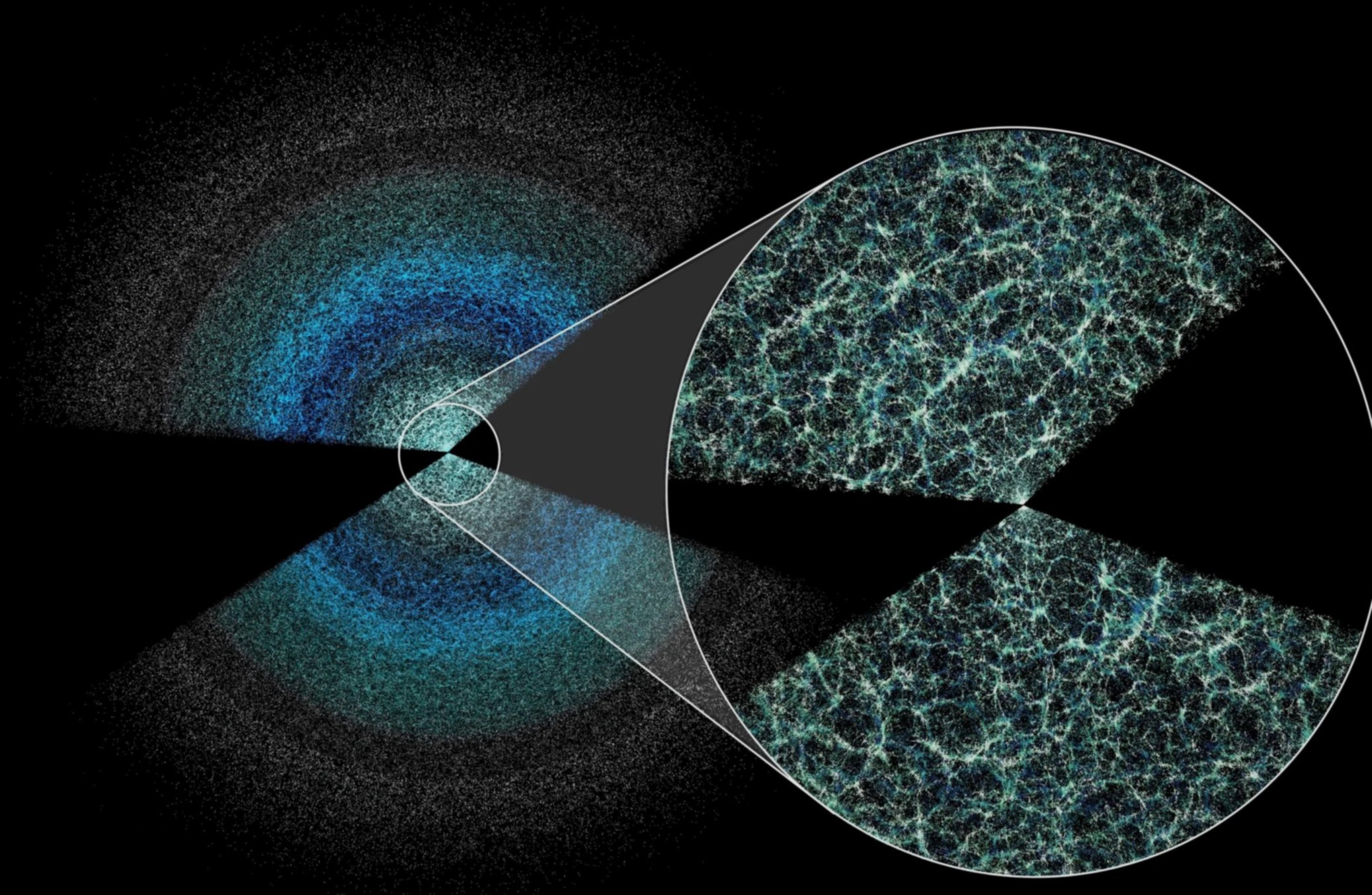
Scientists have reached a historic milestone in cosmology by completing the largest and most detailed 3D map of the universe ever created. Utilizing the Dark Energy Spectroscopic Instrument (DESI), researchers have successfully mapped an unprecedented volume of the cosmos, providing a massive new dataset designed to solve one of physics’ greatest mysteries: dark energy.
The Scale of the Discovery
The DESI project has surpassed its original goals, completing its primary observations ahead of schedule and yielding far more data than initially anticipated. This high-resolution map is not just a visual achievement; it is a statistical powerhouse.
The survey has cataloged:
– 47 million galaxies and quasars
– 20 million stars
To put this in perspective, DESI has gathered data on six times as many galaxies and quasars as all previous astronomical measurements combined. This sheer volume of data allows scientists to move beyond mere observation and into high-precision testing of how the universe behaves on a grand scale.
Why Dark Energy Matters
To understand the significance of this map, one must look at the composition of our universe. Current scientific consensus suggests that roughly 70% of the cosmos is made of dark energy —a mysterious force that acts as a sort of “anti-gravity,” driving the accelerated expansion of the universe.
Despite its dominance, we do not truly know what dark energy is or how it behaves. For decades, scientists have operated under the assumption that dark energy is a constant force. However, the massive dataset provided by DESI offers a chance to test a more radical possibility: that dark energy might be evolving over time. If the data shows that the strength of dark energy changes, it would force a fundamental rewrite of our understanding of physics and the ultimate fate of the universe.
A Global Effort Overcoming Obstacles
The DESI project is a monumental international collaboration, involving over 900 researchers from more than 70 institutions worldwide. Managed by the Lawrence Berkeley National Laboratory, the project has seen significant contributions from various global entities, including major roles played by researchers at The Ohio State University.
The mission was not without its hurdles. In 2022, the project faced a major disruption when the Contras wildfire severed power and internet access at the observatory for several months. Despite these logistical setbacks, the team utilized creative technical solutions to maintain data quality, ensuring the survey remained on track.
What Comes Next?
While the primary mission of mapping the target area is complete, the work is far from over. The project is entering a multi-stage transition:
- Data Processing: The team is beginning to process the massive five-year dataset, with the first comprehensive results expected to be published in 2027.
- Extended Observations: DESI will continue collecting data through 2028, expanding its gaze into more challenging regions of the sky.
- Refined Mapping: Future phases will focus on smaller, more intricate structures, such as dwarf galaxies and stellar streams, to better understand how cosmic structures formed and evolved.
“A larger survey footprint will greatly improve our constraints on cosmological parameters and improve our dark matter program,” noted Klaus Honscheid, lead scientist of DESI instrument operations.
Conclusion
By mapping tens of millions of cosmic objects, DESI has provided the scientific community with an unprecedented tool to probe the nature of dark energy. As researchers begin analyzing this massive dataset, we may be on the verge of a paradigm shift in how we understand the expansion and eventual destiny of our universe.