For decades, a prevailing theory in paleoanthropology suggested that Neanderthals vanished because they were cognitively inferior to the early modern humans (Homo sapiens ) who migrated into Eurasia. The assumption was simple: more advanced brains meant better survival skills, leading to the eventual replacement of the Neanderthal species.
However, a new study published in the journal PNAS challenges this long-held narrative, suggesting that the anatomical differences between the two species may have been far less significant than previously believed.
The Illusion of Anatomical Superiority
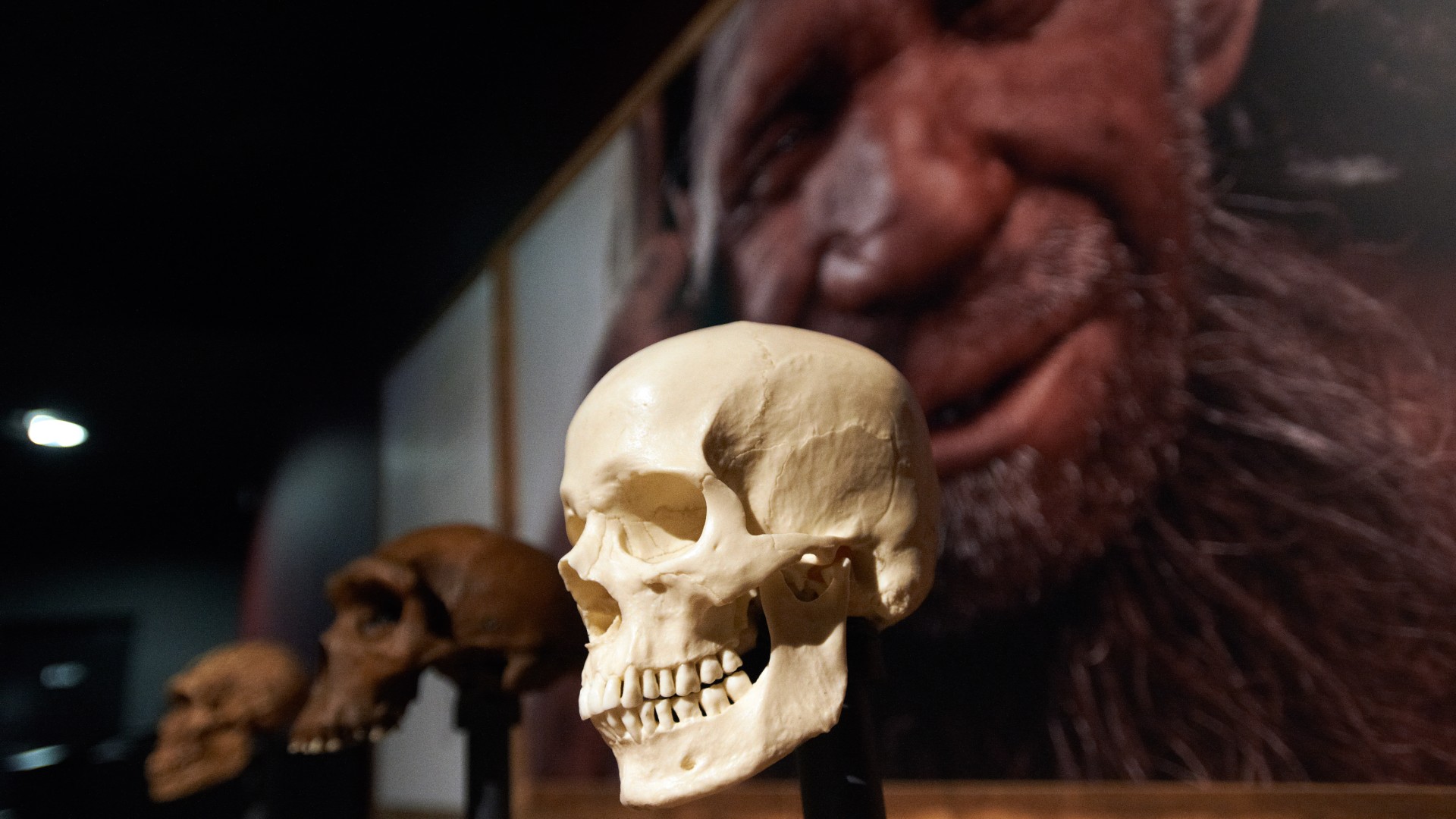
Historically, scientists have pointed to the distinct shapes of Neanderthal and modern human skulls to infer different mental capabilities. Neanderthal skulls were characterized by:
– Longer, lower cranial shapes
– Heavier brow ridges
– Larger nasal openings
Because the internal structure of the skull (the endocranium) differed from the more globular shape of modern humans, many experts concluded that Neanderthals lacked the capacity for complex speech, long-term planning, or advanced short-term memory.
A New Perspective on Brain Variation
The research team, led by anthropologist Tom Schoenemann of Indiana University Bloomington, argues that these conclusions were flawed because they failed to account for the natural diversity found within the human species itself.
To test this, the researchers compared MRI datasets from two modern populations: 100 ethnic Han Chinese and 100 Americans of European ancestry. Their findings were striking:
– In nearly 70% of the brain regions studied, the volume differences between the Chinese and American groups were actually larger than the differences previously measured between Neanderthals and early modern humans.
“This evidence does not support the idea of Neanderthals having significantly different brains and cognitive abilities compared to anatomically modern humans that existed at the time,” Schoenemann noted.
If the brain variations we see between modern human populations are not considered evolutionarily significant, it follows that the differences between Neanderthals and Homo sapiens likely weren’t significant either.
Cognitive Gaps vs. Evolutionary Reality
The study did find minor correlations between brain anatomy and certain functions. Specifically, some differences were linked to attention and inhibition, suggesting Neanderthals might have had slightly lower executive functioning.
However, the researchers cautioned against over-interpreting these findings for two reasons:
1. Weak Correlations: The link between brain anatomy and actual cognitive performance is notoriously weak.
2. Minimal Impact: Even if these minor differences existed, they were likely too small to drive a species to extinction.
Why Did They Actually Disappear?
If intelligence wasn’t the deciding factor, what was? The study shifts the focus away from “brain power” and toward demographics and genetics.
The researchers suggest that Neanderthals may have been victims of “genetic swamping.” This occurs when a smaller population is absorbed by a much larger, incoming population. As Homo sapiens moved into Neanderthal territories, their sheer numbers may have overwhelmed the Neanderthal gene pool, leading to their disappearance through integration rather than competition for resources or intelligence.
This theory aligns with recent models suggesting that the integration of modern humans into Neanderthal populations could have led to the latter’s disappearance in as little as 10,000 years.
Conclusion
The disappearance of the Neanderthals was likely not a matter of intellectual inadequacy, but rather a result of demographic shifts and genetic absorption by the expanding Homo sapiens population.