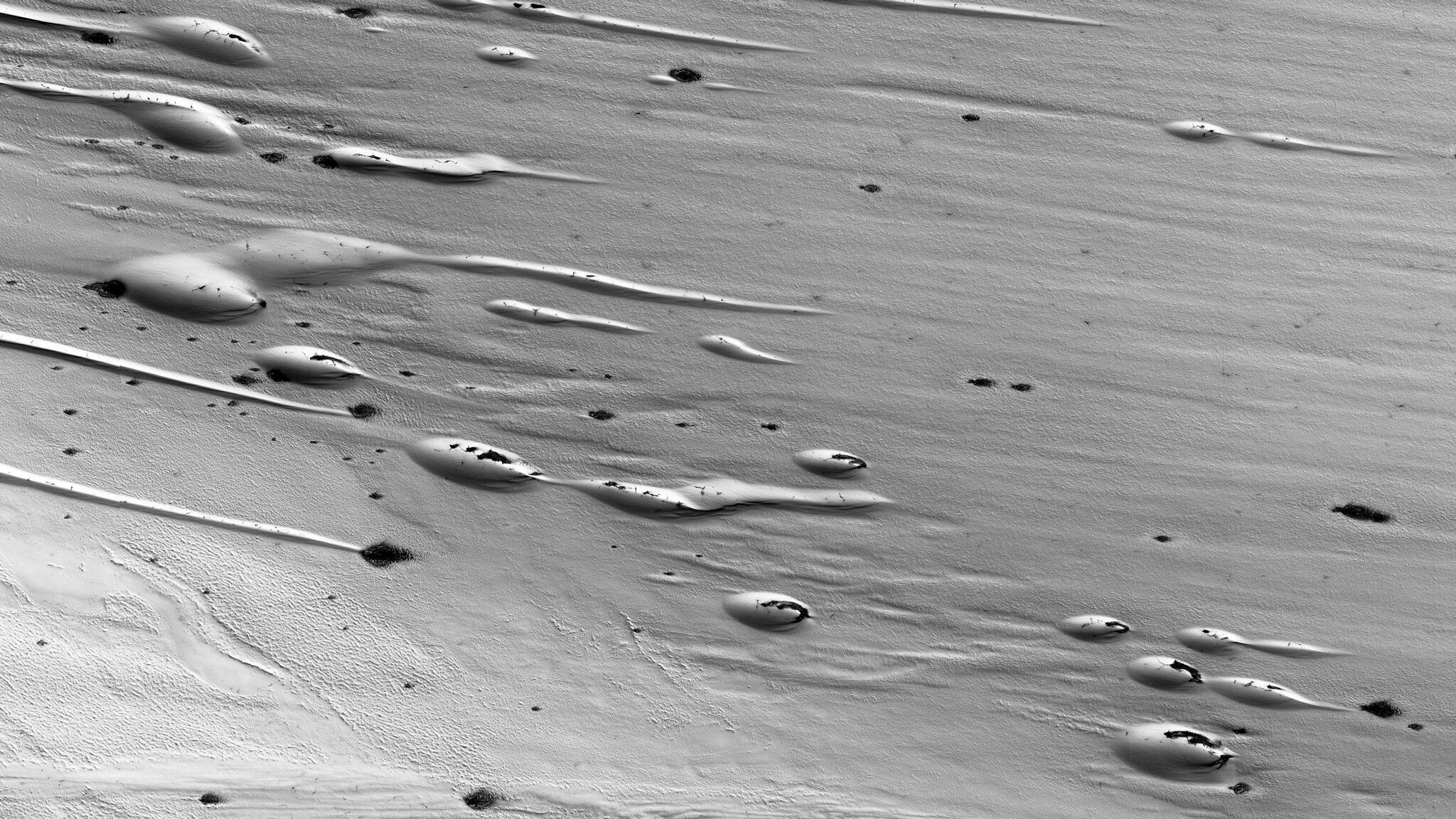
A recent high-resolution image captured by NASA’s Mars Reconnaissance Orbiter has provided a striking look at the seasonal shifts occurring on the Red Planet. As Mars enters its springtime, the northern ice cap is undergoing a visible transformation, characterized by melting ice and shifting sands.
Seasonal Transitions on the Martian North Pole
The image, taken by the HiRISE (High Resolution Imaging Science Experiment) camera, focuses on Chasma Boreale, a massive valley located within Mars’ northern ice cap. The valley is a dramatic geological feature, with walls that soar approximately 4,600 feet (1,400 meters) above its relatively flat floor.
The photograph reveals several key environmental processes:
- Ice Recession: Evidence of melting ice is visible across the landscape, marking the transition from the Martian winter to spring.
- Aeolian Activity: Crescent-shaped sand dunes streak across the surface. The sharp tips of these dunes serve as a natural compass, indicating the direction of prevailing winds on the planet.
Why These Observations Matter
While Mars is a frozen, desolate world, the seasonal melting at Chasma Boreale highlights a fundamental truth about planetary science: dynamic environments exist even in the most extreme conditions.
The movement of ice and sand is not merely a visual phenomenon; it is a critical data point for scientists. By studying how ice recedes and how dunes migrate, researchers can better understand the Martian climate, the composition of its atmosphere, and the historical evolution of its water cycle. This seasonal “thaw” provides a window into the active processes that continue to reshape the Martian surface today.
A Universal Connection
Despite being hundreds of millions of miles away, the seasonal changes on Mars mirror the cyclical patterns we experience on Earth. This visual evidence serves as a reminder that even the most alien landscapes are governed by the same fundamental physics of temperature, wind, and phase changes that drive life and geology on our own planet.
The melting ice and shifting dunes at Chasma Boreale offer a rare, high-definition glimpse into the seasonal rhythms of another world.
Conclusion
The latest HiRISE imagery confirms that Mars is far from a static world, showcasing a planet undergoing active seasonal changes through ice melt and wind-driven sand movement. These observations continue to bridge our understanding of planetary climates across the solar system.