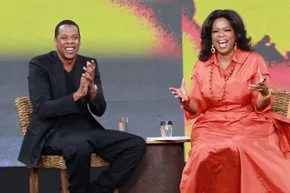
The lighting in the studio is bright. There was complete silence in the audience. Then the woman sitting on the couch in the middle started crying. It’s raw. It’s very messy. The host doesn’t stop. They go above and beyond and ask intimate questions that make guests wonder if they realize how vulnerable they are. You may feel embarrassed, but you can’t look away. You are hooked.
Behind the scenes, producers are high-fiving They just got their moment. That unique uncomfortable tension? It is the driving force behind the talk show.
At its core, a talk show is simple. This is a TV program built around interviews. There’s a host, sometimes a panel. There’s strict clocks ticking down. The standard format runs for one hour That’s about 42 minutes of actual content without commercials. Most of these performances are recorded in front of a live studio audience, but are rarely broadcast in real time. They are filmed in batches, edited and included in the schedule weeks or months later.
This is not a new idea. In the 1920s, people gathered around furniture-sized radios and listened to audio versions of what we now call talk shows. But what about modern TV formats? This was an invention in the 1960s.
How Phil Donahue Changed the Format
Before the 1960s, TV talk shows were boring. formal. boring. And then there’s Phil Donahue.
Donahue struggles. His show, taped in Dayton, Ohio, failed to attract big-name celebrities. So he took desperate measures. He grabbed the microphone and turned to look. He asked them for their opinions on guests or current events.
It worked. The audience members loved being the stars for a few minutes. Viewers at home loved the authenticity.
The pilot episode aired in November 1967 as “Conversation Corner”, later renamed “Phil Donahue”. The form he established has not changed much. Use controversial material or guests to spark public service-like discussion.
Modern talk show themes and styles
Today, the same DNA has been preserved intact. It’s everywhere. Topics ranged from simple interviews to celebrity scandals, financial hardship, public health threats, sexual abuse, human rights and social causes.
However, the structure is different.
Some shows still rely on a single host and focus purely on guest interviews. Some have adopted the style of variety shows. These panels may include a cooking section, fitness tips, health advice, or product demonstrations. This is more of a lifestyle presentation than an interview.
Then there are the cerebral ones.
A program that focuses exclusively on economics, politics and literature. Consider Wall Street Week. It aired on PBS from 1970 to 2005 and at its peak drew more than 4 million viewers each week. It was serious. It was dense. It was successful.
The program was revived in 2014 under the direction of Susan Krakauer. I’ve found that even a niche smart talk show can have a lifetime if the audience is interested.
Internet and the new wave
The Internet has changed everything.
Almost anyone can now host their own talk show. You don’t need a PBS grant or a network slot. All you need is a camera and a concept.
Let’s take “this week” as an example. This is a web-based talk show network. Includes news, guest interviews and interactive audience segments. It’s ushering in a new era of options.
The hierarchy is gone. The gatekeepers are gone. If you want to talk about something, you can start a presentation. The drama remains the same. Viewers are still enthralled by the human turmoil unfolding on the screen.
But the medium? It’s wild.