They look like twinkling stars. They act like blinking lights. But pulsars are something else entirely. They are the dense, spinning corpses of massive stars, firing beams of radiation across the cosmos with metronomic precision.
In 1967, Antony Hewish and Jocelyn Bell Burnell detected the first one using a radio telescope. What they found wasn’t just a new star. It was a cosmic lighthouse.
Since that discovery, we have identified over 550 of these objects. They are not all the same. But they all share one trait: they pulse. The intervals between those pulses range from a thousandth of a second to four seconds. That speed is insane. A pulsar spinning that fast has to be incredibly dense.
How a Spinning Neutron Star Creates Light
Most people think of stars as balls of fire. Pulsars are balls of neutrons. They are the collapsed cores of massive stars that exploded as supernovae. The gravity is so strong that protons and electrons smash together to form neutrons. The result is an object about 20 kilometers across but with the mass of the Sun.
So how do they pulse?
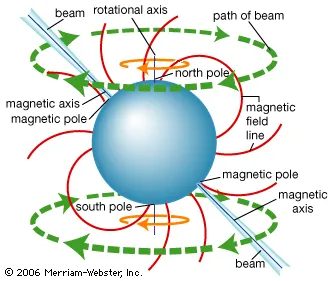
It starts with rotation. The star spins rapidly. It also has a powerful magnetic field. The axis of that magnetic field does not line up with the axis of rotation. This mismatch is key.
Charged particles from the surface get caught in the magnetic field. The field accelerates them to near light speed. As they spiral around the magnetic poles, they emit radiation. This radiation shoots out in tight beams.
Imagine a lighthouse on a rocky coast. The light sweeps across the water. If you are on a ship, you see a flash. Then darkness. Then another flash. Pulsars work the same way. The beams swing around. When they point at Earth, we see a pulse. When they point away, we see nothing.
This is the pulsating radio star in action. While most are detected via radio waves, some emit visible light, X-rays, and gamma rays too.
The Slow Decay of Cosmic Clocks
Pulsars are not eternal. They are losing energy. The rotation slows down. The deceleration is tiny. Typically, it is about a millionth of a second per year. You wouldn’t notice it. But over time, it adds up.
Calculations suggest these objects “switch off” after roughly 10 million years. That is a blink in cosmic time. Eventually, the magnetic fields weaken. The beams stop. The lighthouse goes dark.
Why does this matter?
Because for those 10 million years, they are the most regular timekeepers in the universe. Their pulses are so steady that scientists use them to test theories of gravity. They help us understand what happens to matter under extreme pressure. They act as natural laboratories for physics that we can’t replicate on Earth.
We know more about pulsars than we do about many places on our own planet. They are remnants. Ghosts. But they are still talking to us. Just in pulses.