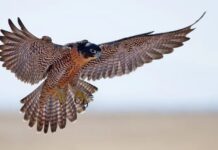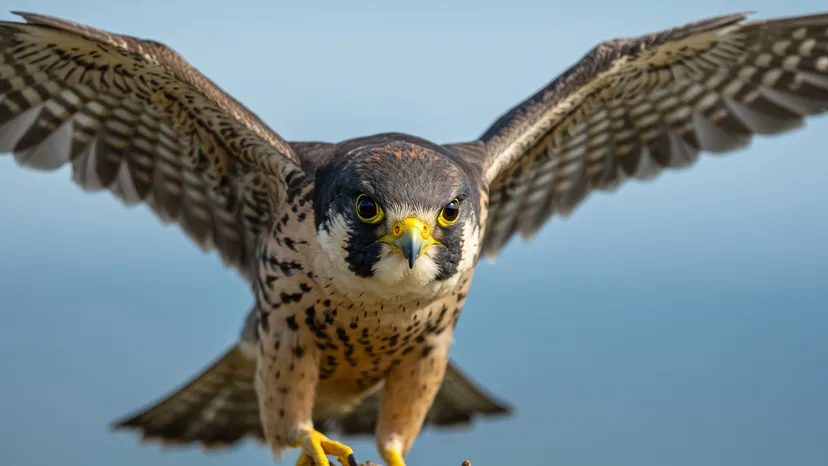
You see the silhouette first. Sharp talons. A hooked beak. Wings tapered to a point for cutting through air at breakneck speeds. It’s a falcon. Simple enough.
But then you spot another. And another. Suddenly, a question pops up: What is a group of falcons called?
It’s not a flock. Not really. That word feels too generic, too crowded. Falcons don’t really do “crowded.” They prefer precision. They prefer hunting alone or in small, coordinated units.
A Cast of Falcons
The term you’re looking for is a cast.
This isn’t just some random poetic flourish. It comes straight from the dusty, leather-gloved world of falconry. Back when humans trained these birds for sport, a “cast” referred to a small group of hawks or falcons flown together. Usually just two or three. Maybe four if you were particularly ambitious.
Think about the geometry of it. A cast implies structure. A cast implies something built to be thrown or sent forth.
In the wild, you won’t often see large gatherings of these raptors. They are territorial. They are solitary hunters by instinct. But the terminology stuck. It survived the decline of the sport and remains the correct collective noun.
It distinguishes them from the rest of the avian crowd. Geese have a flock. Turkeys have a gang. Ravens have an unkindness. Falcons have a cast.
Why the Distinction Matters
Why does this specific terminology matter? It reflects behavior.
A flock suggests a mass movement. A chaotic, unified direction. Falcons don’t move like that. They strike. They dive. They operate with individual agency, even when in numbers.
The word “cast” also hints at their relationship with humans. These birds were worked closely with people for centuries. The language of their groups is tied to their domestication and utility.
It’s a small linguistic detail. But it reveals how we view these animals. Not as wild masses, but as partners. Or at least, as creatures we tried to organize and direct.
So the next time you’re on a ridge and spot two Peregrines riding the thermals together, you can say it with confidence. They aren’t flying in a flock.
They are in a cast.
Falcons aren’t just solitary hunters. They are part of a massive, diverse family of raptors. This group includes hawks, eagles, and owls. But birds have a strange habit. They invented their own names for groups. It’s not just about counting heads. It’s about culture. And history.
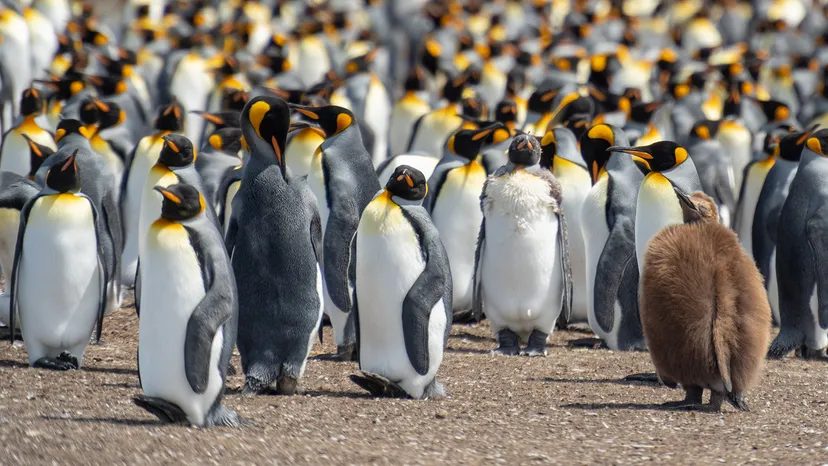
You’ve probably heard the classics. A murder of crows. A parliament of owls. A gaggle of geese. Or maybe a skein if they are flying in formation. Then there’s a covey of quail. A waddle of penguins. These terms are practical. They help you describe what you see. But they are also poetic. They hint at behavior.
Look at ducks. If you see a large group on water, it’s a raft. If you spot hens together, that’s a brood. Flamingos? You can call them a stand. Or a flamboyance. The word changes depending on how they look.
Collective Nouns in the Bird World
Sparrows. Robins. Starlings. Each species has its own label. These words didn’t appear overnight. They are rooted in centuries of language. Think about starlings. When hundreds or thousands move together, it’s a murmuration. The word captures the fluid motion. It sounds like the sound they make.
Ravens are darker. Their groups have darker names. An unkindness. A conspiracy. The names suggest mischief. Or mystery.
Some names are less common. You might encounter a colony of gulls. A bevy of doves. These terms highlight social structures. They also highlight mystery. Especially for birds like falcons. Or hawks. Or vultures. We don’t see them as often. When we do, the words we use for them feel ancient.
Falcons in the Sky
When it comes to falcons, the language gets interesting. You might hear a group of these birds called a cast. This term applies to hawks too. A cast of hawks. A cast of falcons. It sounds like a theatrical troupe. Or a group of actors on a stage.
Why does this matter? It changes how we see them. We don’t just see predators. We see participants in a social system. A cast implies structure. It implies that they are together by choice. Or by circumstance.
Some sources might also use the term a “flight” of falcons. But “cast” is the more specific, literary term. It appears in older texts. It connects us to the past. When you look up and see a falcon soaring, you aren’t just seeing a bird. You are seeing a member of a cast.
This isn’t just trivia. It’s how humans make sense of nature. We name things to control them. Or to understand them. The names stick. They survive. A murder of crows. A parliament of owls. A cast of falcons.
Which one will you use next time? It depends on the bird. And the mood.
Migration and Hunting Dynamics
You don’t see them hanging around in flocks like starlings. Falcons rarely gather in large numbers. The instinct is solitary. They are apex aerial hunters. Speed. Sharp eyesight. Stealth. These traits make them admired. But not always alone.
During migration, things change. They group temporarily. Why? Energy conservation. Wind currents. They ride the thermals together. It saves calories. It reduces fatigue. The long journey demands efficiency.
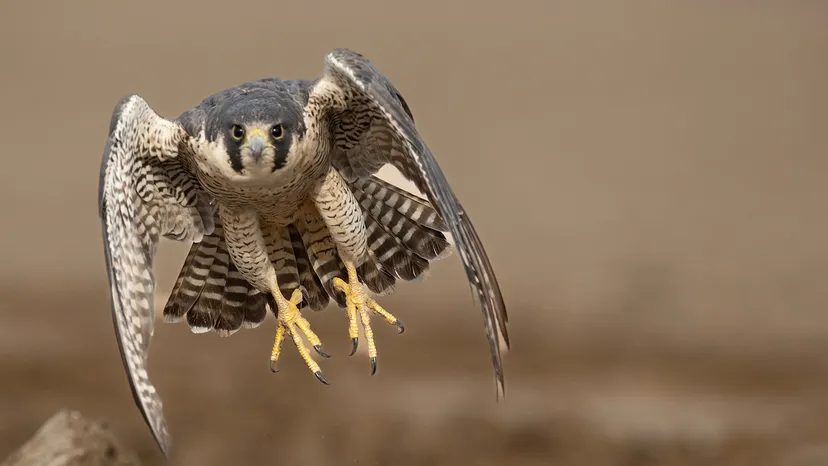
Prey availability matters too. If an area has abundant food, you might see more than one. Not a crowd. A small cast. Near cliffs. On open plains. Peregrine falcons fit this pattern. They are among the fastest animals on Earth. Typically solo. But you may spot a few together when conditions align.
The Apex Predator Mindset
Falcons are built for isolation. Their hunting style relies on surprise. Speed is their weapon. They dive. They strike. A group interferes with this precision. So, they avoid each other outside of specific moments.
These moments are temporary. Migration is one. Abundant prey is another. Even then, they don’t form social bonds like crows or pigeons. They tolerate proximity. They don’t socialize.
How to Spot Them Together
Where do you look? Cliffs. High vantage points. Open plains where prey is exposed. These are the hubs. If you’re birding, check these areas during migration seasons. You might catch a glimpse of a small group. Not a spectacle. Just a few birds sharing the sky for a brief window.
Their speed is legendary. But their social behavior is limited. They gather when necessary. They part when the need passes. It’s practical. It’s efficient. It’s falcon logic.
Why It Matters
Understanding their behavior clarifies conservation efforts. Habitat protection isn’t just about space. It’s about connectivity. Migration routes. Prey abundance. These factors determine when and where they intersect. Protecting these areas ensures their survival. And our ability to observe them.
They remain solitary champions. But in numbers, they show a different side. Temporary. Functional. Striking.
The Reality of Falcon Sociality
Don’t expect to see dozens. It doesn’t happen. Their biology doesn’t support it. They are hunters. Not flockers. Any grouping is situational. Temporary. Purposeful.
When you see them together, it’s a rare glimpse into their adaptive side. Not their natural state. Natural state is solo. Solo is safe. Solo is fast. Solo is how they survive.
But in the right moment, they share the sky. Briefly. Effectively. Then they’re gone. Back to the hunt. Back to the solitude. That’s the truth about falcons.