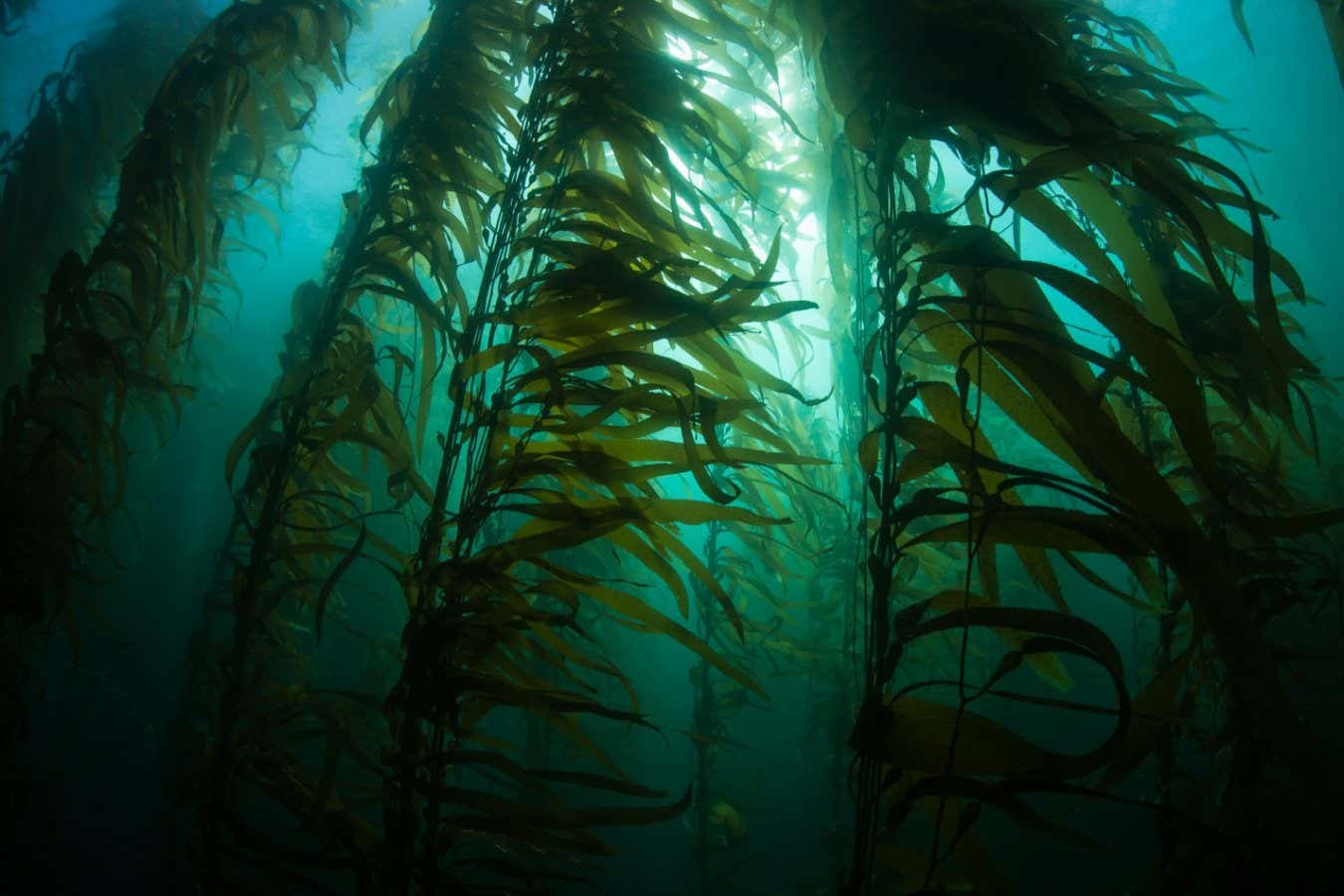
Tens of millions poured into a green dream. Seaweed grows fast. It eats carbon dioxide. Investors loved it. They saw a cheap way to hit those Paris Agreement targets, keep warming below 2°C. Maybe even reverse some of the damage.
US start-up Running Tide scored $70 million. Big plans. They grew kelp on wooden pucks, let the biomass get soggy, and sank it to the deep. Sequestration through gravity. Simple, right? They ran out of cash. Shut down last year.
Then there’s Kelp Blue, Dutch by name. They’ve raised $2 million. Their farm in Namibia churns out seaweed for fertilizer. They claim small particles break off, drift down, and could lock away half a billion tonnes of CO2 a year. Ambitious numbers.
Reality checks are piling up. Two new studies say the math might not add up. Or rather, it adds up to the opposite of what you want.
“It could backfire locally.”
That’s Manon Berger from the University of Bern. She’s warning that sucking up nutrients for farmed seaweed might starve phytoplankton. Phytoplankton also eat carbon. When they die, they sink. You pull one lever, you jerk another. The result? The ocean takes up less carbon. Ecologically messy. Climate-wise, limited.
Most seaweed hangs near the coast. Sargassum aside. It needs food. Nutrients are plentiful there. The kelp does photosynthesis, grabs dissolved carbon from the water, lets the sea absorb more CO2 from the air.
Here is the rub.
Most of that carbon comes right back up. Microbes and fish eat the kelp. They poop it out, decay it, breathe it back out. Estimates say nine-tenths of the carbon returns to the atmosphere immediately. To actually hide it away, you need to get that stuff to the deep dark ocean. Bale it up. Sink it.
But the open ocean is hungry and empty.
Berger modeled growing 20 billion tonnes a year within 200 miles of the shore. The kelp gobbles nitrogen, phosphorus, iron. Fast. After 25 years? Growth drops 95%. Worse, global phytoplankton crashes by up to 8%. You are cannibalizing the existing biological pump to fuel your own.
Some scenarios still look good. Billions of tonnes removed. But twist the variables. Change the species, change the nutrient appetite. Suddenly, for every tonne of carbon you lock up, you put half a tonne more into the air. Net gain. Not really.
The model highlights tiny patches. Senegal. Southern Australia. Together, 0.05% of the ocean. That is the only real estate where kelp thrives without wrecking the plankton.
“If you have only a few specific locations, you can’t grow seaweed enough to hit gigatone removal levels.”
So you need to boost growth. Enter Andrew Yool, UK National Oceanography Centre. His team ran models where they dumped iron into the water to fertilize the kelp fields. Up to 40 billion tonnes ofCO2 removal possible. Sounds great.
Then you look at the fish.
Halve the plankton, you kill the food source for almost everything higher up. “You’re robbing the surface ocean,” Yool says. You move nutrients from top to bottom. It looks less like farming and more like slowly strangling the ecosystem.
The scale is absurd anyway. You need to cage 14% of the ocean surface. Not in calm waters, but the storm-battered Southern Ocean and high northern latitudes. Think rough seas. Think logistics hell.
Skip the iron fertilization? The seaweed doesn’t make up for the lost plankton. You add up to 700 million extra tonnes of CO2 to the air. Per year.
Chelsey Baker, also at NOC, puts it plainly. You cannot just grow algae and call it carbon removal if you ignore the collateral damage to phytoplankton.
“You can’t assume CDR works if you don’t account for what the phytoplankton were doing before.”
The science is out there. Nature Communications. Biogeosciences. The DOI links sit quiet, waiting to be cited or ignored.
There’s a push to look for ecological solutions that heal rather than just patch. Lucy Jones, Guy Shrubsole, Rowan Hooper—they’re looking at crises and potential fixes that make us happier too. Noble. Maybe naive.
But for now, the kelp sinks. And so do the expectations. We wanted a magic plant. We found a trade-off.