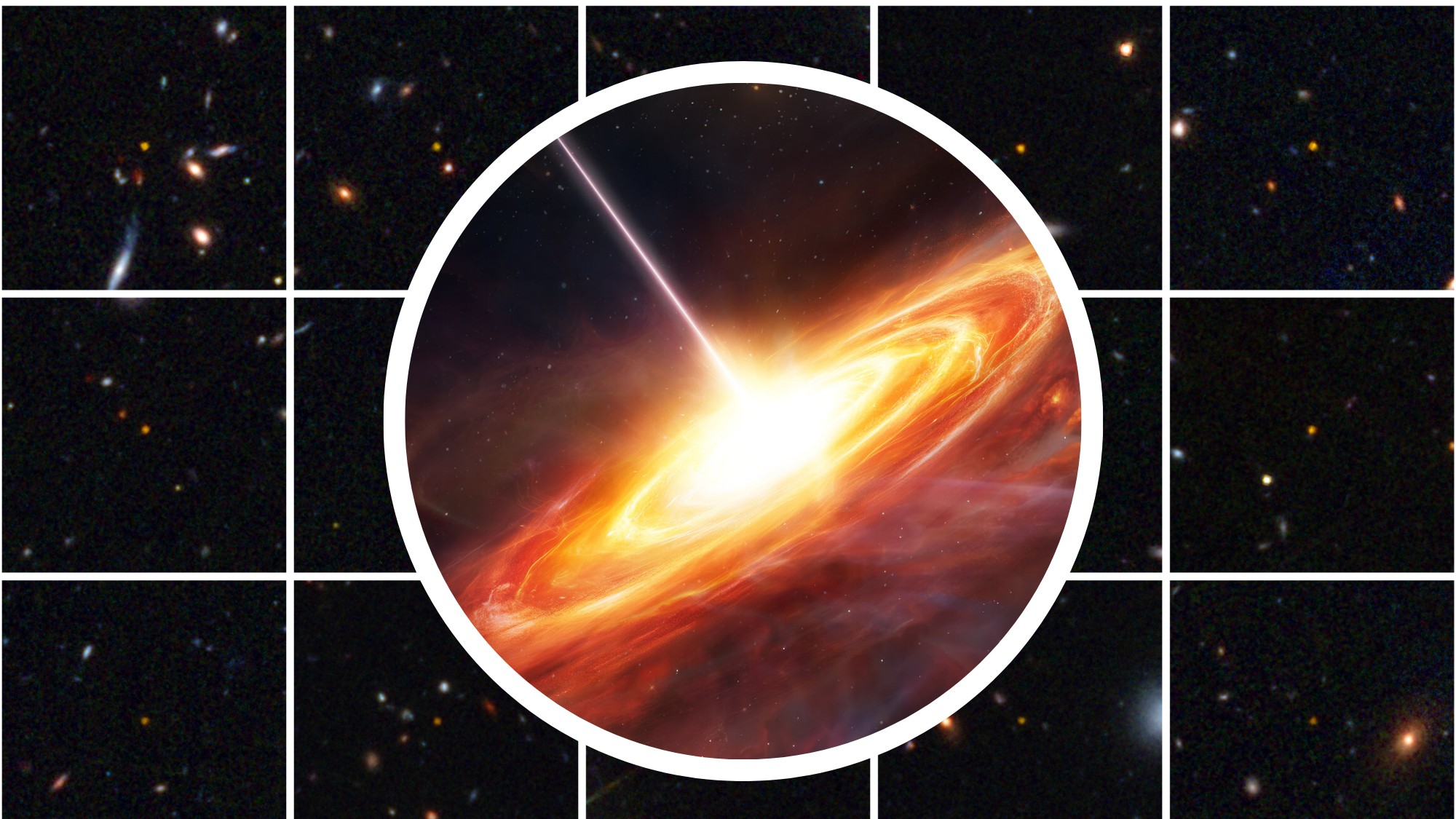
The universe was only 5% of its current size. Still babying. 670 million years in. And something huge was glowing there. A trillion suns. Brighter than every star in its galaxy combined.
We finally saw it.
Scientists used the Euclid telescope, launched in 2023 by the European Space Agency, to find it. They found thirty-one black-hole-powered quasars from the early cosmos. One is the oldest ever recorded. The rest? Just a massive haul. Previously, astronomers spent ten years to find ten of these distant objects. Euclid did three times that in one year.
Quasars are messy. Violent, actually. They happen when a supermassive black hole eats. Gas, dust, everything swirls into an accretion disk. Gravity crushes it. Friction spikes. The matter glows so bright it drowns out the host galaxy. Finding them at these distances is like spotting a match strike in a hurricane. Or maybe a lighthouse. Their light mixes with foreground stars. It is easy to miss.
That is why this discovery matters. We have wondered for decades how supermassive black holes get so heavy so fast. Now we have data. Not just guesses.
Daming Yang, a team leader from Leiden University, called them treasures from the universe’s infancy. Studying them explains the mystery. But really? It’s just faster work now.
The real prize isn’t just the loudest voices in the room. Euclid picked up fainter whispers too. Before, we only saw the brightest few. Now we can look at quasars as a population. Not isolated incidents. A pattern.
Twelve of them were around 770 million years post-Big Bang. Two were older. Much older. EUCL J1729 but there are long names, the other is EUCL J125 too. They sat 13 billion light years away. Existed when time was young. This finding more than doubles our census of these ancient engines.
“It’s a big step towards understanding… on a more fundamental level.”
Antonio La Marca from ESA said we finally have a census. Not just a handful of bright lights. A survey.
They existed during the epoch of reionization. That period where the dark ages ended. Photons could finally travel free. 680 million to 1.1 billion years. The lights turned on, basically. These thirty-one objects let us peek inside that transition.
Valeria Pettorino called them time machines. Rare things. They show how the first galaxies formed. Which is weird, because the universe is mostly invisible stuff anyway. Dark matter. Dark energy. Euclid’s job is to map that “dark universe” by finding what’s left. Sharp imaging. Infrared vision. Space-based perspective.
We have the census. The telescope did the heavy lifting. But what do we do with all this early data? We stare at the screen and wonder.
“They’re interesting in themselves,” Pettorino said.
Maybe. Maybe the next one is brighter.