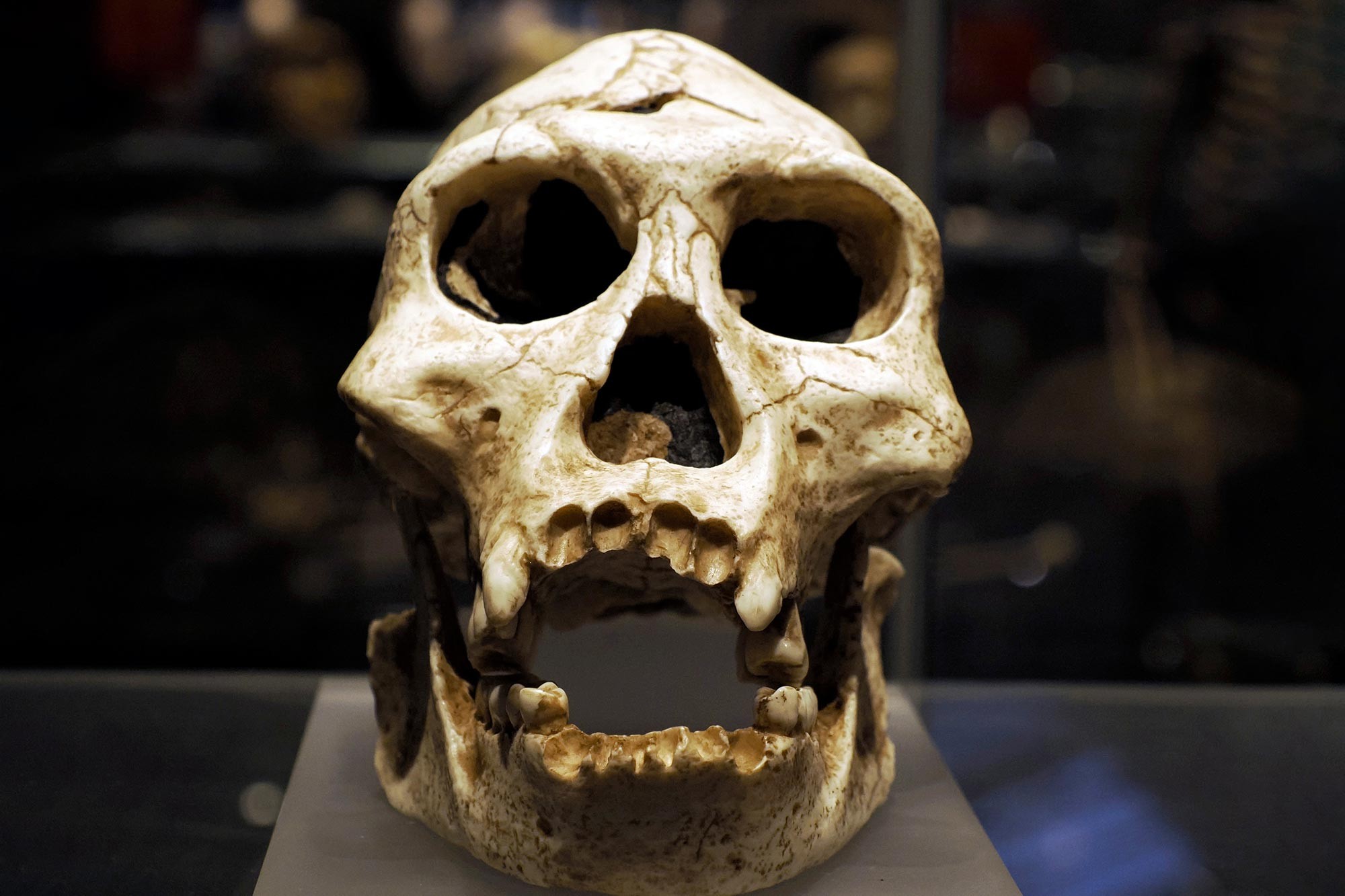
A groundbreaking genetic analysis of fossils from Stajnia Cave in Poland has provided scientists with a rare, detailed look at a cohesive group of Neanderthals living approximately 100,000 years ago. Unlike most Neanderthal studies, which rely on isolated fossils from different eras, this research offers a “genetic snapshot” of multiple individuals from the same location and time period.
A Rare Window into Neanderthal Social Structures
The study, published in Current Biology, involved the analysis of mitochondrial DNA extracted from eight Neanderthal teeth. These remains represent at least seven distinct individuals who inhabited the region north of the Carpathian Mountains.
The significance of this discovery lies in its cohesion. Most paleoanthropological data is fragmented, consisting of single fossils scattered across vast distances and millennia. In contrast, the Stajnia Cave findings allow researchers to reconstruct the genetic profile of a specific community.
“For the first time, we are able to observe a small group of at least seven Neanderthals from Central-Eastern Europe… providing a coherent genetic picture of Neanderthals in this part of Europe,” notes Andrea Picin, Professor at the University of Bologna and research coordinator.
Clues of Kinship
The genetic data suggests these individuals were not just neighbors, but potentially family members. Researchers identified a shared mitochondrial DNA pattern between:
– Two juvenile teeth
– One adult tooth
This finding provides tangible evidence of familial ties within Neanderthal social groups, offering a deeper understanding of how these populations organized themselves and cared for their young.
Mapping Ancient Migrations
The research also sheds light on how Neanderthal lineages moved across the continent. The mitochondrial DNA found in the Stajnia group belongs to a specific branch previously identified in:
– The Iberian Peninsula
– Southeastern France
– The Northern Caucasus
This connection implies that this particular maternal lineage was once widespread across western Eurasia before eventually being replaced by different genetic lines in later Neanderthal populations.
Furthermore, the study draws a link to the famous “Thorin” fossil from Mandrin Cave in France. Despite being dated to roughly 50,000 years ago, Thorin shares a similar mitochondrial genome with the Stajnia group, suggesting long-term genetic continuity or shared ancestry across vast distances and time.
Redefining Central-Eastern Europe’s Role
For a long time, many archaeological models viewed Central-Eastern Europe as a peripheral region—a mere edge of the Neanderthal world. The Stajnia Cave findings challenge this notion.
The presence of such a structured, genetically linked group suggests that Central-Eastern Europe was a vital hub in Neanderthal history. The region likely played a key role in how these populations migrated, interacted, and shared technological advancements across the European continent.
A Note on Scientific Precision
The researchers also issued a cautionary note regarding the interpretation of ancient dates. Sahra Talamo, Professor at the University of Bologna, emphasized that when using radiocarbon dating near its technical limits, scientists must be careful not to overstate precision. This highlights the necessity of integrating archaeology, radiocarbon dating, and genetics to form an accurate historical picture.
Conclusion
The discovery at Stajnia Cave transforms our understanding of Neanderthal life by proving that Central-Eastern Europe was a significant center for human evolution. By revealing family connections and widespread genetic lineages, the study moves us closer to understanding the social complexity and migratory patterns of our ancient relatives.