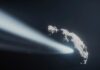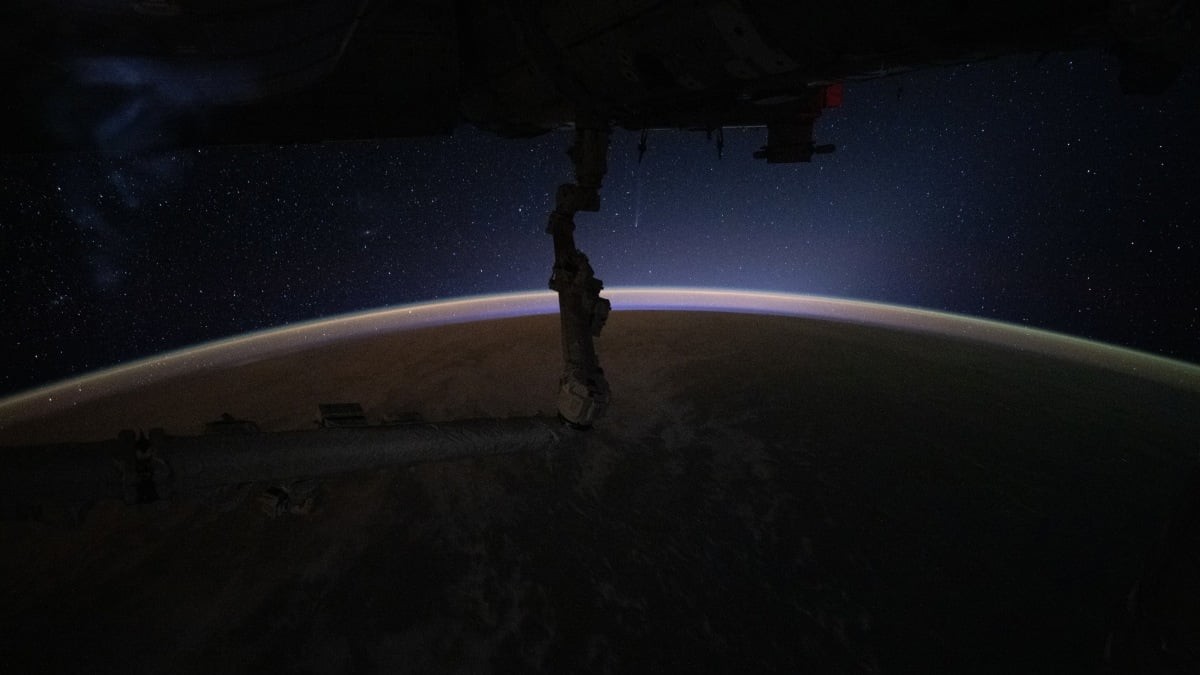
While monitoring the sun for potential solar threats, a U.S. weather satellite captured an unexpected guest: Comet C/2025 R3 streaking through the solar system.
The sighting occurred via the National Oceanic and Atmospheric Administration’s (NOAA) GOES-19 satellite, which orbits approximately 22,300 miles above Earth. While the satellite’s primary mission is to track solar activity that could disrupt power grids and navigation systems, it provided a rare, high-speed glimpse of this celestial traveler.
How the Satellite “Saw” the Comet
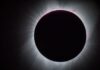
The comet was captured using a specialized instrument called a coronagraph. To understand how this works, imagine trying to look at a dim star while standing in direct sunlight; the glare makes it impossible. A coronagraph solves this by blocking the sun’s blinding face, creating an artificial eclipse.
By masking the sun’s main disk, scientists can observe the outer atmosphere—where solar flares and coronal mass ejections (CMEs) occur—without being blinded by the sun’s brilliance. In this instance, the technique allowed the comet to appear as a distinct object darting across the field of view.
The Journey of Comet C/2025 R3
First discovered in September 2025 by the Pan-STARRS2 telescope in Hawaii, Comet R3 has been a subject of intense interest for the astronomical community.
- High Expectations: Astronomers initially predicted R3 could be the brightest comet to enter the inner solar system this year, potentially visible even with small binoculars.
- Recent Proximity: On Sunday, April 26, the comet made its closest approach to Earth, passing within 45.5 million miles —roughly half the distance between the Earth and the Sun.
- Current Position: As of early May, the comet is currently traveling through the constellation Cetus.
Why Comets Matter to Science
Comets are much more than just “space snowballs.” They are ancient relics formed roughly 4.6 billion years ago during the birth of our solar system. Composed of ice, dust, and rock, these objects serve as time capsules from the early solar system.
Beyond their historical value, comets play a fundamental role in the story of life. Many scientists believe that comet impacts may have delivered essential water and organic compounds —the chemical building blocks of biology—to the early Earth, potentially jumpstarting the development of life on our planet.
The sighting of Comet R3 by a space weather satellite highlights the serendipitous nature of space observation, where tools designed to protect our technology also provide windows into the ancient history of our solar system.
Summary: A NOAA satellite designed to monitor solar storms inadvertently captured footage of Comet C/2025 R3 as it passed near Earth, providing a unique look at an ancient celestial object that may have helped shape life on our planet.