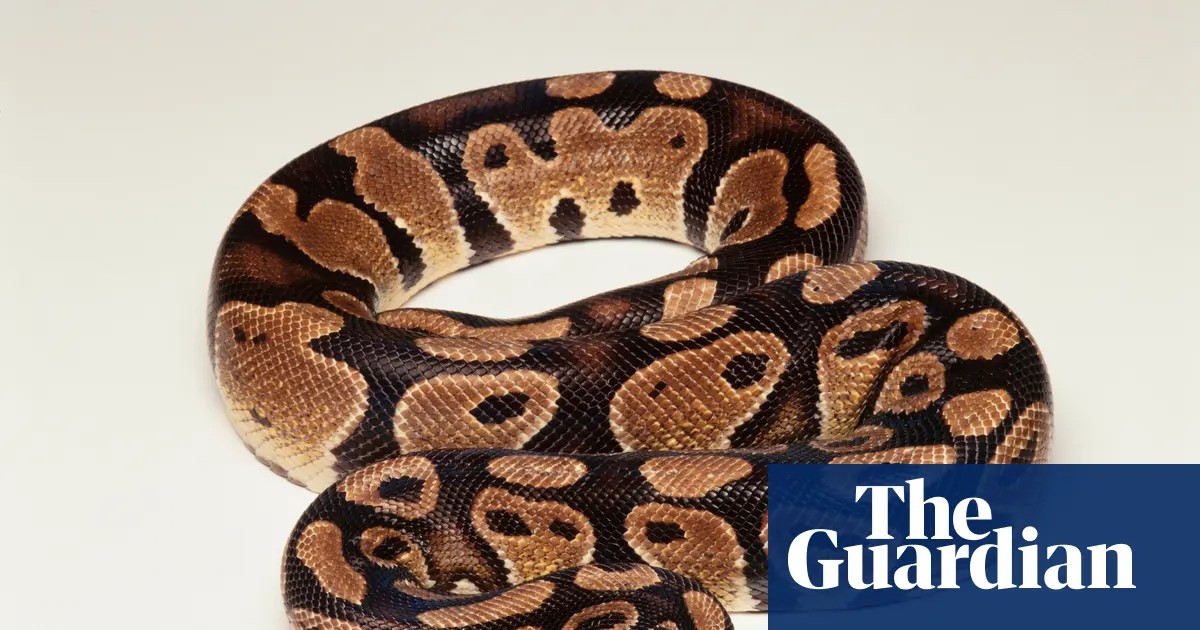
A classic lateral thinking puzzle challenges us to design a way for two snakes of different lengths to escape a cage through two distinct passages, using nothing but geometry and the physical constraints of the animals themselves.
The Challenge
Imagine two snakes trapped in a cage. Both snakes have the same thickness (a constant circular cross-section) and the same ability to wriggle. However, they differ significantly in length: one is short, and the other is long.
The goal is to design two escape routes, Passage A and Passage B, under the following strict conditions:
* Passage A must allow the short snake to escape while blocking the long snake.
* Passage B must allow the long snake to escape while blocking the short snake.
* No mechanical aids: There can be no trapdoors, levers, or moving parts.
* Physical limits: The snakes cannot squeeze through any opening narrower than their own diameter.
This puzzle relies on the concept of topological constraints —how the length of an object interacts with the shape of the path it must travel.
The Solution: Passage A (The Loop Method)
To prevent a long snake from passing while allowing a shorter one to succeed, we must use the snake’s own body length against it.
The solution involves creating a tube that contains a loop. The total length of this path must be greater than the length of the short snake, but shorter than the length of the long snake.
How it works:
1. The short snake enters the tube, travels through the loop, and exits successfully because its body never obstructs its own path.
2. The long snake enters the tube and follows the path into the loop. However, because the snake is so long, its body eventually wraps around and meets itself at the junction where the loop connects back to the main tube.
3. Because the snake has a physical width, its body at the junction creates a blockage. The “tail” end of the snake effectively plugs the passage, making it impossible for the rest of the body to advance further.
Note: This relies on the fact that the snake cannot “turn” sharply at a junction if the diameter of the tube is equal to the diameter of the snake; it must follow the predetermined flow of the path.
The Solution: Passage B (The Rigidity Method)
Passage B requires a different approach, focusing on the relationship between length and movement rather than a circular loop.
The solution involves a passage that includes a gap or a specific floor geometry (such as a hole or a narrow ledge).
* The short snake lacks the body mass or length to bridge the gap or maneuver over the obstacle, causing it to become stuck or fall short of the exit.
* The long snake, possessing more length and therefore more “reach” or weight distribution, can navigate the obstacle or use its length to bridge the gap, allowing it to reach the other side.
This solution assumes a degree of non-zero rigidity —the idea that a snake is not a perfectly liquid substance, but a physical organism with enough structure that its length provides a mechanical advantage.
Conclusion
The “Snake Escape” puzzle demonstrates how physical dimensions—specifically length and width—can be used to manipulate movement within a fixed space. By utilizing loops and structural obstacles, one can create “filters” that allow objects of certain sizes to pass while effectively trapping others.