


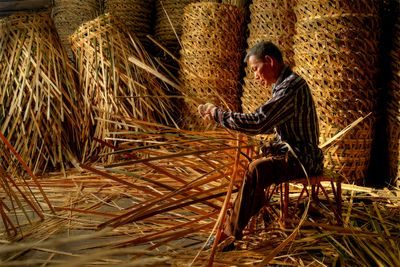
You might think of a fiber as just a thread, but the definition is actually a bit more rigid. A natural fiber is a hairlike raw material pulled directly from animals, plants, or even minerals. It has to be convertible into something else. Think nonwoven fabrics like felt or paper. Or yarns that get spun into woven cloth.
Technically speaking, it is an agglomeration of cells. The diameter is negligible compared to the length. Nature is full of fibrous materials. Cellulosic types like wood, straw, grains, and cotton are everywhere. Only a tiny fraction actually makes it into commercial products.
Why the filter? Economics play a role. But so does performance. To be useful industrially, a fiber needs specific traits. It needs length. Strength. Pliability. Elasticity matters too. Does it stretch under tension and return to its original shape? Abrasion resistance is another factor. Absorbency and surface properties also count. Most good textile fibers are slender. They are flexible. And they are relatively strong.
A History Written in Thread
We’ve been using natural fibers for longer than we have records. The oldest evidence comes from excavation sites. Specifically, Swiss lake dwellers. They were using flax and wool fabrics back in the 7th and 6th centuries BCE.
Prehistoric peoples also used several vegetable fibers. Hemp is likely the oldest cultivated fiber plant. It originated in Southeast Asia. From there, it spread to China. Cultivation reports there date back to 4500 BCE.
The art of weaving linen was already well developed in Egypt by 3400 BCE. That implies flax was being cultivated sometime before that date. You can’t weave what you can’t grow.
Cotton spinning in India dates back to 3000 BCE. Silk is older still. The manufacture of silk products originated in China. The Chinese culture was highly developed by then. Sericulture, which is the cultivation of silkworms for raw-silk production, emerged around 2640 BCE. Methods to spin silk developed alongside it.
“The usefulness of a fibre for commercial purposes is determined by such properties as length, strength, pliability, elasticity, abrasion resistance, absorbency, and various surface properties.”
These aren’t just historical footnotes. They are the foundation of how we dress, build, and create today. But how did we get from simple woven grass to the complex textiles we use now? And what makes one fiber better than another for a specific task?

The Synthetic Shift and Natural Fibre Response
Transport networks and communication channels improved. Skills in textile manufacturing were no longer locked in specific regions. They spread to other countries. Local industries adapted these techniques to fit their own resources and needs. New plant sources for fibres were discovered. Their potential was explored quickly.
The 18th and 19th centuries brought the Industrial Revolution. This era drove invention. Machines for processing natural fibres were developed. Production volumes surged.
Then came the chemical challenge. Regenerated cellulosic fibres arrived first. Rayon was formed by dissolving cellulose material, purifying it, and extruding it into fibre. It challenged the natural monopoly. Complete synthetic fibres followed. Nylon became the poster child for this shift.
These new materials penetrated markets previously held by natural sources. They dominated sectors. The competitive threat forced a reaction. Research into breeding better strains of natural fibre sources intensified. Scientists sought higher yields. Processing methods were improved. Yarn and fabric properties were modified.
The results were considerable. Total production increased. But the market share of natural fibres dropped. Cheaper synthetic fibres flooded in. They required fewer man-hours to produce. Efficiency won.
Classification and properties
Natural fibres fall into categories based on origin. The vegetable class is cellulose-based. It includes cotton. Flax is part of this group. Jute belongs here too.
The animal class is protein-based. Wool sits in this category. Mohair is another member. Silk rounds out the list.
Asbestos represents the mineral class. It is an important fibre in this group.
“The considerable improvements achieved have permitted increased total production, although natural fibres’ actual share of the market has decreased with the influx of the cheaper, synthetic fibres requiring fewer man-hours for production.”


Why Natural Fibres Behave the Way They Do
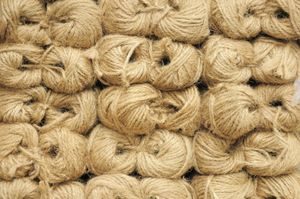
Cotton, kapok, and coir all share a specific origin. They grow as hairs on seeds or fruit walls. Each one is a single, long, narrow cell. Flax, hemp, jute, and ramie take a different path. These bast fibres live in the inner tissue of plant stems. They are built from overlapping cells. Abaca, henequen, and sisal hide in the leaf system. They are part of the fibrovascular structure.
Chemically, they are mostly cellulose. The difference lies in the impurities. Hemicellulose, lignin, pectins, and waxes clutter the mix. Processing must strip these away.
Animal fibres tell a simpler story. They are proteins. Silk is the outlier. It does not come from fur or hair. Moth larvae extrude silk filaments to spin cocoons. Everything else is protective skin covering for animals.
The Water Connection
Natural fibres love water. This applies to both liquid and vapour forms. The only exception is mineral fibres. That affinity causes swelling. The fibres absorb moisture and expand. This is not a flaw. It is a feature for dyeing. Watery solutions penetrate easier when the fibre is swollen.
Heat and Light
Synthetic fibres often melt. Natural ones do not. They are nonthermoplastic. Apply heat and they do not soften. They remain stable in dry heat until they decompose. You will not see shrinkage. High extensibility is absent. They do not turn brittle if you freeze them.
Sunlight is a different story. Exposure to UV and moisture causes yellowing. Extended exposure destroys strength. The fibre weakens. It fades.
Rot and Bugs
Microbial decomposition is the enemy. Mildew and rot thrive on natural materials. Cellulosic fibres are eaten by aerobic bacteria and fungi. High humidity and temperature accelerate this. Lack of light makes it worse. Wool and silk suffer too. Bacteria and molds target them.
Insects add to the damage. Moths eat wool. Carpet beetles attack animal fibres. Termites and silverfish chew through cellulose.
The Modern Fix
Chemical modification solves the rot problem. Treatments can make fibres immune to microbial damage. Modern developments also protect against insects. The substrate is modified. The result is durability. The natural fibre survives where it once would have decayed.


