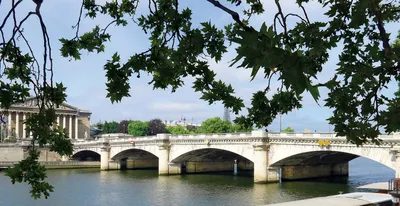
Jean Perronet wasn’t just building bridges. He was rewriting the physics of stone.
Born in Suresnes, France, in 1708, Perronet came from a military family. His father was an army officer. But Jean chose a different path. He joined the Corps des Ponts et Chaussées. This was the new government body in charge of France’s infrastructure. He was good at it. Too good, perhaps.
When the École des Ponts et Chaussées opened in 1747, it was the world’s first engineering school. Perronet became its first director. He taught the next generation how to move earth and water. But his real lesson came from his own hands.
How Jean Perronet Redefined Stone Arch Bridge Design
The shift happened in 1763. Perronet was working on a bridge at Mantes. He noticed something odd about the geometry of elliptical arches.
Traditional bridges used thick, heavy arches. They pushed outward with massive force. The abutments needed to be huge to stop the bridge from collapsing. Perronet realized that with elliptical arches, the horizontal thrust was distributed differently. It traveled to the ends.
This allowed for something radical: extremely flat arches.
They looked impossibly thin. They looked like they might break. They didn’t.
Perronet’s discovery allowed for bridges that were not just strong, but structurally elegant, reducing the footprint in rivers while maintaining integrity.
He supported these delicate curves with timber falsework during construction. Once the stone set, the timber came down. The piers holding up the arches were slender. Very slender.
Why does this matter? Because wide piers block rivers. They slow down boats. They create turbulence. Turbulence causes scour, which eats away at the foundation. By using slender piers, Perronet widened the waterway. He let the water flow. He let the ships pass. He reduced the risk of the bridge washing away.
The Most Graceful Stone Bridge Ever Built
The results were stunning.
Critics later called the Pont de Neuilly the most graceful stone bridge ever constructed. It wasn’t just functional. It was beautiful. The flat arches spanned wide distances without cluttering the river with pillars. It changed how cities looked over water.
But the true test came later.
In 1787, Perronet was 80 years old. Most men his age were resting. He was breaking ground on the Pont de la Concorde. It was originally named the Pont Louis XV. It stood in the heart of Paris.
Then the French Revolution started. The king lost his head. The government changed. Funding dried up. Chaos ensued.
Perronet kept working.
He finished the bridge in 1791. It survived the revolution. It survived the years. It remains a testament to Jean Perronet civil engineering principles.
His memoirs, published in 1782, detailed his career up to that point. They served as a manual for his successors. They explained the “why” behind the flat arches. They explained the math of the thrust.
We still use those principles today. When you see a bridge that looks like it