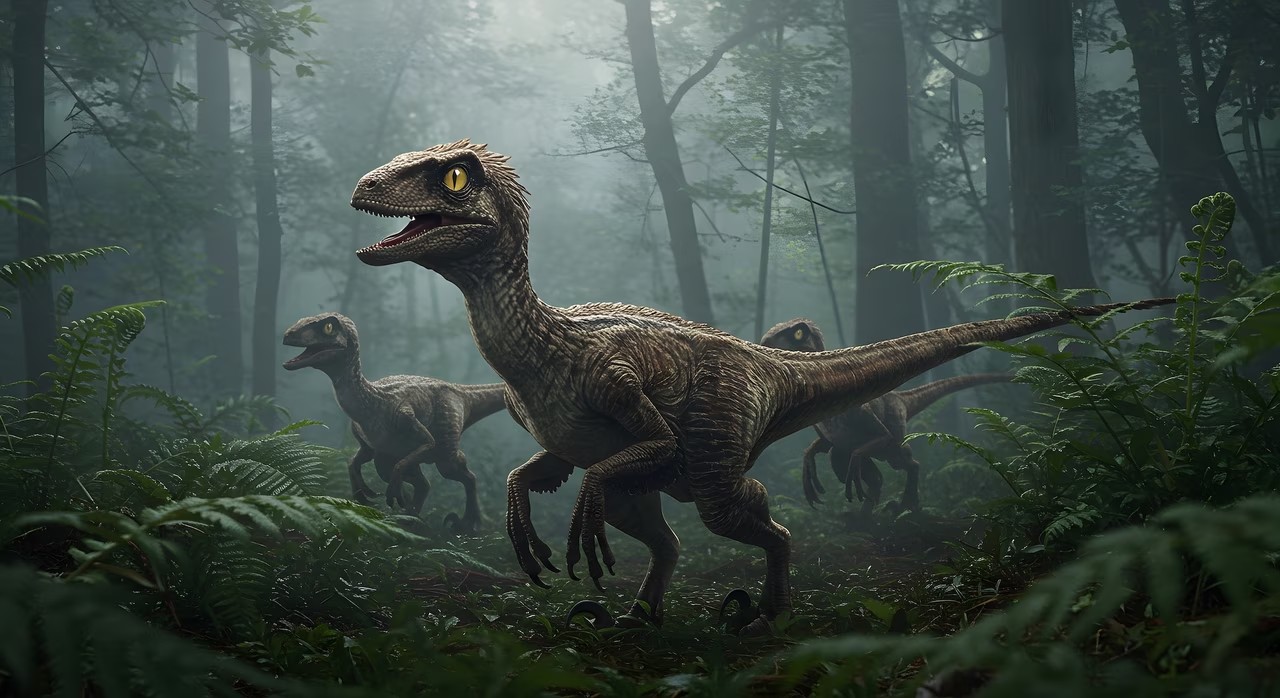
They showed up around 230 million years ago. The Late Triassic period. Roughly.
From that point on, dinosaurs became everything. Small meat-eaters running on two legs. Massive plant-eaters lumbering on four. The Jurassic era, sitting right in the middle of the Mesozoic (about -201 to -145 million years ago), was their golden age. Think Stegosaurus. Apatosaurus. Allosaurus. Then came the Cretaceous, the final chapter. That’s when you get the big hitters: Tyrannosaurus rex, Triceratops, and Velociraptor. You’ve seen them. Probably multiple times. Jurassic Park. Jurassic World. Hollywood loves a good reptile.
These animals weren’t just local. They were everywhere. Every continent. They left behind thousands of fossils. Paleontologists use those bones to piece together what they looked like, how they lived, and how they evolved.
Then came the end. About 66 million years ago. A massive extinction event. Likely an asteroid impact near what is now the Yucatán Peninsula. It changed everything. Life on Earth shifted gears.
But we don’t forget. Since the 19th century, dinosaurs have hooked us. Scientists and regular people alike. They aren’t just study subjects anymore. They are symbols. Of evolution. Of lost grandeur. And since the movies started rolling? They represent the blurry line between hard science and pure fiction.
Can we really clone dinosaurs from amber DNA?
Jurassic Park came out in 1993. Michael Crichton wrote the book. Steven Spielberg made the movie. The core idea was seductive. What if we could bring back creatures dead for 65 million years?
The plot device? Amber.
In the story, scientists find prehistoric mosquitoes trapped in fossilized tree resin. Inside those bugs? Blood. Inside that blood? Dinosaur DNA. The fictional company InGen extracts it. They fill in the missing genetic gaps with DNA from modern frogs. They implant the embryos into live eggs. Boom. Dinosaurs.
It sounds plausible on screen. The science looks shiny. The technicians wear white coats. But is it actually possible?
The hypothesis rests on the idea that DNA can remain intact for tens of millions of years.
That’s the big question. Can you really reconstruct segments of ancient code to resurrect a dinosaur through cloning?
The movie says yes. Reality says… wait. It’s complicated. The idea relies on DNA conservation over epochs. It assumes we just need to patch the holes in the genetic sequence. If the process seems credible in a theater, what does it look like in a lab?
We need to separate the spectacle from the biology. The technical feasibility is one thing. The biological limits are another. And the ethics? That’s a whole other conversation.
So, when you watch T-Rex break through that glass window, ask yourself: is this science? Or is it just very expensive storytelling?
The half-life problem
DNA rots.
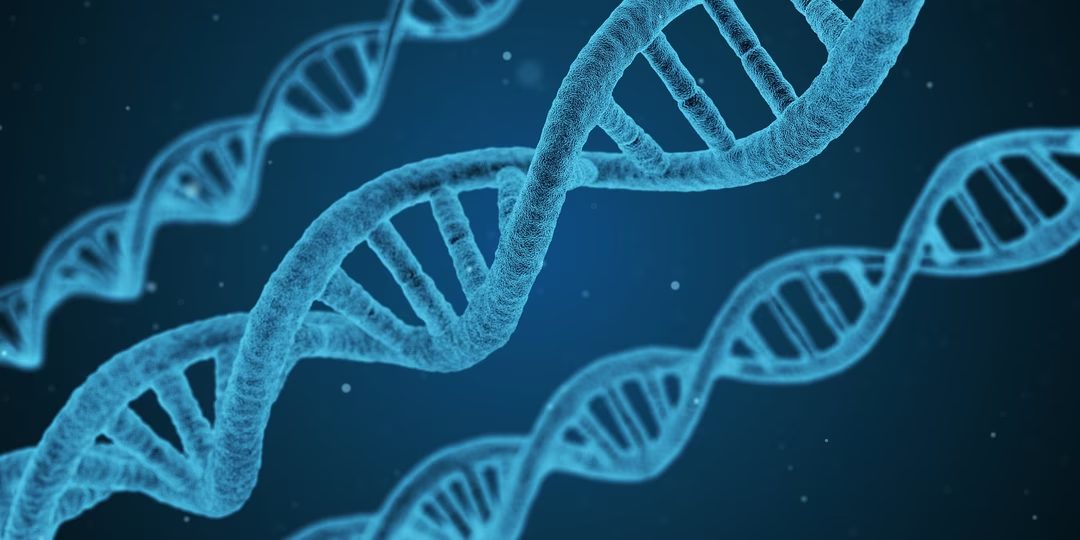
Even in perfect conditions. Ideal temperature. No bacteria. Nothing to eat it. It still falls apart. Studies, specifically the 2012 work by Allentoft et al. in the Proceedings of the Royal Society B, put a number on the decay. The half-life is roughly 521 years.
Do the math. After 6.8 million years, the last trace is gone. Shredded into nothing. Dinosaurs died out 66 million years ago. That isn’t just a gap. It’s an abyss. Retrieving a complete dinosaur genome isn’t just hard. It is scientifically impossible with current physics.
The oldest DNA we have ever pulled out of the ground comes from mammoths or prehistoric horses. They are less than a million years old. A fraction of the time needed.
And even if you found fragments? Good luck. You’d have to piece them together like a puzzle missing half the pieces. But worse, you wouldn’t know what the pieces do. The dinosaur genome is a blank page. There is no host cell alive today capable of raising a dinosaur embryo. No uterus. No egg. Just silence.
Can we reverse-engineer a dinosaur from chicken DNA?
Some scientists aren’t giving up. They’re changing the game.
Jack Horner, the paleontologist who advised Spielberg on Jurassic Park, runs the “Chickenosaurus” project. He doesn’t want to clone a dead thing. He wants to wake up the dead genes inside a living one.
Birds are dinosaurs. We know this. So Horner tries to activate atavistic genes in chickens. Traits that went dormant millions of years ago. Teeth. A tail. Claws.
Experiments on chicken embryos have already shown it’s possible to tweak development. You can make a beak look a bit more like a snout. You can encourage tail vertebrae to grow where they usually stop. It’s not a T-Rex. It’s a weird, modified bird. But it’s a start.
Then there’s synthetic biology. Tools like CRISPR-Cas9 let us edit genomes with surgical precision. The dream is to build an artificial genome. Patch together what we know about dinosaur anatomy and modern bird genetics. Create a hybrid. A chimera.
It’s not resurrection. It’s approximation. But it might look enough like the real thing to scare you.
Why amber isn’t a magic time capsule
Hollywood loves amber.
In the movies, a mosquito gets trapped in resin. It sits there for millions of years. We suck the blood out. We get DNA. We make a park.
Reality is crueler.
Amber is great at preserving structure. It keeps the insect’s legs intact. But it does not preserve DNA. Recent studies have debunked claims of finding dinosaur DNA in amber. The sequences? Modern contamination. Human DNA. Lab errors. Not ancient giants.
The molecule simply cannot survive that long. Not in amber. Not in ice. Not anywhere.
The developmental and ethical walls
Even if you had the code, you still have the hardware problem.
An organism isn’t just a string of letters. Development depends on epigenetics. Signals from the mother. The specific environment of the cell. You can’t just print the software and expect the machine to boot. Without a dinosaur egg or a dinosaur uterus, a cloned embryo likely wouldn’t develop correctly. It would fail.
Then comes the ethics.
If we could do it, should we?
What is the purpose? A theme park attraction? A scientific curiosity? Where would these creatures live? In a zoo? In the wild? The ecological risks are massive. The moral questions are harder. Do they have rights? Who owns them?
They never left
Creating a dinosaur via cloning is fiction. The tech doesn’t exist. The biology forbids it.
But here is the twist.
Dinosaurs didn’t go extinct. Not really.
Look outside.
See a sparrow? A pigeon? An ostrich?
Those are dinosaurs. Direct descendants of theropods. They have hollow bones. Feathers. A bipedal stance. Some even share behavioral traits with their Jurassic ancestors.
Every bird is a living relic of the Velociraptor lineage. A distant heir to the Tyrannosaurus rex.
They are small. They fly. They don’t eat your tourists. But they are here.
So if you want to see a dinosaur, you don’t need a lab. You don’t need amber. You just need to look up.