The sky put on a show. July 29, 2026 brought us the full Buck Moon, and the results were anything but boring. Native American tribes traditionally used this name to mark when young bucks grow their first antlers. The moon itself didn’t grow anything, but it still looked stunning as it climbed over the eastern horizon.
It wasn’t just one face that skywatchers saw that night. It was a kaleidoscope.
Some saw beauty in the quiet. Others saw a world on fire.
Global Perspectives on the Full Moon
The images captured that night tell a story far more complex than just “moon looks pretty.”
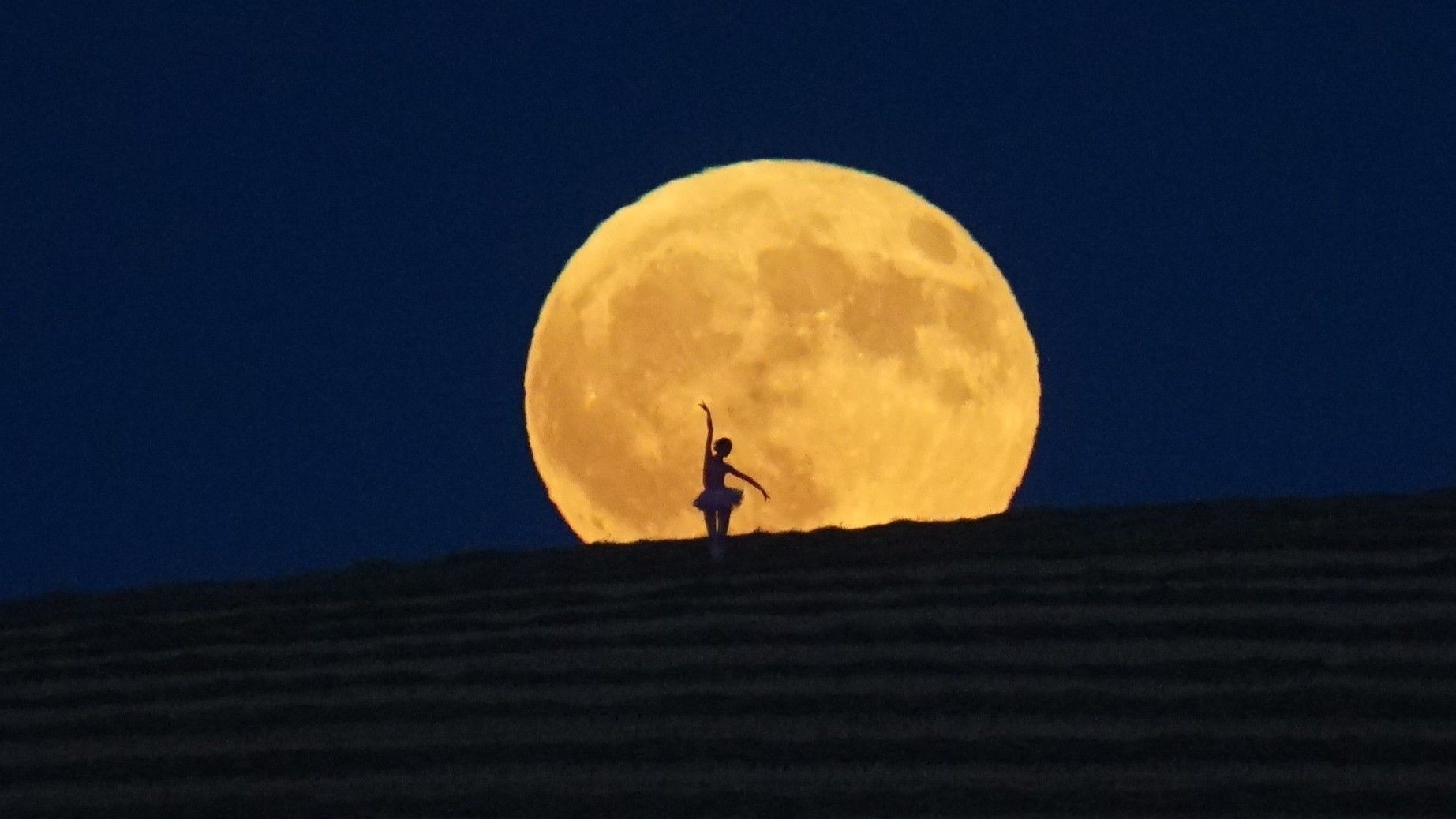
In Tekirdağ, northwestern Türkiye, photographer Mesut Karaduman framed a ballerina against the yellow-orange lunar disk. It was precise. The contrast between the dancer and the massive celestial body created a surreal silhouette against the hillside.
But not every view was peaceful.
Across the water in Balıkesir, Sergen Sezgin documented a different reality. The moon rose over a smoldering hillside, its color stained deep crimson by smoke from raging wildfires. A prolonged heatwave had left vulnerable areas dry and flammable. The Buck Moon didn’t just rise; it looked down on destruction.
Urban Silhouettes and Atmospheric Warping
Cities have always been good at competing with the stars. On this night, some lost.
In New Jersey, Gary Hershorn captured a magnificently timed shot of the Buck Moon perched at the pinnacle of Manhattan’s One World Trade Center. The Hudson River reflected the glow below. It’s the kind of shot that requires patience, timing, and a telephoto lens.
Meanwhile, in Toronto, Canada, Mert Alper caught a couple watching the moon break through a dense cloud bank at Woodbine Beach. The clouds hid it, then revealed it.
But the atmosphere has a way of messing with physics.
In San Francisco, the Buck Moon looked warped. Tayfun Coskun photographed it rising behind the Golden Gate Bridge, distorted by heat rising from the bay. Birds flew across its pockmarked surface in a moment frozen in time.
Earlier, on July 28, Coskun also captured the last rays of sunlight hitting San Francisco skyscrapers and surrounding hills, just before the moon took center stage.
The Physics of Color and Light
Why did some photos look warm and orange while others looked stark white?
Kevin McCarthy explains it simply. He stepped onto his driveway in Charlotte, North Carolina at 11:15 p.m.
“The moon has a definite warm tint,” he told Space.com. “Likely caused by its low position in the sky.”
When the moon is low, light passes through thicker layers of atmosphere. The blue light scatters out. Only the reds and oranges survive. It’s simple physics. But it makes for compelling photography.
In Türkiye, Ismail Kaplan used a telephoto lens to capture the moon shimmering next to Ankara Castle. The ancient fortifications added depth to the shot, grounding the ethereal light in history.
In Hungary, near the Zemplén Hills, another photographer found a quirky angle. The moon sat perfectly inside the wheel of a child’s bicycle at Telkibánya. It’s a detail-oriented shot. It requires noticing what others ignore.
Shadows and Surprises
Sometimes the best shots include unexpected guests.
Izhar Khan photographed a bat silhouetted against the Sea of Tranquility over Sydney, Australia. The bat flew directly in front of the lunar disk. For a split second, a terrestrial animal and a distant celestial body shared the frame.
These aren’t just pretty pictures. They are records of how humans interact with the night sky. We frame them against dancers, castles, bicycles, and fire. We use them to make sense of our environment.
What Comes Next?
This Buck Moon is just the start.
August is going to be violent for skywatchers.
On August 12, look for a total solar eclipse. It will be visible from Spain, Iceland, and Greenland. It coincides with the peak of the Perseiid meteor shower. You won’t see just the moon. You’ll see the sun disappear, stars come out, and then return.
Two weeks after that, prepare for a lunar eclipse. The moon will fall deep into Earth’s shadow. It will turn rusty-orange, similar to the smoke-stained moon seen in Türkiye, but this time it’s purely atmospheric refraction, no wildfires involved.
If you want to capture these events, you need gear.
Check out roundups on the best astrophotography cameras. Look for telephoto lenses that can resolve craters from 238,900 miles away. Don’t forget solar viewing gear for August 12. You need proper filters, or you’ll just see black blobs and risk eye damage.
The sky is loud. You just have to know where to look.
Is it worth waking up at 3 a.m. in August for an eclipse?
Probably.