


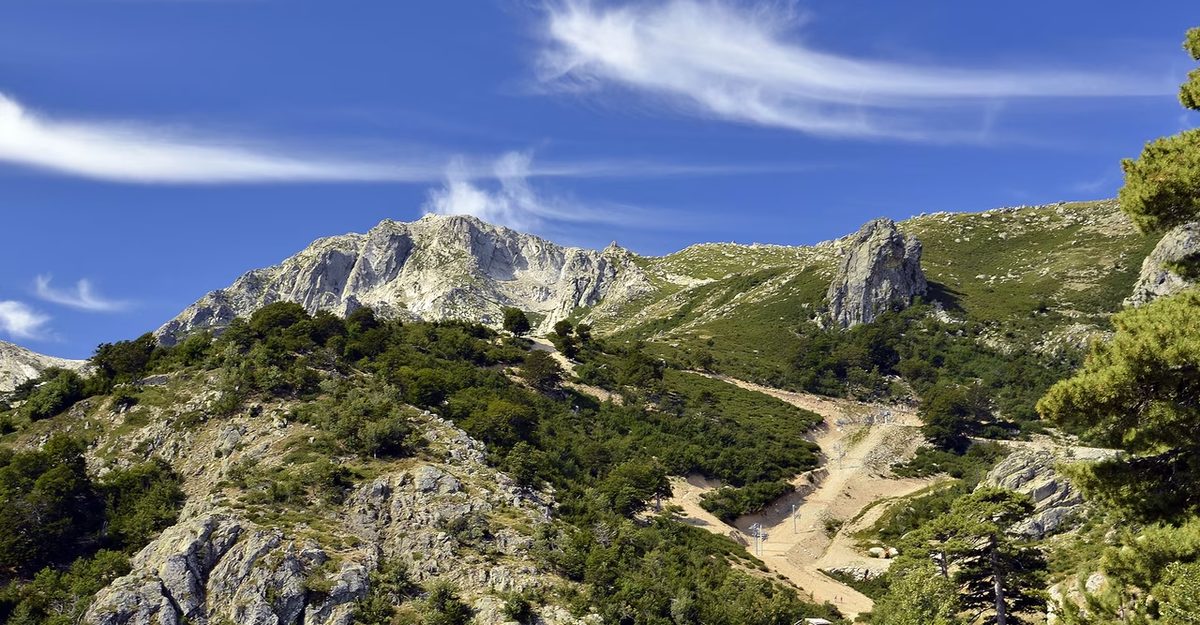
Corsica sits roughly 200 kilometers southeast of the French Riviera. It is west of Tuscany and north of Sardinia. The island is largely wooded and mountainous. The southern coastline features high cliffs.
Geologically, the island is not part of the main European continental plate. It rests on a separate tectonic fragment known as the Corsica-Sardinia block. This microplate is distinct from the plates underlying France and Italy. It exists in isolation from those larger landmasses. The island shares this geological identity with Sardinia. Together they form a unique structural unit.
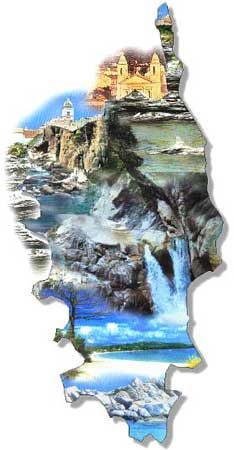

The Greeks didn’t just give it a name; they gave it a verdict. Kallisté. The most beautiful. It stuck. Even today, the moniker “Isle of Beauty” isn’t just marketing fluff. It’s a description that holds up under scrutiny. But look closer at the map. The coastline stretches for a thousand kilometers. Three hundred of those are soft, white sand. You can see why sailors and divers flock there. The water is deep blue. The air is thick with salt.
Yet there is a contradiction here. A geographic one.
Corsica is often called a mountain rising from the sea. That’s the geological truth. But there’s another layer to that description. Early in the last century, locals started calling it the “Green Isle.” Not because of the coast. Because of the interior. This distinction was necessary to separate it from the arid, baked rocks of neighboring Mediterranean islands. Sardinia. Sicily. Cyprus. They are dry. Corsica is not.
How does an island in the southern Mediterranean stay so lush?
“Despite its southern position and unparalleled sunshine, Corsica remains verdant.”
The answer isn’t just rain. It’s a combination of altitude and isolation. The island’s spine runs north to south. High peaks trap moisture. The clouds break against the granite walls. They drop water on the forests below. Pine forests. Maquis shrubland. It creates a microclimate that feels more like the Alps than the Sahara.
This isn’t just scenery for Instagram. It’s an ecosystem. The “green” label protects something fragile. The biodiversity here is unique. Endemic species. Plants found nowhere else on Earth. If you strip away the green, you strip away the island’s soul.
Visitors come for the beaches. They stay for the silence of the hills. The contrast is what seduces them. One minute you are in the turquoise shallows. The next, you are hiking through a pine forest that smells of resin and earth. The transition is abrupt. It’s jarring. It’s beautiful.
But the green is under pressure. Tourism puts strain on the water supply. Climate change alters the rainfall patterns. The “Isle of Beauty” is fragile. Its beauty isn’t static. It’s a living thing. And it’s fighting to keep its color.
The question isn’t really whether Corsica is beautiful. The Greeks already answered that. The question is how much of that green can we keep before the magic fades?
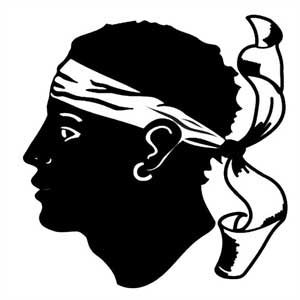

The flag of corsica: why it’s more than just a symbol
The Maurru —the Moor’s head—isn’t hiding in a museum. It’s flying. In Corsica, the flag isn’t just a piece of cloth. It’s a daily statement. You see it on balconies in Ajaccio. You see it on cars driving up the coastal roads. It’s white with a black head in the corner. Simple. Stark. Unapologetic.
But ask anyone outside the island what it means, and you get a shrug.
Most people think it’s just about heritage. They’re wrong. It’s about identity. And tension. And a history that refuses to stay buried.
Where did the Moor’s head come from?
It’s not medieval folklore. It’s political. Specifically, it’s from the 1950s.
Before that, Corsica flew the French flag. Or sometimes no flag at all. But in 1952, a journalist named Antoine-Marie Pagliuca needed a symbol. Not for a king. Not for a church. For a new feeling of self.
He picked the Moor’s head. It was taken from the Coat of Arms of Genoa. Why Genoa? Because Corsica was part of the Republic of Genoa for centuries. The Moors were enemies of Genoa. Defeating them was a badge of honor for the Genoese.
Pagliuca flipped it. Instead of a victory over an enemy, it became a symbol of anti-colonial resistance. Or at least, that’s the spin.
“The flag wasn’t chosen for its beauty. It was chosen for its bite.”
Why a black head on white?
Design matters. The flag is clean. White background. Black profile. High contrast. It looks good on a t-shirt. It looks good on a protest sign.
But the black head isn’t random. It’s a Moor. Specifically, a head in profile. Facing right. Sometimes with a turban. Sometimes without.
Historically, the Moor’s head on the Genoese coat of arms had a red neckband. A reminder of the moors’ defeat. The Corsican flag stripped that away. No red. Just black and white.
This simplification was intentional. It made the symbol portable. Easy to reproduce. Easy to rally behind.
Is it just a cultural symbol?
No. That’s the dangerous part.
In the 1970s, the flag got co-opted by nationalist groups. Groups that wanted Corsican independence from France. Or at least, more autonomy. More control over their own laws, their own economy.
For these groups, the flag wasn’t just heritage. It was a demand. A demand for recognition.
“When you fly the flag, you’re not just saying ‘I am Corsican.’ You’re saying ‘I am distinct.'”
This association made the flag controversial. In mainland France, it’s sometimes seen as a hate symbol. Or a terrorist symbol. Because some groups used it alongside calls for violence.
But most Corsicans? They just want to be left alone. They want their own language schools. They want their own fishing rights. They want to be treated like a region, not a footnote.


