
小米不仅进入了智能手机市场,还重塑了它。 在很短的时间内,这家中国制造商从生产轻薄、价格实惠的小玩意儿转变为设计具有鲜明个性、引人注目的手机。 他们通过激进的定价和对价值的关注赢得了自己的大本营,并最终在全球范围内扩张。 尽管该品牌尚未完全渗透到每个国际市场(导致某些地区无法轻松访问其设备),但其发展轨迹是明确的。 小米不会消失。 它们正在成为科技对话中的永久固定对象。
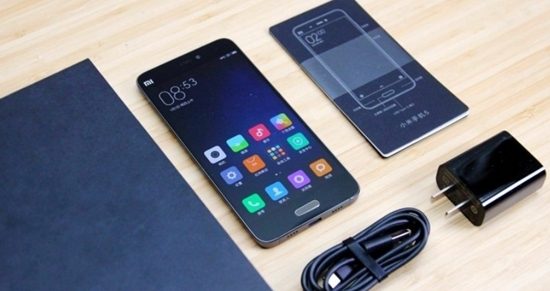
小米5就是这种转变的例证。 作为该公司的旗舰机型,它并不仅仅停留在货架上。 它通过时尚设计和原始性能的结合来吸引人们的注意力。 但它实际上提供了什么?
The Specs Behind the Hype
To understand the significance of the Mi5, you need to understand its hardware. It’s more than just a pretty face.
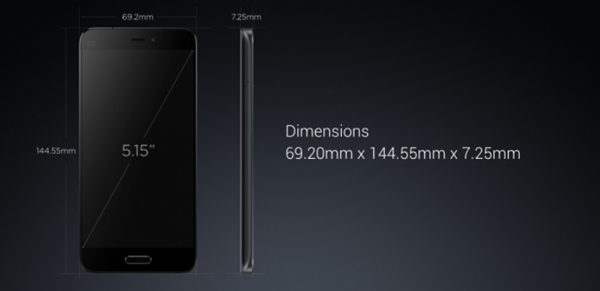
- Display: 5.15 inch IPS LCD display with Full HD (1080p) resolution. It is bright with 600 nits, and the screen itself occupies 73% of the front surface.
- Processing power: Equipped with Snapdragon 820 chipset. It is a quad-core processor with a clock frequency of 2.15 GHz.
- Memory and Graphics: 3 GB RAM and Adreno 530 GPU combination.
- Storage: 32 GB or 64 GB internal storage. Note: This is not expandable.
- Camera: The rear unit is a 16-megapixel shooter with dual-LED flash and can record 4K video at 2160p resolution. The front camera is 4 megapixels with an 80-degree wide-angle lens and 1080p video capability.
- Battery: Non-removable 3000 mAh battery with fast charging support.
- Connections: 4G LTE support, fingerprint sensor, USB Type-C port.
金属机身,而不仅仅是塑料机身
小米 5 打破了大部分预算和中端市场的全塑料美学。 相反,它提供了精致的金属机身设计。 这不仅仅是耐用性的问题。 这是关于感知的。 对于一个被称为“价值之王”的品牌来说,提供优质的感觉是一项战略举措。 这标志着小米已经准备好在质量上与大厂商竞争,而不仅仅是价格。
金属机身、高分辨率显示屏和旗舰级处理器的结合创造了一款感觉昂贵的设备。 它挑战了你需要花一大笔钱才能买到一部感觉很充实的手机的想法。
Is that enough?
Mi5 is in a difficult situation. It has the specs of a high-end phone but is priced at the price of a mid-range phone. The lack of expandable storage may frustrate some users. The 3000 mAh battery is good enough, but not enough, especially when playing 4K videos. However, the addition of a USB Type-C port and a fingerprint scanner shows that Xiaomi is up to date with the latest standards.
It’s not perfect. No phone is. But that’s a statement. Xiaomi proves that high performance doesn’t
Edge to edge test
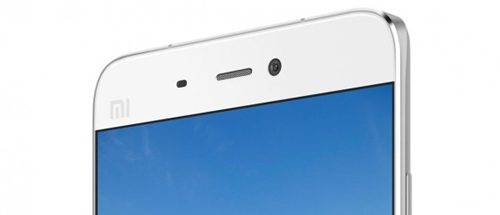
Look at the front of the device. The screen rules everything. Engineers have reduced the size of the top and bottom bezels to the point where they are almost invisible, and there are practically no sides. It’s a design decision that cries out for more screen real estate.
Result? Amazing 73% screen-to-body ratio.
But there is a catch. You can’t have everything. The physical button remains on the bottom panel. It breaks the illusion of a seamless glass panel, but serves two purposes. It’s a home button, yes, but it’s also a fingerprint reader. Safety and navigation are integrated into one touch point.
Why hold a button when everyone else relies on gesture controls or sensors below the screen? Sometimes physical feedback is just faster. You don’t have to search to know where you are. One press confirms that you are home. It’s a compromise, but one that prioritizes functionality over pure aesthetic minimalism.
The screen is undeniably the star. But this button anchors the experience to the real world.
Turn the phone over and anyone who has used a phablet in recent years will immediately recognize its appearance. The design language of the Samsung Galaxy Note 5 is on full display here. The volume control and the power button are comfortably placed on the right edge. This is standard stuff, but the execution feels intentional.
On the left side there is a place for a SIM card tray. It’s flat and maintains the sleek silhouette of your device without adding unnecessary bulk. The metal frame that wraps around the frame is surprisingly thin. Looks sharp. It feels accurate.
Why are the edges tapered?
If you look closely at the side, you can see that the metal on the top and bottom is thinner. This is not a manufacturing defect. This is an aesthetic choice thanks to the back panel. The back of the phone has a curved circular geometry. This curvature causes the metal frame to taper inwards as it meets the edges.
In the Samsung Galaxy Note 5 we saw just this method. The designers prioritized a certain visual flow. The result is a device that doesn’t look like a sheet of glass or metal. It looks like it was carved.
Handling meets aesthetics
This tapering serves a dual purpose. 首先,First, it improves ergonomics. The narrowing edges fit more naturally into the palm. It reduces the “wedge” effect that many large phones suffer from. Second, it adds to the visual appeal. The phone does not look heavy, even if it is.
The design makes the device easy to hold while adding an aesthetic layer that distinguishes it from blockier competitors.
It is a subtle detail. But when you pick it up, the difference is noticeable. The phone disappears into your hand a bit more than its dimensions might suggest.
The back of the phone is defined by its restraint. There is no clutter. Only clean lines and a functional placement. The camera module sits quietly in the upper-left corner. The dual-LED flash next to it means you’ll never be left in the dark when the lights dim. Move your eyes to the center-bottom and you will find the brand logo. That’s it. No unnecessary textures. There are no decorative rings around the lens.
But don’t mistake this minimalism for cheapness. The back panel has a matte, patterned coating. This is not just about aesthetics. It changes the way the phone feels when you hold it in your hand. It has a texture that grips your skin. Reduces slick, slippery factor commonly found in glossy glass designs. You hold it, and it stays put.
Cameras and Performance

Camera: 16 megapixel flagship
The rear camera of the Xiaomi Mi5 is not just about the number of pixels. It has a 16 MP sensor and an f/2.0 aperture. The secret to letting in more light is a wide aperture. This means you can take better photos in low light without having to increase ISO or increase graininess.
The hardware that supports this is serious. It uses a Sony Exmor RS sensor. This name is well known for its flagships. This sensor can handle low light and high dynamic range better than conventional chips. This camera also features 4-axis optical image stabilization (OIS). This is rare in this price range. It stabilizes not only digital images but also video. result? Photos are clearer and videos are more stable, even if your hands shake a little.
The video function corresponds to the photo function. The Mi5 records 2160p 4K video. This is Ultra HD. You can also capture dramatic moments in slow motion with the Slow Motion function. In HDR mode, bright skies and dark shadows don’t cancel each other out.
One practical detail is worth noting. It is the sapphire crystal that covers the lens. The glass is easily scratched. Sapphire is one of the hardest materials. It is scratch-resistant and absorbs shocks. The camera lens protrudes, obviously. But thanks to the sapphire coating, you can throw it in your bag with your keys without worrying about damaging the optics.
自拍和前置功能
手机的正面讲述了一个不同的故事。 与后部相比,4 MP 自拍相机听起来可能比较温和。 但它并不想与主要射手竞争。 它是为社交共享而设计的。
它具有 80 度广角镜头 。 这是集体照或风景自拍照的关键。 您不必后退十英尺才能将每个人都纳入画面中。 广阔的视野捕捉更多的背景。 It’s less about technical perfection and more about getting the shot.
正面的视频录制上限为 1080p 全高清 。 对于社交媒体平台来说,这个分辨率已经足够了。 该相机具有人脸识别 功能,可加快对焦速度。 当您试图调整光线时,您不会看到模糊的东西。 还有一个计时器 选项。 对于没有朋友拿着手机的单人拍摄很有用。
该设计平衡了功率和实用性。 它对前置摄像头并没有过度承诺。 相反,它提供了用户真正需要的东西:清晰的图像、广角和易于使用的功能。 后置摄像头是重头戏。 前面是实用的伴侣。
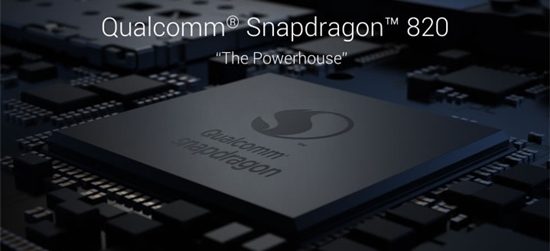
The internal hardware of the Xiaomi Mi 5 is not subtle. It was built on Qualcomm’s Snapdragon 820 processor, which was the most powerful processor released by the company at the time. This is serious piece of silicon. This chip has a quad-core and runs at 2.15 GHz. This is fast enough to make old flagship phones feel slow in comparison.
This processing power is powered by 3 GB of RAM. Although this is not the largest memory allocation on the market, it works efficiently with the Adreno 530 graphics processing unit. They get through difficult tasks together without stuttering.
AnTuTu Benchmark Performance
How does this translate into real-world performance? The numbers speak louder. Xiaomi Mi 5 crossed the 150,000 mark in the Antutu comparison. It’s not a narrow lead. It was an overwhelming score.
This performance puts this device ahead of many other flagship models on the market. While some competitors may offer higher-resolution screens or better cameras, the Mi5’s raw computing power still leads the way. When users ask which phone can best handle multitasking, the answer is usually this configuration.
“Powered by Snapdragon 820, 4 x 2.15GHz cores and 3GB of RAM, the Mi5 doesn’t just follow trends, it leads them.”
The combination of the Adreno 530 GPU and the high-frequency CPU creates a synergistic effect that reduces the latency of games and complex applications. The equipment works so efficiently that you don’t even notice it’s working. This is the difference between fast phones and instant phones.
Does the 3GB RAM limitation prevent it? In most everyday scenarios, no. System management is optimized to use this memory efficiently. However, users who use dozens of large applications at the same time may experience limitations. However, for the average power user, the bottleneck is elsewhere. With the Snapdragon 820, processing power is never an issue.
This level of performance was rare at the time. Most phones hovered around 100,000 to 120,000. After clearing 150,000, Mi5 enters the Elite Company. This forced other manufacturers to rethink their specifications. The battle for the lead is getting even tougher.
The impact of this hardware goes beyond benchmarks. This affects battery life, thermal management, and overall system responsiveness. Cell phones that process data faster can save energy because you can sleep more deeply between tasks. Therefore, the Snapdragon 820 is more than just a marketing point. This is a fundamental change in the way mid-range and budget phones compete with high-end devices.
The Xiaomi Mi 5 proves that you don’t have to pay a high price for flagship-level performance. available, accessible, and powerful. This changes the dynamics of the market. It raises consumer expectations.
Looking at the hardware in a few years, the numbers speak of rapid development. But it was at the top at the time. The question remains: how much performance do we really need? 150,000 for many people
Storage options are available in three levels: 32, 64 and 128 GB. The catch? There are no expansion slots. You’re stuck with what you buy.
Memory varies by capacity. If you go for the 128GB version, you get 4GB of RAM. The rest remain at a lower level. For power users, this is a simple compromise.
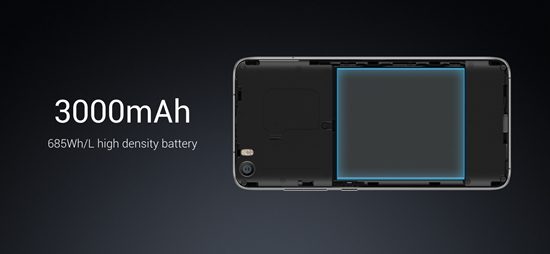
Battery capacity 3,000 mAh. It is glued and cannot be removed. It cannot be corrected by the user. It’s just sealed inside the frame.
But it lasts. One day of normal use? No problem. It handles the standard grind without breaking a sweat.
Charging is where things get interesting. Built-in fast charging support. Just leave it in the morning and you’re good to go. A full drain recovers to 80% in just 60 minutes. This is real speed. It’s not marketing nonsense.
This phone comes pre-installed with Android 6 Marshmallow. It is now an outdated operating system, but it was the standard when the device was launched. Connectivity keeps pace with the future. USB Type-C port included. One port for charging and data. Reversible. Modern.
Pricing and Editor’s Take
(Continued from the previous part)
The price range is mid-range and offering decent specs for the cost. You pay for USB-C and fast charging, but you lose storage flexibility. Is it worth it? It depends on how much you rely on local storage. If you stream everything, the 32GB model is enough. Choose 128GB if you want to store photos and apps locally. RAM jumps help with multitasking and make the upper level smoother for heavy users. This is a solid choice for those who need reliability over expandability.
The specs sheet reads like a weapon. At its core sits what is currently the market’s fastest processor. Pair that with 4 GB of RAM, and you have a machine built for speed, not just survival. The battery is rated at 3,000 mAh. It is not massive, but for this class of chip, it is a reasonable compromise between performance and endurance.
The real story here is not just the hardware. It is the gap between what is available globally and what is available in local markets.
The domestic availability problem
Despite the impressive configuration, the device has not officially launched in our country yet. There is no official word from the manufacturer regarding a release date. This silence creates a vacuum of uncertainty.
“If launched at an appropriate price, the device could achieve significant sales success.”
This is the central tension. The design has drawn massive attention. The specs are competitive. But without a confirmed launch date or price point, it remains a hypothetical purchase for many.
Why the price tag defines the success
The Mi5 was positioned aggressively. During its global introduction, the company emphasized a competitive entry price. This strategy was clear. They wanted volume. They wanted to undercut the flagships that cost twice as much while offering 90% of the performance.
If they stick to that pricing model, the local adoption could be swift. The combination of a top-tier chip, ample memory, and a lower price point is a hard formula to ignore.
However, if the import costs, taxes, or distributor margins drive the price up, the appeal diminishes. The specs are perfect. The timing is uncertain. The price is the only variable left to answer.
For now, the phone sits in a waiting room. The technology is ready. The demand is visible. But the key to the door has not yet been turned.