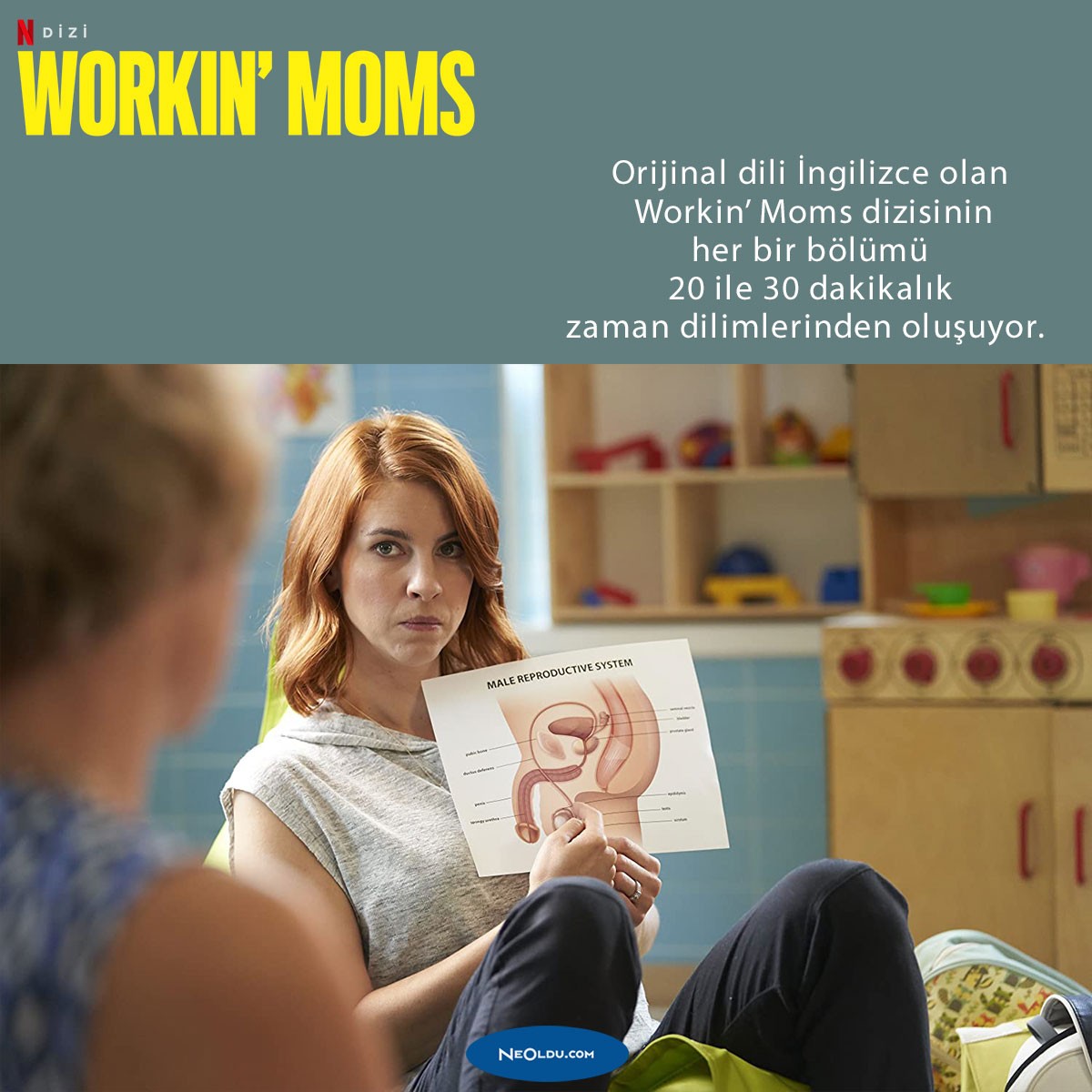
The show started in 2017 as a small production on CBC television in Canada. Then Netflix bought the rights, and the series about a tired mother suddenly became a worldwide hit. Workin’ Moms has found an audience. It has become one of the most talked about series in recent years. If you’re wondering if it lives up to the hype or you’re just looking for your next nice watch, here’s the breakdown.
The show follows a group of Toronto moms as they try to balance their careers, friendships and the fact that they’re barely holding it together. It’s raw, funny and often uncomfortably real. Season 2 premiered on Netflix in July 2020, and the show’s fan base continues to grow far beyond its original streaming numbers.
Main actors and roles
The focus of the show is Kate (Catherine Reitman), a writer and mother of two children. She lives a life where she is constant whirlwind of deadlines and changing diapers. Her best friend is Marybeth (Anna Silk), a wealthy socialite who seems to have it all figured out but secretly struggles with infertility and marital issues. Then there is Frankie (Fraser Anderson), a single mother who works as a hairdresser and often finds herself in questionable situations. and Simone (Shelley Thompson), a fiercely independent lawyer dealing with her own family drama.
The dynamic between these four women drives this series. They support each other, but also compete, judge and sometimes betray each other. The messy and complicated friendship feels real. The supporting cast such as various companions, bosses and children add layers to the story without overwhelming it.
Why does it resonate with viewers?
The show succeeds because it refuses to idealize motherhood. There is no magical moment when everything goes well. Instead, there are a lot of genuine connections, bursts of humor and messy moments. It depicts the unique anxieties of modern mothers trying to be good parents, successful professionals and fun friends at the same time.
Critics and viewers praised the show for its honest portrayal of women’s struggles. It does not shy away from topics like postpartum depression, workplace discrimination, and the pressure to maintain a perfect image on social media. The humor is sharp, often self-deprecating and very empathetic.
Where to Watch and how to start
If you missed the CBC premiere, you can watch the show on Netflix. The show is available in many regions and attracted a wide audience. It’s fast-paced and each episode is around 25 minutes, which makes it easy to binge. You can start with Season 1, which establishes the characters and their conflicts, and then move on to Season 2, which deepens the relationships and raises the stakes.
What are the fans saying?
Audience reviews were overwhelmingly positive. Many viewers rated the show `suunnittelevaksi'', hauskaksi” ja `” as heartwarming.”Some appreciated the focus on strong female leads and female friendships. Some enjoyed the combination of comedy and drama, noting that the show could be funny one moment and heartbreaking the next. The general consensus is that this drama will make viewers feel
Why Workin’ Moms fits into your schedule (and why it matters)
If you’re looking for a show to respects your fragmented attention span, “Working Moms” is the answer. Each episode is 20-30 minutes long. That specific window is perfect for modern viewing habits. You can watch the whole arc before dinner. You can finish a story arc before going to bed. No need to spend two hours on a commitment that may not pay off.
Behind-the-scenes logistics reflect this punchy pacing. Wolf & Rabbit Entertainment handles the production. They know how to keep the pace going without the scene dragging on. However, the creative burden fell on the shoulders of Karen Moore and Rebecca Kohler. The script was written by both of them together. Their collaboration likely contributed to the sharp, overlapping dialogue that set the show’s tone.
The Format Advantage
Why does runtime matter? In an age of streaming fatigue, short episodes are a psychological win. You do not feel guilty for binging three episodes in a row. You feel accomplished. This structure allows for concise storytelling. Each scene has a mission. There is no room for meandering subplots that go nowhere.
Moore and Kohler have built a world that feels expansive. They tackle issues of motherhood, burnout, and friendship in a specificity that resonates. The writing is full of jokes and emotions. Condensing it to 30 minutes requires precision. It requires every line of dialogue to have a dual role.
Time constraints often increase creativity. Shorter episodes require the writers to trim the fat.
This approach makes the series accessible. This is for parents who have 10 minutes between school and grocery shopping. This is for viewers who want a quick hit of catharsis. The show does not ask for much. It delivers exactly what is promised.
Behind the scenes
Moore and Kohler’s partnership is a central of the show. They do not just write; They shape the culture of the set. This dynamic likely influences the improvisational feel of a given scene. The result is a naturalism that feels earned rather than accidental.
Wolf & Rabbit Entertainment provides the infrastructure. They manage budgets and schedules. But the soul of this project comes from the writers. Their ability to balance humor and genuine pathos continues to draw viewers in. Each episode is an self-contained unit, but it build toward a larger narrative.
Is it easier to produce a 30-minute show than an hour-long drama? Sometimes. The pressure per minute is higher. Every second counts. But the reward is a product that fits seamlessly into the chaotic life. You can watch it anywhere. You can pause it without guilt. You can return to it when you are ready.
The format is not just for convenience. It is a statement. It says that women’s stories, especially mothers’ stories, don’t need to be padded to be valid. They can be sharp. They can be short. They can be real.
Catherine Reitman didn’t just create “Workin’ Moms.” She also acts in it.
This is a rare dual role on television.
The show started airing in 2017 and has lasted for four full seasons. Reitman plays a character named Kate. This chaotic, funny and deeply relatable journey forms the basis of the show. This is not just an adult struggle. It’s a story about the messy realities of raising children while trying to maintain your own identity.
And then there are the babies.
For some people, they can be background noise. But they are definitely worth a look. Children on screen bring an authenticity that is often lacking in scripted comedies. These are not just props. They’re Reitman’s spiritual core, and they’re in the midst of domestic turmoil.
The attraction of the movie “Workin’ Momss” is the cast and main roles of young children.
If you haven’t watched it yet, you’re missing out on one of the funniest and most honest depictions of motherhood on television today. The baby stories alone make it worth the screen time.
The chaos of balancing everything for “Working Moms”
Trying to be a good parent, a dedicated employee and a normal person at the same time creates special fatigue. Working moms just aren’t buying this fight. It grabbed me by the throat and shook me until I started laughing.
The play revolves around four women. they are friends. they are mothers. They are always just one small crisis away from collapse. The show focuses on the messy realities of life after giving birth. This is not the polished smiley version seen in the commercials. This is the raw, stressful and often hilarious side of parenting.
The characters in “Working Mom” face their shattered self-esteem. They are trying to understand who they are other than their mother. They don’t buy themselves enough time. every time. Balancing work and family feels less like a scale and more like walking a tightrope across a pit of snakes.
This sense of tension is what makes this play so compelling. It’s exciting to watch. Sometimes it’s hard. But it’s also really fun. Humor comes from real life situations. I feel my panic. You see your friend sinking into despair.
The four main characters navigate a world that seems designed to wear them down. They face constant problems. small. Something big. I’m the type of person who wakes up at 3 a.m. The play depicts the psychological toll of this lifestyle. It represents anxiety. sin. Sometimes I feel like screaming into my pillow.
Why do we want to observe them? Because it’s true. Not sterile. The show follows the lives of working mothers who try to hold things together while falling apart. Somehow they continued on their way.
Finding humor in chaos
As we watch Kate, Annie, Frankie and Jenny stumble through their chaotic and complicated lives, this drama makes us laugh despite, or perhaps because of, their struggles. They are more than just friends. they are a unit. When one of them faces disaster, the other three show up and offer not with solutions, but with support and a sharp wit that turns tragedy into comedy.
The trick is not to ignore the hard stuff. It was looking at it through a lens of irony. Every setback, every heartbreak, every silly mistake is followed by a well-timed joke. This dynamic allowed the audience to breathe. It made the characters relatable in a way that pure drama cannot.
“They didn’t just survive the doom, they laughed it off until Doom lost his powers.”
This is not joy without reason. It’s a coping mechanism. They keep their sanity by using their misfortune as a punch line. the viewers got to share in that resilience. It is a special comfort. Even if everything goes wrong, your friends will help you find the funny side.
The reality behind being a #workingmother and balancing career and family
Cast that defines modern parenthood
At the heart of Working Moms is the cast, a group of actors who don’t just play the characters, but live the messy, grueling and hilarious reality of modern motherhood. Kate, played by Catherine Reitman, is a neurotic, ambitious, deeply flawed protagonist who always tries to have it all but always fails. She will be joined by Jessalyn Gilsig who plays Mary. Mary is rich and manipulative, but also strangely caring and considers parenting a competitive sport. And then there’s Dani Kind as Frankie, an aspiring artist trying to find her footing, and Juno Rinaldi as Celia, a confused new mother who brings a different kind of chaos to the group.
These four women create such authentic characters that their struggles feel more like a documentary about their own lives than a scripted drama. You feel guilty, tired and fleeting joy from quiet moments. Few shows capture the special density of female friendships so accurately. But the world they inhabit is filled with supporting characters who are just as important to the show’s success.
Philip Sternberg plays Kate’s husband, Matt, which gives the film a quiet, down-to-earth quality. Ryan Belleville as Owen and Olunike Adeliyi as Nicole add to the workplace dynamics. Denise Andress, Katherine Burrell, Sarah McVeigh and Peter Kelehan make up the ensemble. Each actor contributes to the show’s rich relationships, whether they’re dealing with infidelity, a job change, or the simple act of trying to cope with being bullied by a toddler.
Why does chemistry work?
Kate McLennan’s script is sharp and unflinching, but Working Moms is more than just writing. It’s chemistry between leads. It’s clear that they’ve built a trusting relationship over the years that has led to closeness on screen and closeness off screen as well. When they argue, it feels real. When they laugh, it feels earned. This isn’t just a show about working moms. This is a study of how women support each other when the world demands perfection from them.
The actors create such authentic characters that their struggles feel more like a documentary about your own life than a scripted drama.
You begin to see friends in these characters. Maybe you’re the Mary who manages expectations on your team. Or maybe you’re like Frankie, looking for stability in a chaotic world. The show doesn’t judge. It’s just an observation. In doing so, it validates the experiences of millions of women who struggle to balance the scales every day.
Beyond the Lead Roles
Although the four leads take up most of the screen time, the supporting actors add important depth to the story. Matt, played by Philip Sternberg, often is often the straight man to Kate’s chaos, providing a contrast that highlights her instability. Ryan Belleville and Olunike Adeliyi bring their own complexities to the workplace, illustrating the intersection of professional identity and personal life. These characters are more than just props. They are fully realized individuals with their own arcs, desires and failings.
The show’s ability to weave these stories together is a testament to the group’s skill. They don’t overshadow each other. They complement each other. The result is a series
Why Working Moms is a reality for working moms
If you’re feeling lonely and caught in a tug-of-war between career goals and family life, Workin’ Moms is the antidote you need. The show follows four women as they navigate workplace politics and face the chaotic demands of their spouses and children. It’s not just about motivation. It provides validation. This series is available on Netflix and has a way of making you feel seen.
The reaction of the public was divided, but they were deeply interested. For many, this is the perfect “snack comedy”. Each episode is about 20 minutes long, so you can easily watch it during a nap or a late night relaxation moment. The show deals with the physical and emotional effects of childbirth in a rawness that hits close to home way. We see the characters grapple with the potential pitfalls of future partnerships, the friction of returning to work, and the constant pressure to prove their worth on an increasingly hostile career ladder.
Kate, the central character, embodies the angst of modern working mothers. She is career-driven, constantly vigilant about her position, and often finds herself competing with new hires who seem to have it all figured out. Her dedication is admirable, even if her specific aesthetic choices (like lip fillers) might raise an eyebrow or two for some viewers. It’s this kind of specific, unglamorous detail that grounds the show.
The Writing Behind the Laughter
Catherine Reitman, the creator, has struck a nerve. Critics and fans alike have compared her writing style to a more mature Lena Dunham, noting her ability to deepen her characters with each season. The comedy is measured. The jokes are not forced. It flows. The way her characters navigate the absurdities of modern motherhood and female ambition is so real you might find yourself cheering from the couch.
“This shows us what real life is like: no matter what we do, things will never be completely perfect. And that’s strangely comforting.”
The show avoids common feminist clichés. It doesn’t attract attention, and we don’t write click headlines about gender politics. Instead, it depicts a world where women are complex, flawed and ambitious. The relationship between Kate and Nathan (played by Reitman and Philip Stenberg in real life), including their marriage, feels real. Some fans even like the dynamic between other characters, such as the Lionel and his partner, which portrays the different stages of parenthood in a relaxed and natural way.
Season by season: The roller coaster
As the series progresses, reception shifts. The first two seasons were widely considered nearly perfect. They offer compelling career motivations and parenting advice that will keep viewers glued to their screens for weeks. The show does not shy away from difficult themes, such as women’s sexuality, the fragility of friendships, the realities of marriage and the constant negotiation of professional identity.
However, season 3 caused friction. Some viewers didn’t feel the connection. The plot points seem forced, and the character arcs drifted away from the grounded realism that defined the earlier episodes. While the characters sometimes make questionable choices, the series usually provides enough background to make those choices feel earned. In the third season, some felt that the context was missing.
Despite the decline in quality for some fans, expectations for next season are high. Season 4 is highly anticipated, with many expecting the show to return to its roots.
The Verdict on Workin’ Moms
For some, the show is a lifeline. It expresses the feeling of returning to work after a long hiatus: guilt, excitement and exhaustion. This is more than just a lightweight watch. It surrounds you. As a working mother, there were moments where the screen felt too close to my own reality, bringing tears to my eyes amidst the laughter because the screen feels so close to my own reality.
However, it was not universally loved. Some critics felt that the writers tried too hard to portray a “strong woman” and lost their way, resulting in characters who seemed unnecessarily hostile to their perfect partners. Depending on the interpretation, ambition is pettiness. Each female character can independently drive you up the wall, which might be the point, or it might be a misstep depending on the mood.
Ultimately, the “working mom” is a mirror. It reflects the messy, funny, frustrating and triumphant reality of being a woman who refuses to choose between career and family. It’s flawed and sometimes contradictory, but definitely important to anyone who feels alone in the chaos.
The wait for new content continues. The fourth season and Seasons 4 and beyond are expected to resolve the narrative threads left hanging, but for now, the debate over the show’s success or failure is still part of the conversation. This is a show that will stay with you long after the credits roll.