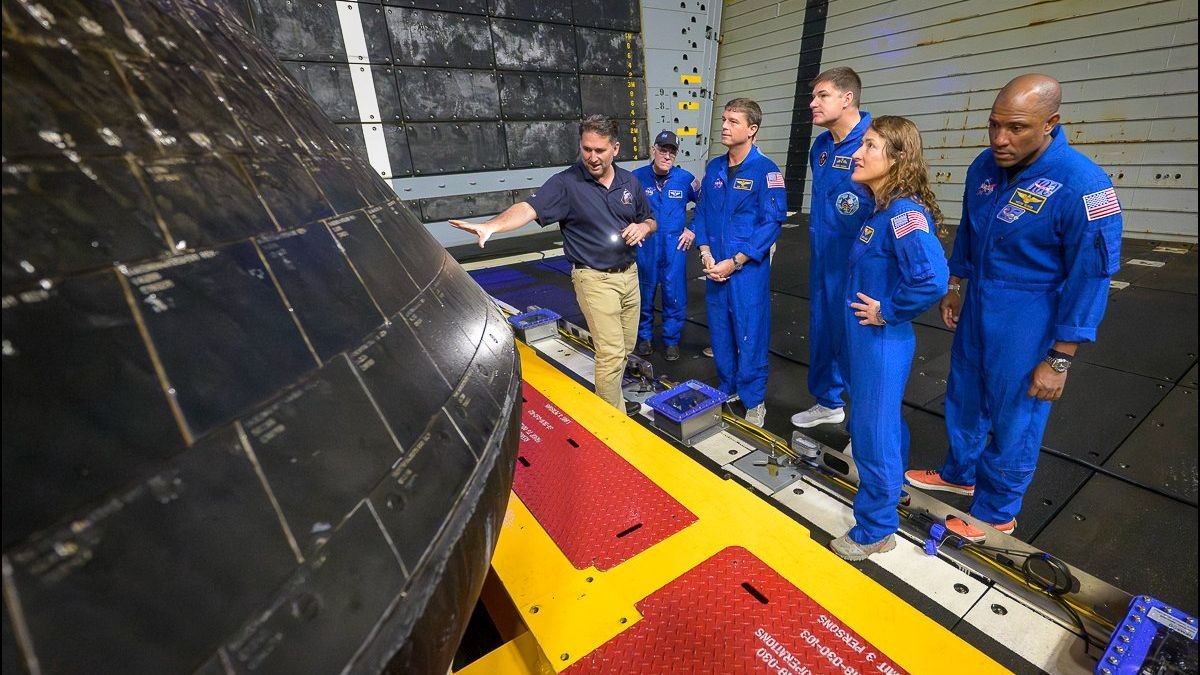
The Artemis 2 mission has successfully completed its return to Earth, overcoming significant technical concerns regarding the Orion capsule’s ability to withstand the extreme heat of atmospheric reentry. Despite years of debate and scrutiny, the spacecraft—named “Integrity” by its crew—survived the descent without the structural damage that had previously alarmed engineers.
Overcoming the Shadow of Artemis 1
The primary source of anxiety surrounding this mission stemmed from the performance of the Artemis 1 uncrewed mission in late 2022. While that mission was considered a success, the Orion capsule’s massive 16.5-foot heat shield experienced significantly more wear and damage than NASA had originally predicted.
This discrepancy raised a critical question for the spaceflight community: Could the current heat shield design safely protect human astronauts?
Returning from lunar orbit involves hitting Earth’s atmosphere at much higher velocities than low-Earth orbit missions. This results in temperatures reaching approximately 5,000 degrees Fahrenheit (2,800 degrees Celsius). To address the issues seen in Artemis 1, NASA implemented a strategic change for Artemis 2:
– A Steeper Reentry Angle: By adjusting the trajectory, NASA ensured the capsule spent less time in the most intense temperature zones.
– Design Continuity: Despite some pushback from experts, NASA opted to keep the existing heat shield design but relied on this new flight path to mitigate risk.
The Crew’s Assessment
Following the splashdown on April 10, the crew—consisting of NASA astronauts Reid Wiseman, Victor Glover, and Christina Koch, along with Canadian Space Agency’s Jeremy Hansen —conducted a visual inspection of the vehicle.
Commander Reid Wiseman reported that the reentry felt “really amazing” and “very smooth.” Upon inspecting the hardware, the crew noted:
– Minor Charring: Some “char loss” was observed on the “shoulder,” the transition point where the heat shield meets the spacecraft’s cone structure.
– Structural Integrity: Beyond that minor wear, Wiseman described the underside of the shield as looking “wonderful” and “great” for a crew of four.
While these visual observations are encouraging, NASA will conduct a rigorous, data-driven analysis of the shield’s performance over the coming months to confirm the technical success of the mission.
Looking Toward the Future of Artemis
The success of Artemis 2 provides a vital data point, but it also marks the end of an era for this specific heat shield configuration. NASA has indicated that the design will be modified for future missions to ensure even higher safety margins.
The upcoming Artemis roadmap shows a shifting scale of thermal challenges:
– Artemis 3: Will focus on Earth orbit, testing docking procedures between Orion and lunar landers (such as SpaceX’s Starship or Blue Origin’s Blue Moon). This mission will face much less intense reentry conditions.
– Artemis 4: Will represent the next major thermal test, as it aims to return astronauts from the lunar south pole, necessitating a high-speed, high-heat reentry similar to Artemis 2.
The successful reentry of Artemis 2 validates NASA’s trajectory adjustments and provides the necessary confidence to proceed with the increasingly complex lunar missions ahead.