For decades, scientists believed Australia was home to only one species of koala. That assumption has now been overturned. Researchers have confirmed the existence of a second, distinct species of koala that inhabited Western Australia until it went extinct approximately 30,000 years ago.
This discovery not only adds a new chapter to the evolutionary history of marsupials but also highlights how drastically the continent’s ecosystems have shifted over millennia.
Unearthing the Evidence
The path to this discovery began with a trove of fossils collected from caves in Western Australia over the last century. While numerous specimens dated between 137,000 and 31,000 years ago existed, the material was previously too fragmented to definitively classify the remains as a separate species.
The breakthrough came thanks to a significant donation from the family of the late speleologist Lindsay Hatcher. Hatcher had discovered numerous ancient remains during expeditions in the south-west of Western Australia. Among his collection was a koala skull in exceptional condition.
“Upon examination of that skull, we noticed differences with modern koalas that got us to start working on the fossil material in the collection,” says Kenny Travouillon, a researcher at the Western Australian Museum.
A Subtle but Significant Difference
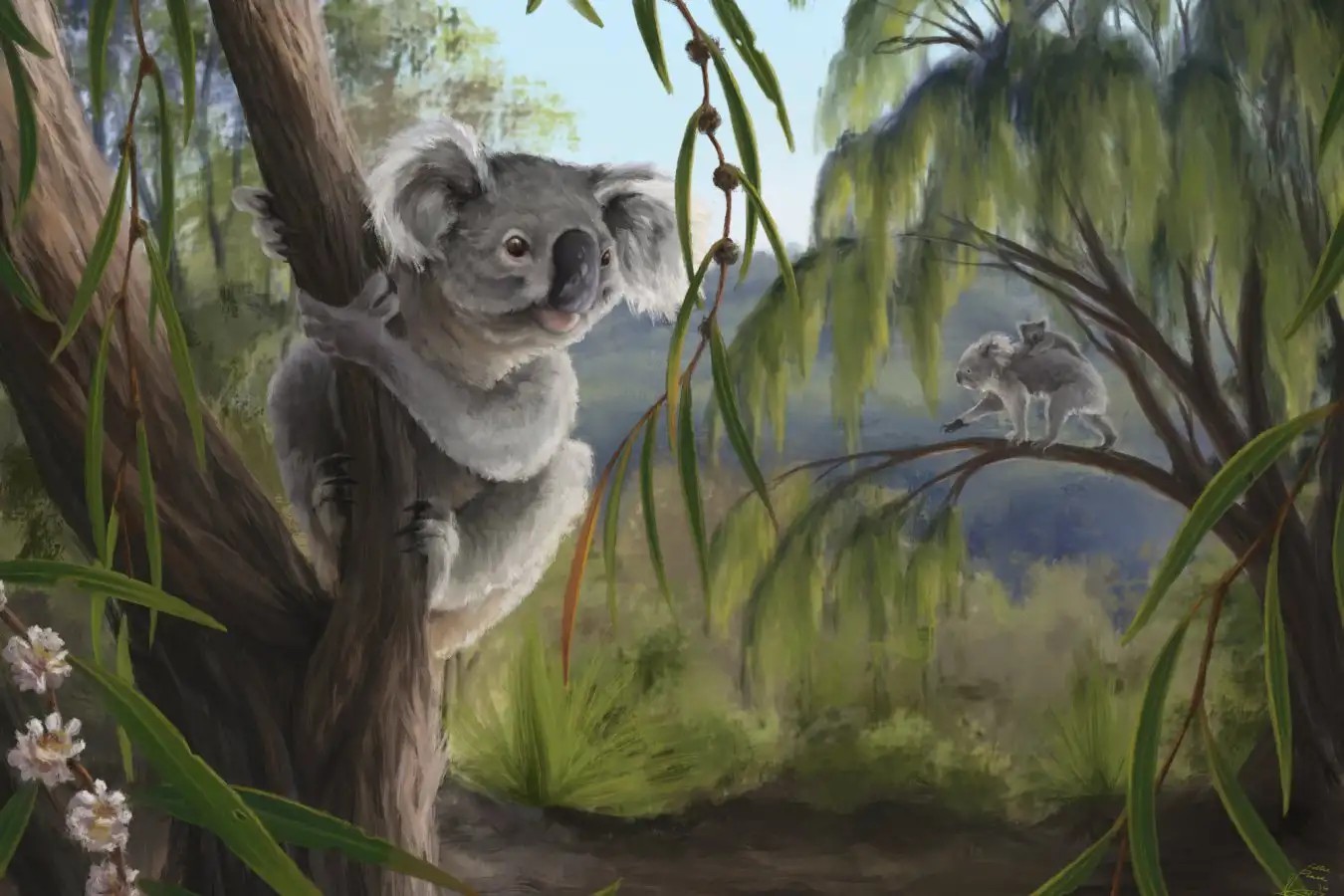
To the untrained eye, the newly identified species, named Phascolarctos sulcomaxilliaris, looked remarkably similar to the modern eastern koala (Phascolarctos cinereus ). However, detailed analysis revealed distinct anatomical variations that point to different evolutionary adaptations.
Key physical differences include:
- Shorter Heads and Jaws: The Western Australian koalas had more compact skulls.
- Different Chewing Mechanics: They possessed larger teeth and a shorter, more efficient jaw structure for breaking down leaves, suggesting a different chewing style compared to their eastern counterparts.
- Less Agile Skeletons: The skeletal structure suggests these animals were less agile, likely spending less time moving between trees.
- Enhanced Sensory Features: A large groove on the cheek indicates the attachment of a larger muscle. This may have supported a larger lip for grabbing leaves or allowed for inflated nostrils, enhancing their sense of smell to detect foliage from greater distances.
Travouillon summarizes the distinction simply: “They were same-same but different.”
Climate Change and Extinction
The disappearance of P. sulcomaxilliaris is linked to profound environmental changes. Around 30,000 years ago, Western Australia’s climate dried out significantly, causing the forests that sustained these koalas to vanish.
This extinction event was part of a broader collapse of the region’s megafauna. The Western Australian koala shared its habitat with now-extinct giants such as:
- Short-faced kangaroos
- Giant echidnas
- The giant marsupial Zygomaturus
- Thylacines (Tasmanian tigers)
- Larger species of Tasmanian devils
Human Presence:
The timeline of this extinction coincides with the presence of Indigenous Australians in the region. “Our first peoples in Western Australia would have lived amongst them and they would have been witness to their extinction,” notes Travouillon. This raises important questions about the interplay between climate change, human activity, and biodiversity loss during that era.
Scientific Consensus and Future Research
The findings have been met with strong support from the paleontological community. Tim Flannery of the Australian Museum in Sydney describes the study as making a “convincing case for the distinctiveness of the Western Australia koalas as a unique species.”
Looking ahead, researchers are hopeful that advances in technology may allow for the extraction of ancient DNA from these fossils. Such data could provide even deeper insights into the genetic relationship between the extinct western species and the vulnerable eastern population that remains today.
Conclusion
The discovery of Phascolarctos sulcomaxilliaris reshapes our understanding of Australia’s natural history, proving that the koala was once a more diverse genus with distinct regional adaptations. It serves as a poignant reminder of how sensitive these ecosystems are to climate shifts and underscores the importance of preserving the remaining habitat for the single surviving koala species.