A recent study has uncovered a previously unknown meteor cluster, providing a rare glimpse into the violent processes that reshape our solar system. By analyzing millions of observations, researchers have identified a stream of 282 meteors that points to a “hidden” asteroid being systematically dismantled by intense solar heat.
The Discovery: Reading the “Dust Trails” of Space
While much of the public attention regarding space threats focuses on large asteroids capable of impacting Earth, the smaller debris entering our atmosphere daily offers a different, equally vital scientific story.
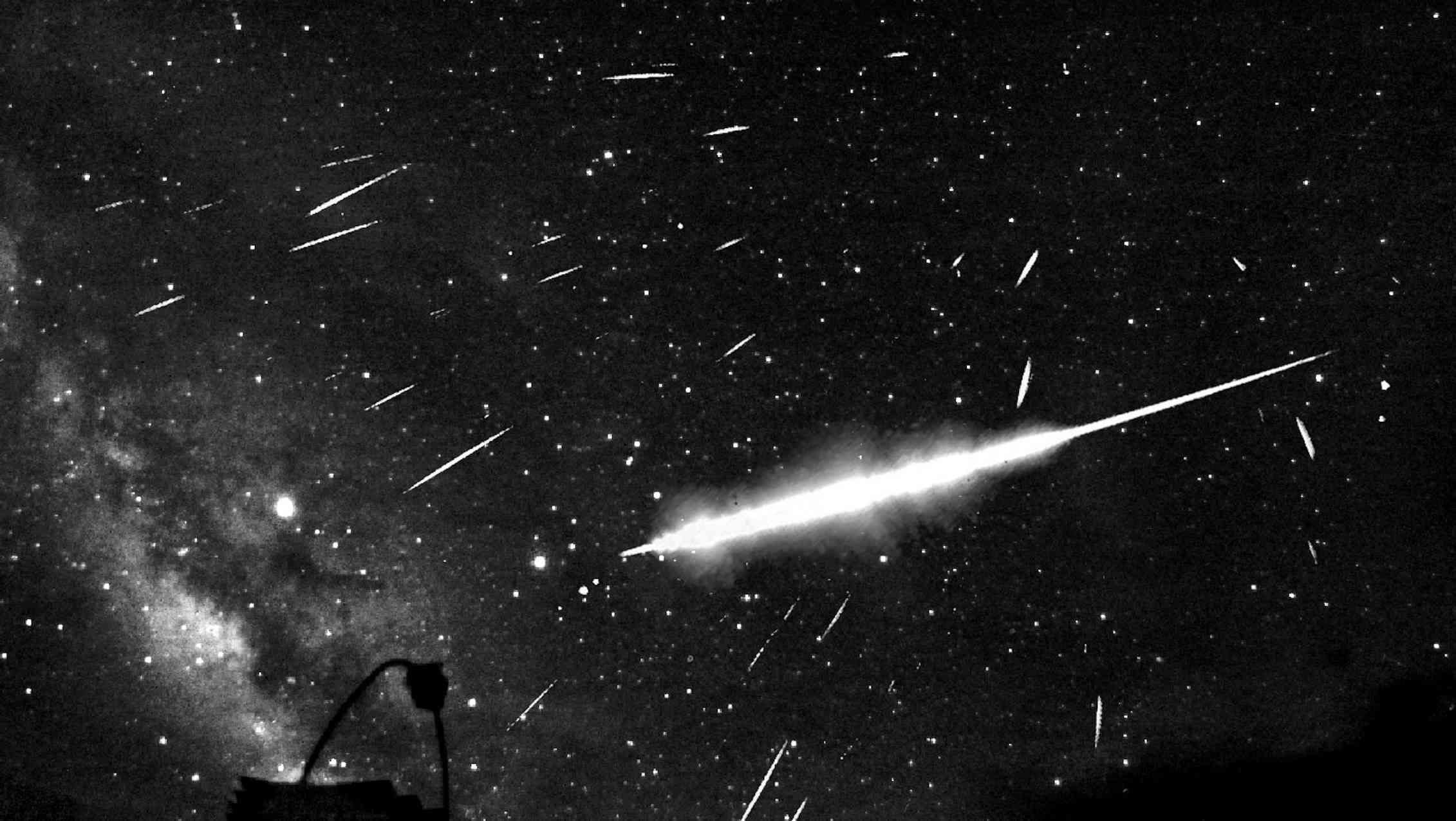
In a study published in The Astrophysical Journal in March 2026, researchers utilized global camera networks across Canada, Japan, California, and Europe to sift through massive datasets of meteor observations. They identified a distinct cluster of 282 meteors—a signature of recent activity from an object that likely ventured too close to the Sun.
To understand this discovery, it is helpful to distinguish between the two primary sources of these “shooting stars”:
– Comets: Often described as “dirty snowballs,” these icy bodies from the outer solar system release dust and gas as they approach the Sun through a process called sublimation.
– Asteroids: Primarily rocky and dry, these leftovers from the early solar system do not typically shed material unless acted upon by external forces, such as heat stress, collisions, or rapid rotation.
A “Baking” Asteroid
The newly discovered meteor stream is unique because of its extreme orbit. The parent body travels much closer to the Sun than Earth does—nearly five times closer.
By analyzing how these fragments burn up in our atmosphere, scientists determined that this debris is more durable than comet dust but more fragile than a solid rock. This suggests a specific phenomenon: intense solar heat is essentially “baking” the asteroid, causing its surface to crack, trapped gases to escape, and the body to crumble piece by piece.
This process explains why some objects, like the famous asteroid 3200 Phaethon (the source of the Geminid meteor shower), exhibit “active” behavior. As these objects shed debris, the fragments spread out along their orbits. Over time, gravitational tugs from planets act like currents in a river, pulling the debris apart until it eventually dilutes into the general dust of the solar system.
Why This Matters: Planetary Defense and Invisible Objects
The ability to detect meteor showers is more than just a way to observe celestial beauty; it acts as a highly sensitive probe for objects that are otherwise invisible.
Traditional telescopes often struggle to spot certain asteroids, especially those that are dark or move too close to the Sun’s glare. However, because meteors are created when this debris hits our atmosphere, they serve as a “flare” that signals the presence of a parent object.
This discovery has two major implications for science:
1. Evolutionary Insights: It helps astronomers understand how asteroids change, break apart, and evolve over billions of years.
2. Planetary Defense: Identifying “hidden” populations of near-Earth asteroids is critical for protecting our planet from potential impacts.
“Meteor observations act as a uniquely sensitive probe that lets us study objects that are completely invisible to traditional telescopes.”
Looking Ahead
While the specific asteroid responsible for this new cluster remains elusive, the scientific community has a new tool on the horizon. NASA’s NEO Surveyor mission, scheduled for launch in 2027, is specifically designed to hunt for these dark, Sun-approaching, and potentially hazardous objects. This mission will be instrumental in locating the origin of this new meteor stream and identifying other hidden threats in our cosmic neighborhood.
Conclusion: The discovery of this meteor cluster proves that even tiny fragments of space dust can reveal the existence of massive, crumbling asteroids, providing essential data for understanding the mechanics of our solar system and enhancing our planetary defense capabilities.