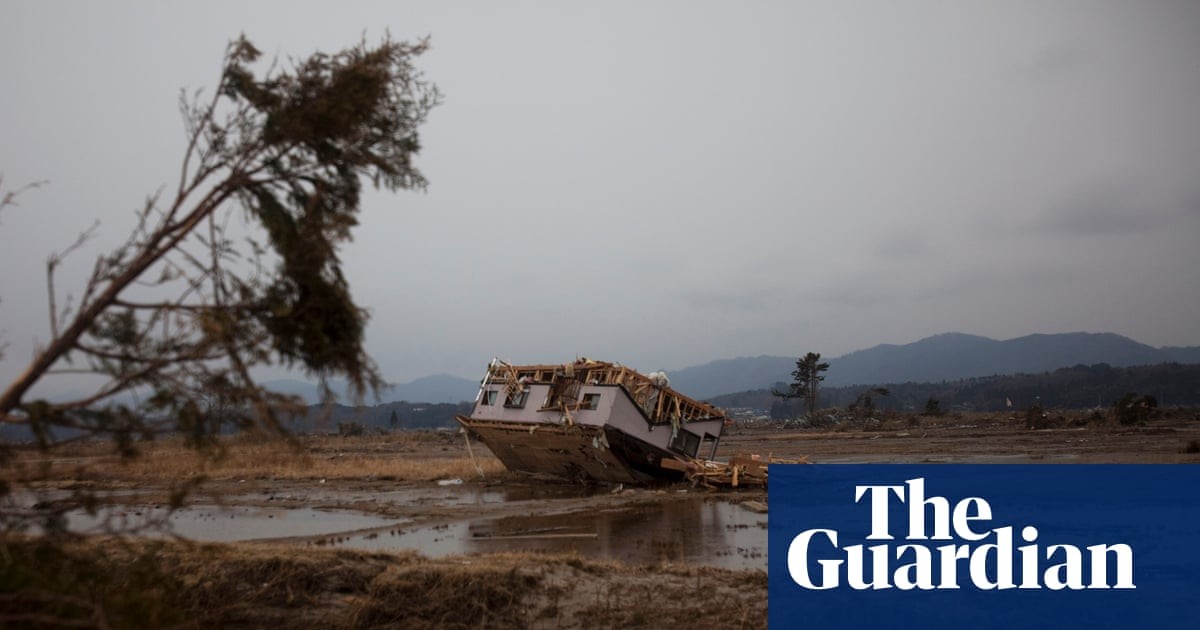
More than 15 years after the catastrophic Tohoku earthquake and tsunami struck Japan, new scientific insights are shedding light on why the disaster was so uniquely devastating. Recent research suggests that the composition of the Japanese coastline played a critical role in the scale of the tragedy, which claimed nearly 20,000 lives and triggered the Fukushima Daiichi nuclear crisis.
The Science of “Gloopy” Waves
A study led by Patrick Sharrocks of the University of Leeds, published in the Journal of the Geological Society, has identified a key factor in the tsunami’s destructive power: the interaction between the seawater and the land.
By analyzing historical helicopter footage and comparing “before and after” satellite imagery from Google Earth, researchers were able to reconstruct the movement of the tsunami’s front. Their findings reveal a dramatic transformation as the wave moved inland:
- Initial Phase: The tsunami began as a fast-moving, relatively clear-water flow.
- Transformation: As the water swept over mud-rich rice paddies and coastal sediment, it picked up massive amounts of debris and silt.
- Final Phase: The wave transformed into a thick, heavy, and “gloopy” mud-laden flow.
Why Density Matters
The distinction between clear water and mud-laden water is not merely academic; it is a matter of physics that directly impacts human safety.
In fluid dynamics, a denser fluid exerts significantly more force than a lighter one when moving at the same speed. Because the tsunami became saturated with mud, it gained immense mass. This increased density meant the flow exerted much higher pressure against structures, allowing it to crush buildings that might have otherwise survived a standard seawater wave. This heightened force is a primary reason for the disproportionately high number of injuries and fatalities recorded during the event.
The researchers noted that this phenomenon is similar to volcanic mudflows (lahars), where water mixes with volcanic sediment to create a highly destructive, high-density slurry.
Implications for Future Disaster Planning
This study highlights a critical gap in how we currently predict tsunami damage. Most traditional models focus on the height and speed of the water, but they may not sufficiently account for the sediment composition of the coastline.
The researchers argue that tsunami hazard assessments must be updated to include:
1. Coastal Soil Analysis: Understanding whether a coastline is sandy, rocky, or mud-rich.
2. Land Use Planning: Using these findings to dictate where high-density residential or industrial zones should be located in tsunami-prone regions.
The study suggests that the very nature of the ground beneath our feet can turn a standard flood into a high-impact, crushing force.
Conclusion
By revealing how mud-saturated flows increase the kinetic impact of