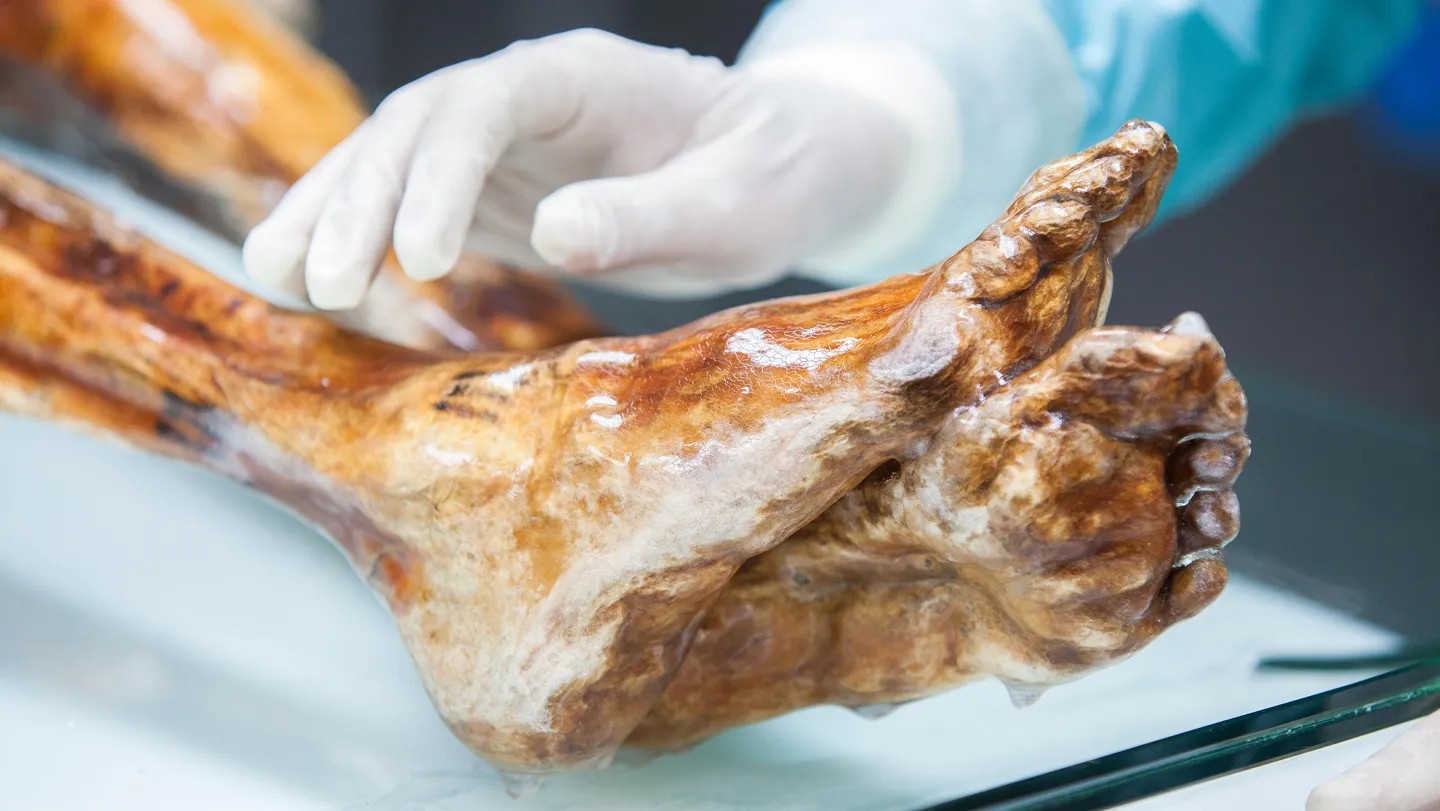
The man died. He froze. He stayed that way for millennia. Now, he is growing in a petri dish.
It sounds like a scene from a horror movie, but it is biology. And it is specific. Researchers have successfully cultivated dormant microbes from the body of Ötzi, the famous Ice Age mummy found in the Alps. This isn’t just a lab trick. It offers a rare glimpse into the health of humans who lived during the Copper Age, roughly 5,300 years ago.
Why We Need Ancient DNA (and Living Bacteria)
Most studies of ancient humans rely on DNA sequencing. We read the genetic code left behind. It is useful. It tells us about ancestry, physical traits, and some diseases. But DNA is a record. It is static.
Live microbes are different. They are dynamic. They react. They evolve.
By bringing these ancient bacteria back to life, scientists can do something sequencing alone cannot do: study how these pathogens functioned. Did they attack? How strong was the host immune response? Was this a natural resident of the gut, or an invader?
“Dormant means inactive to the point where normal body functions are suspended,” says the standard definition. For Ötzi’s microbes, that suspension lasted five thousand years.
The Copper Age Context
Ötzi belongs to the Copper Age. This was the transitional period between the Stone Age and the Bronze Age, spanning roughly from 4500 B.C.E. to 3500 B.C.E. Humans were starting to fashion tools and weapons from copper. They were also living closer together. Farming. Herding.
These conditions change the microbiome.
The microbiome is the collection of bacteria, viruses, and fungi that live inside and on us. It is not just a passenger list. It is an active ecosystem. It influences digestion, immunity, even behavior. When a human dies, that ecosystem usually collapses or changes rapidly. Decomposition takes over.
Ötzi is an exception. His body was preserved in a glacier. Ice. Cold. Dry. These elements slowed down decay. They kept the microbes in a state of dormancy rather than destruction.
How Do You Wake Up Ancient Germs?
You cannot simply thaw a mummy and hope for the best. The process requires precision.
Researchers took samples from the mummy’s body. Specifically, they looked for microbial life in tissues and on the skin. The environment of a glacier is harsh. Radiation. UV exposure. Time. These factors damage DNA. But some microbes are tough.
In the lab, scientists provided the right nutrients. The right temperature. The right atmosphere. They simulated the conditions those bacteria might have experienced back in the 3300s B.C.E.
Some grew.
This proves that these organisms survived in a dormant state. They were waiting. Not for anything specific. Just waiting for a host. Or a culture medium.
Which Microbes Survived?
The study identified specific types of bacteria. Not just general “gut flora.” We are talking about distinct species. Some of these were known pathogens. Others were commensals — bacteria that live on the host without causing harm, at least normally.
For example, researchers have looked for Treponema bacteria, which cause syphilis and yaws. The genetic evidence was strong, but cultivating live Treponema is notoriously difficult. The live growth from Ötzi provided further confirmation of the genetic findings. It bridged the gap between theory and reality.
It answers the question: “Was this bacteria actually alive, or just dead matter?”
It was alive.
Why This Matters for Modern Medicine
We spend billions fighting antibiotic resistance. New pathogens emerge. Old ones return. We do not fully understand the long-term stability of bacterial genomes.
Ancient microbes offer a baseline. A control group from the past. By comparing the genome of live, ancient bacteria with modern strains, we can track evolution. We can see how these organisms changed as human society changed. As agriculture expanded. As trade routes opened.
Did copper smelting affect the gut biome? Did crowded living conditions spread new diseases? The answers are in the DNA. But they are also in the behavior of the live cells.
“The environment may refer to the weather and ecosystem… or the temperature and humidity,” the source notes. In the lab, we control these variables to isolate the microbial response.
The Risk Factor
Does this pose a danger? Could these revived microbes escape and infect us today?
Probably not. Not easily.
Our immune systems have evolved. Our gut flora is different. These ancient bacteria are adapted to a human host from the Copper Age. Their physiology may have drifted. Their surface proteins might not bind to our modern cells in the same way. They are relics. Fragile. Likely outcompeted by modern strains.
However, “likely” is not “never.”
The risk of releasing a dormant pathogen is low, but not zero. This is why strict biosafety protocols are non-negotiable. These experiments are done in high-containment labs. Not open benchtops. The science is valuable. The hazard is managed.
What About Other Mummies?
If it worked for Ötzi, why not for Tutankhamun? Or the Peruvian mummies?
It depends on the environment. Preservation requires specific conditions. Extreme cold. Dryness. Lack of oxygen. Glacier ice provides all three. Desert sands provide some. Bog bodies provide others, but acidic peat can destroy DNA and kill microbes rapidly.
Ötzi was lucky. He fell into a crevasse. The ice sealed him. He was frozen in time. Most other bodies rot. Their microbial communities displace each other. The record is lost.
We have only one Ötzi. And now, we have his bugs.
The Future of Paleomicrobiology
This study is not a fluke. It is a proof of concept.
As techniques improve, we