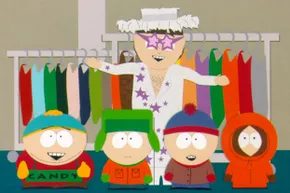
The Federal Communications Commission has always had a specific set of words it doesn’t like. “Indecent.” “Obscene.” “Profane.” These aren’t just grammar rules. They are legal landmines for networks. If a program crosses these lines, the FCC steps in. The agency enforces strict boundaries on what hits the airwaves.
Networks hired censors to keep them safe. Their job was simple. Remove certain topics. Delete specific social groups. Banish forbidden language from broadcast programming. This was the standard long before streaming took over our lives.
But censorship isn’t static. It shifts with the times. Look back to 1952. Lucille Ball was pregnant on I Love Lucy. The show couldn’t say “pregnant.” Censors blocked the word. Instead, Lucy was “having a baby.” She was “expectant.” Or “with child.” The nuance was lost in the fear of the truth.
Jump ahead to the 1960s. Navel gazing became a crime. Actresses on I Dream of Jeannie, Gilligan’s Island, and Gidget couldn’t show a belly button. Why? Censors likely feared the connection between exposed skin and pregnancy. It was a weird leap. But the logic held sway.
Sometimes money dictated what stayed on screen. Take the 1959 Playhouse 90 episode “Judgment at Nuremberg.” This post-WWII drama mentioned gas chambers. It had to be cut. The sponsor was the American Gas Association. You don’t insult the guy paying the bills.
Every decade, shows push back. They challenge the edits. They become a thorn in the censor’s side. And they wouldn’t have it any other way. Here are some of the thorniest series ever to test those boundaries.
10: ‘The Smothers Brothers Comedy Hour’
This show didn’t just push against the rules. It smashed them. The Smothers Brothers Comedy Hour aired from 1965 to 1969. It was a variety show with a bite. The brothers used satire to mock authority. They brought in controversial guests. They tackled politics in ways no one had before.
The network, CBS, tried to control them. They demanded script approvals. They banned jokes about the Vietnam War. They cut political commentary. But Dick and Tom Smothers kept fighting back. They appealed to the FCC. They argued for creative freedom. The public loved it. The ratings soared.
Eventually, CBS pulled the plug. Not because of ratings. But because the brothers refused to comply with censorship requests. It was a landmark moment. It showed that creators could fight back. It proved that audiences wanted real content. Not watered-down safe TV.
“The Smothers Brothers Comedy Hour didn’t just push against the rules. It smashed them.”
This battle set the stage for everything that followed. Late night hosts. Political satirists. Modern streamers. They all stand on the shoulders of that rebellion. The censorship wars didn’t end. They just evolved. But The Smothers Brothers Comedy Hour remains a key point in that history. It proved that if you fight hard enough, you might just change the
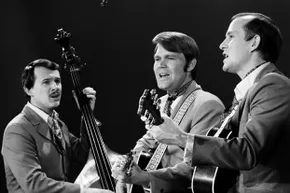
Tom and Dick Smothers weren’t just a comedy duo. They were a thorn in CBS’s side. Their variety show ran from 1967 to 1969. It was popular. It was also a war zone. The brothers leaned left. Their jokes pointed fingers at authority. The network hated it.
Take 1967. Tommy played a censor alongside Elaine May. They chopped words like “breast” from a script. It was satire. CBS pulled the plug. They didn’t air it.
Then came Pete Seeger. He was booked to sing “Waist Deep in the Big Muddy.” The network censors saw a threat. They thought the song insulted soldiers. They banned the performance.
Why did the ban stick for a year? Politics. Fear. But the song didn’t lose its edge. It just waited. Seeger got to perform it the next season. The network blinked.
The Nixon Commercial and the Final Straw
Things got uglier in the final season. Harry Belafonte was set to perform “Don’t Stop the Carnival.” The backdrop? Violent protests at the Democratic National Convention.
CBS couldn’t handle the juxtaposition. They slashed the bit.
Here is the twist. They added a five-minute commercial for Richard Nixon. It was for the Republican presidential candidate. The brothers saw the hypocrisy. They saw the political payoff for the network.
CBS finally pulled the plug on the series. Their excuse? Contract violation. The brothers completed an episode late. That was the official reason.
Tommy and Dick sued. They won. The court vindicated them. CBS’s excuse collapsed.
The brothers finally got the last word.
9: ‘Star Trek’
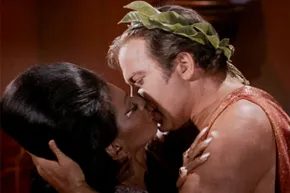
The Kiss That Broke The Network
NBC was terrified.
While Captain Kirk and his crew were busy exploring the galaxy, the network executives were stuck in a much more terrestrial panic. They didn’t want to break any new ground. In fact, they wanted to stay firmly in the safe, beige middle of 1960s television.
Star Trek had always danced around the line. The show focused heavily on space adventures, yes. But it also leaned hard into Captain Kirk’s romantic escapades. It was charming. It was safe. Until 1968.
That was the year “Plato’s Stepchildren” aired.
The premise was simple enough. Telekinetic aliens took control of the Enterprise crew. They forced the characters to do things that defied their personalities. And then they forced Captain James T. Kirk (William Shatner) to kiss Lieutenant Uhura (Nichelle Nichols).
Here is where the network lost its mind. Uhura was Black. Kirk was white. An interracial kiss had never happened on American television. The executives at NBC had a collective heart attack.
They didn’t ask the actors to stop. They didn’t cancel the episode. They were too cowardly for that. Instead, they asked Gene Roddenberry to tape the scene twice.
One version would feature the actual kiss. The other would be a tame, platonic hug. This gave the network a way out if the public revolted. They called it “giving choices.” It was actually just paranoia dressed up as strategy.
Shatner wasn’t having it.
When the camera rolled on the “safe” version, he didn’t give a shy, hesitant hug. He leaned in close. He looked directly into the camera lens. He gave the director a wide-eyed, slightly manic stare that screamed scandal. He basically mugged for the shot on purpose.
The sabotage went unnoticed on set. The crew wrapped up. The actors left. The director had to review the footage the next day.
There was no hug. Only the kiss.
The network executives were left with a fait accompli. They couldn’t re-shoot. They couldn’t cut it now. They had to air it.
The world did not end.
The backlash never came. Fans didn’t march in the streets. The ratings held steady. The silly censors had worried about a thunderstorm that never arrived.
8: ‘All in the Family’
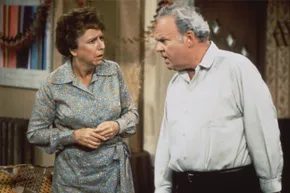
The 1970s were a chaotic, vibrant era for television. CBS’s All in the Family dominated the airwaves, capturing the lives of Archie Bunker and his working-class Queens family. Norman Lear created the series, and its success was undeniable. It won four consecutive Emmys for outstanding comedy. Yet, it was also a nightmare for censors.
The show attacked societal norms. It tackled topics that previous decades would never have touched. Sexuality. Impotence. Abortion. Divorce. Bigotry. It challenged the industry by using language deemed inappropriate in the 1950s and 60s. Words like “hell” and “damn” became commonplace.
How All in the Family Changed Television Censors
The premiere set the tone immediately. Archie’s mouth was a weapon. He spat racial epithets like “kike,” “spade,” and “spic.” CBS executives panicked. They feared public outrage. So, they added extra operators to the network switchboard. They needed someone ready to handle the incoming calls of anger.
But the audience didn’t call to complain. They called to watch. People loved to hate Archie. The show became the highest-rated program on television. Edith Bunker might have felt stifled by her husband’s views, but the creative team behind the scenes didn’t. They had finally been given room to breathe.
The Rise of Saturday Night Live
If All in the Family was the dramatic shock to the system, Saturday Night Live was the chaotic scream that followed. Debuted in 1975, the show brought a raw, unpolished energy to NBC. It wasn’t just a sketch comedy; it was a cultural Zeitgeist captured in three-hour bursts.
While All in the Family forced viewers to confront their own prejudices through a character they couldn’t look away from, SNL let them laugh at the absurdity of politics and pop culture. The cast changes were frequent. The content was risqué. The live format meant mistakes happened on air, and everyone knew it. This unpredictability became part of the appeal. It wasn’t just entertainment. It was a reflection of a decade that refused to sit still.
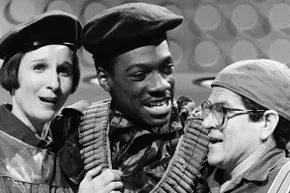
The Censor War
“Live, from New York, it’s …”
Whatever spilled out of the cast’s mouths.
Saturday Night Live hit NBC in 1975. It was immediate chaos. Writers and censors were already at war. They sparred over what would actually air. Back and forth it went for years. Then the mid-1980s hit. The censors stopped negotiating. They just said “No.”
Every week, four or five skits vanished from the scripts. Some were vetoed after they aired live. The goal was clean reruns. A blind man and a gay man sketch got cut post-broadcast. Censors called it offensive to both groups. Another game show bit, “What’s My Addiction?”, made the audience laugh too hard at a serious topic. Producer Lorne Michaels killed both suggestions.
The censors lost that round.
6: ‘Dynasty’
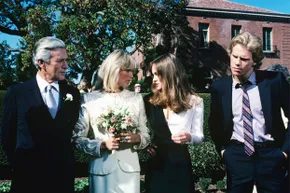
It’s easy to forget now, but being wealthy, stunning, and living in Denver felt like a dream on “Dynasty.” This ABC soap opera dominated the night airwaves from 1981 to 1989. The show was a ratings juggernaut. It hit number five in its second season. It climbed to third place the next year. By the 1984–1985 season, it was sitting at the very top of the charts.
So why did the network executives panic?
They weren’t worried about the jet skis or the designer gowns. They were worried about one thing. Showrunners originally wrote Steven Carrington as gay. This wasn’t a subtle hint. It was the core of his character arc at the start of the series.
ABC censors drew a hard line. They didn’t want a gay protagonist. The compromise was brutal.
Instead of a steady, complex relationship, Steven’s male lover was simply killed off. The narrative forced him into heteronormativity. He married a woman. The marriage failed. He divorced her. Then, he fell in love with another man.
Guess what happened to that second lover?
He also died.
This pattern left Steven in a state of perpetual confusion. He waffled. He seemed unsure of his own identity because the show kept punishing his desire for men with tragedy. It was a coward’s way out for a network that wanted the economic power of a gay character without the political risk.
But the story didn’t end there.
In the 1991 reunion movie, the writers finally let Steven breathe. He appeared happy. He was successful. And most importantly, he was with a male partner. No death. No confusion. Just a life well-lived.
Was the censorship actually necessary for ‘Dynasty’?
Looking back at the numbers, the network’s fear seems almost silly. “Dynasty” was a cultural phenomenon. People were watching it in droves. If a gay character could exist within that universe, why did ABC insist on killing him off twice?
The answer likely lies in the early ’80s media landscape. Representations of queer characters were rare. When they did appear, they were often tragic figures. “Dynasty” tried to ride that wave. It wanted the edge of controversy without the backlash.
The Legacy of a Confused Character
Steven Carrington’s journey is a case study in how television handled sexuality before the modern era.
- Initial Concept: Steven was written as openly gay.
- Network Intervention: ABC censors objected to the orientation.
- The Compromise: Lovers were killed off to force straight relationships.
- The Result: Steven became a symbol of confused identity rather than a solid representation.
- The Resolution: The 1991 reunion gave him the happy ending the original script likely intended.
It’s a reminder that even at the top of the ratings, creative freedom is often the first thing to go. The show gave us beautiful dresses and brutal betrayals. But it took until the end of the franchise to give Steven the one thing he deserved: the freedom to be himself.
We never got the full story. We only got the censored version. And that’s the real tragedy of
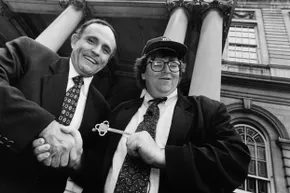
If you blinked during the summer of 1994, you likely missed the brief window where Academy Award-winning director Michael Moore actually had a network show. It started on NBC before hopping to Fox for a notoriously short stint. The program was called TV Nation, and it was built on a simple premise: Moore would dig up the news stories that mainstream media had decided to ignore or bury.
The concept was sharp. The execution was censored.
The Condom Size Controversy
Moore used the platform to explore bizarre, overlooked angles of American culture. One segment focused on a mundane but hilarious issue: condom sizes.
The market offered regular and extra-large options. Small sizes did not exist. It was a gap in the market that Moore found amusingly problematic.
But censors saw a different problem. They believed audiences in the American South would be offended by the discussion. The segment was cut from the broadcast.
It wasn’t lost forever. The footage survived and eventually surfaced on video releases. But for millions of viewers watching live, the conversation about prophylactic sizing simply didn’t happen.
Advertisers Draw the Line
Other segments faced steeper walls. Moore investigated the assassinations of abortion doctors. The reporting was straightforward. The topic was volatile.
Advertisers pulled out. They didn’t want their brands associated with a show tackling the violent targeting of medical professionals. The network caved. The segment was axed.
Again, the story didn’t disappear entirely. It lived on in alternative formats. But the television audience was denied the information.
Protesting Funerals
One of the most jarring cuts involved a high school student. The boy received extra credit for protesting the funerals of AIDS victims.
The act was inflammatory. The context was educational. Or so Moore thought.
The network rejected the segment. The subject matter was deemed too controversial for prime-time television.
Interestingly, this wasn’t a uniquely American problem with the content. Networks in 20 other countries had no issue airing the same footage. The censorship was specific to the U.S. broadcast environment.
Why It Matters Now
Moore’s experience on TV Nation highlights a recurring tension in media. Producers want to tell stories. Censors and advertisers want to protect brand safety. The result is often a sanitized version of reality.
The segments that were cut remain available on video. They serve as a record of what was deemed too risky for the airwaves.
It’s a reminder that what doesn’t make it to TV is often as important as what does. The missing pieces tell their own story.
4: ‘Late Show with David Letterman’
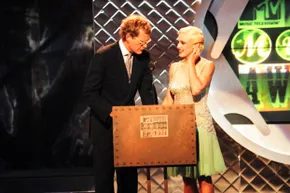
The night was March 31, 1994. David Letterman was trying to keep things chill. It didn’t work.
Madonna showed up as the guest. The result? One of the highest-rated episodes in CBS late-night history. It also holds the grim distinction of being the most censored talk show appearance of all time.
Letterman opened with a crack about her sex life. He wasn’t wrong. She walked out in a long black dress and combat boots. Then she went to work.
She used the “f” word fourteen times.
When she finally left the stage, Letterman tried to recover. He joked that Mother Teresa was up next. He kidded that his show had been canceled.
Madonna’s version of events is different. She claimed everyone on the set was in on the joke. They encouraged her.
She was making a point about the FCC. The regulator allowed graphic violence but banned strong language. That’s hypocrisy.
Or maybe she was just chasing a world record.
The 2003 Golden Globes Awards
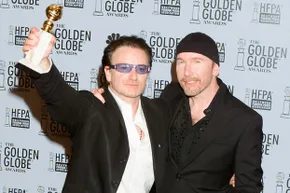
It started with pure, unfiltered joy. Bono, U2’s frontman and generally earnest global activist, was at the Golden Globes. He had just won an award for the score of Gangs of New York. The pressure of the moment, the prestige of the statuette, the music—it all boiled over. In a moment of what he later called “ecstatic” release, he tried to say “very brilliant.” What came out was “f—ing brilliant.”
You know that feeling. The excitement hits before the filter does. But this wasn’t just a slip-up. It was a legal earthquake.
The Federal Communications Commission (FCC) didn’t laugh. They panicked. They decided that this “fleeting expletive”—a single, accidental swear in a live broadcast—was grounds for a new rule. The logic? If networks aired it, they were open to massive fines. Hundreds of thousands of dollars. The goal was to curb indecency on public airwaves, but the method was messy.
A federal court shot it down. Then, in 2012, the Supreme Court threw it out completely, calling the regulation “imprecise” and unconstitutional. The FCC wanted to ban Bono’s slip-up. The courts said no. The agency tried to define the undefinable. It failed.
So why does this matter now? Because the line between “public broadcast” and “private entertainment” has shifted. And so has our tolerance.
2: ‘Family Guy’
If Bono’s swear was a spark, Family Guy was the wildfire.
Created by Seth MacFarlane, the animated sitcom didn’t just cross the line—it erased it. Aired on Fox, a major broadcast network, the show weaponized shock humor. It wasn’t about fleeting accidents. It was about systematic, calculated transgression.
In the early 2000s, Family Guy became a cultural lightning rod. Critics called it offensive. Fans called it hilarious. The FCC was stuck in the middle, trying to apply post-Bono regulations to a show that existed in a gray zone. Was it satire? Was it indecency? The courts tended to side with the creators, citing the show’s artistic intent and the context of late-night viewing.
But the show’s legacy isn’t just about laughs. It’s about pushing the envelope of what’s acceptable on mainstream television. Before Family Guy, network TV was sanitized. After Family Guy, the rules felt flexible. The FCC’s attempt to control “fleeting expletives” looked silly compared to a cartoon character doing something arguably worse.
The real question isn’t whether Bono should have sworn. It’s whether the FCC ever had the right to try. The answer, apparently, is no. And that uncertainty? It changed everything.
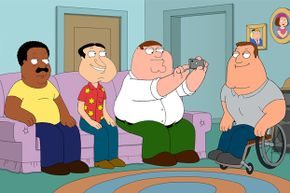
Seth McFarlane’s animated chaos machine, Family Guy, has always treated FCC guidelines like suggestions. The show exists in a constant state of negotiation with censors. There is a push-pull dynamic regarding what gets cut and what gets to air. It is a delicate dance of profanity and taboo.
Consider the irony of a 2005 episode titled “A Family Guy Valentine.” In it, Peter Griffin attempts to launch his own television network. The episode itself was heavily censored for its language. Yet the plot mocked the very concept of broadcasting restrictions. The show ate its own dog food, but with extra salt.
Then came the 2009 episode “Let’s Go to the Hop.” This was the one that didn’t air. Network executives drew the line at abortion. The fear was simple. Advertisers might bolt. The storyline involved Lois serving as a surrogate for an infertile couple. Tragedy struck quickly. The couple died in a car crash.
So what does Lois do? The script had her facing a difficult decision about the pregnancy. Fox pulled the plug. They wouldn’t risk the backlash. But they didn’t kill the idea entirely. They staged a live, untaped performance for Academy members. Censors couldn’t touch a live read. It was a loophole. A way to show what could have been.
1: ‘South Park’
This history sets the stage for South Park. The show has always played a similar game. It pushes boundaries to see what sticks. McFarlane’s work is similar. Both shows test the limits of what is acceptable on television. They force networks to make choices. Choices about content and profit. The result is always the same. The line moves. Just a little. But it moves.
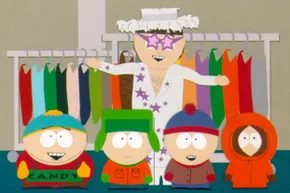
Since 1997, Comedy Central’s longest-running animated series has been a constant thorn in the side of content regulators. Matt Stone and Trey Parker treat every demographic as fair game. They mock races, ethnicities, religions, and political affiliations without mercy. The jokes often land with brutal precision.
In 2006, the creators aimed their satire at a specific controversy in the Netherlands. A local newspaper had published editorial cartoons depicting the Prophet Muhammad. Islamic law forbids any visual representation of the prophet. Comedy Central panicked. They refused to let the show air the image.
So, Stone and Parker found a loophole. They didn’t show the image at all. Instead, they covered it with a black box that simply said “Censored.” It was a clever way to acknowledge the ban while still making the point about free speech.
The conflict resurfaced in 2010. This time, the creators took matters into their own hands. They didn’t ask for permission. They manually placed a black box over the Prophet’s image. They also bleeped out his name. The attempt to self-censor failed to satisfy the network.
Comedy Central didn’t stop there. The network added even more bleeps to the episode. They also barred the episode from streaming on the official South Park website. Stone and Parker tried to comply. The standards and practices team kept raising the bar.
It’s a recurring theme in the show’s history. The censors never seem satisfied. The creators push back. Then they push further. The result is a cat-and-mouse game that defines the show’s edge.
“They were trying, but Comedy Central added even more bleeps and refused to put the episode on ‘South Park’s’ website.”
The network’s reaction to the 2010 episode highlights the tension between artistic intent and broadcast standards. Stone and Parker attempted to mute the content. The network insisted on muting it more. The episode remains a flashpoint in discussions about censorship in animation.
Fans often wonder how the show navigates these restrictions. The answer lies in its willingness to highlight the restrictions themselves. By showing the censors at work, the show critiques the very act of suppression. It’s a meta-commentary that keeps the controversy alive.
The debate over Islamic representation in media continues to evolve. South Park remains a key case study. The show’s approach challenges audiences to think about limits. Who decides what is too far? The creators? The network? Or the viewers?
The black box persists as a symbol. It’s not just a visual gag. It’s a record of negotiation between art and regulation. As long as Stone and Parker keep pushing boundaries, the censors will keep working. The cycle seems unbreakable.