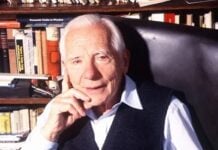
Chen Ning Yang, often called Frank Yang, lived through the entire arc of modern theoretical physics. Born on October 1, 1922, in Hofei, Anhwei, China, he died just last week on October 18, 2025, in Beijing. His life spanned nearly a century of scientific upheaval. It began with a bachelor’s degree in 1942 and a master’s in 1944 from university studies in Kunming. Then came the move to the United States.
He enrolled at the University of Chicago in 1946. There, he studied under Edward Teller. He earned his Ph.D. soon after. This was the foundation for a career that would shift the understanding of fundamental forces.
The Nobel Prize and Parity Violation
Yang became a professor at Princeton University in 1955. He also became a U.S. citizen in 1964. But his most famous work happened earlier. He showed that parity is violated when elementary particles decay. This discovery shook the physics world. It proved that nature does not always mirror itself. Left is not always equal to right in the quantum realm.
This work, along with other contributions to particle physics, won him the Nobel Prize for Physics in 1957. He shared this honor with Tsung-Dao Lee. The prize came before he turned 35. It remains one of the fastest recognitions in the history of the award.
Weak Force and Statistical Mechanics
Yang’s research focused mostly on interactions involving the weak force among elementary particles. The weak force governs radioactive decay. It shapes how stars burn. Understanding it helped clarify the Standard Model. He also worked in statistical mechanics. This branch deals with large groups of particles. It bridges the gap between microscopic behavior and macroscopic reality.
Why Yang Matters Today
Yang’s legacy is not just in his awards. It is in the questions he forced physicists to ask. He challenged assumptions that had stood for decades. He showed that symmetry is not absolute. This opened doors to new theories. It influenced how scientists approach data in particle accelerators.
His life connects two worlds. The academic rigors of China and the United States. Theoretical abstraction and real-world application. He died at 102. A long life for a mind that never stopped moving.
What happens when a single equation changes everything? The answer lies in the work of people like Yang. We are still exploring the implications of his findings. The weak force remains a puzzle. But the pieces are clearer now. Thanks to him.