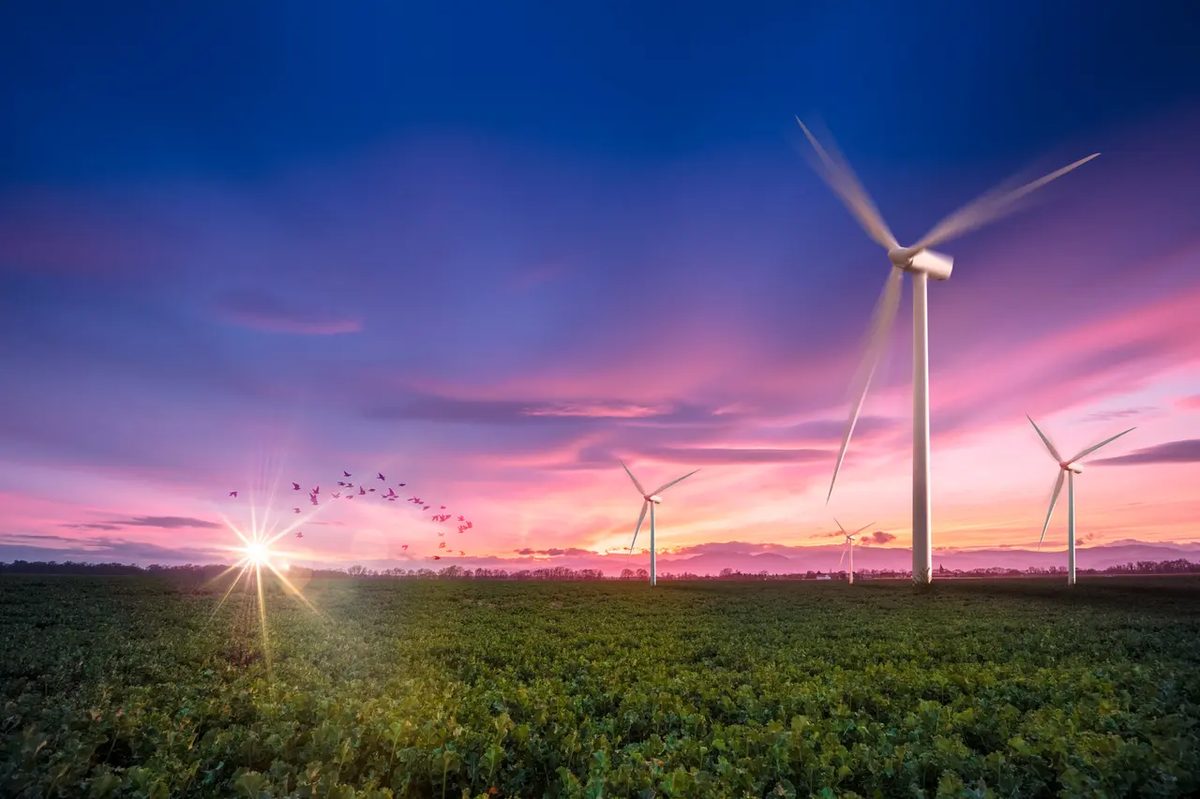
We all know the silhouette. Three blades. Towering against the sky. Spinning. It is the default image of wind power. But this horizontal-axis design is just one piece of a much larger puzzle. There are other technologies out there. They catch energy differently. They operate differently. They might even survive where traditional turbines cannot.
The story of wind energy is not just about efficiency. It is about adaptation. The wind is infinite. The technology is evolving. We need to look past the standard model to see what comes next.
The Dominance of the Horizontal Axis
Let’s be clear about what we are used to. The horizontal-axis wind turbine (HAWT) is everywhere. It dominates the landscape. Why? Because it works. It relies on lift.
Think about an airplane wing. The air moves over the curved surface. Pressure drops on one side. The wing is pulled upward. A wind turbine blade does the same thing. The wind pushes against it. The rotor spins. This motion drives a generator. Or a pump. In some cases, it creates mechanical work directly.
Jean-Luc Wingert, a consulting engineer specializing in energy and the environment, points out the significance of this dominance. He notes that while HAWTs are the most common, they are not the only option. In fact, looking at alternatives reveals how flexible wind energy can be.
Why Look Beyond Three Blades?
The standard turbine is efficient. But it is not perfect. It requires strong, consistent winds. It needs to face the wind. It is heavy. It is complex.
Other designs offer solutions to these problems. Some work in low wind. Some are quieter. Some are cheaper to build. The key lies in how they interact with the air.
Drag vs. Lift
Most people think lift. But drag exists too. Drag is the resistance. A parachute uses drag. A cup anemometer uses drag. Some wind turbines use it. They are slower. They are often less efficient in high winds. But they start spinning in lighter breezes. They are simpler. Fewer moving parts. Less maintenance.
Vertical Axis
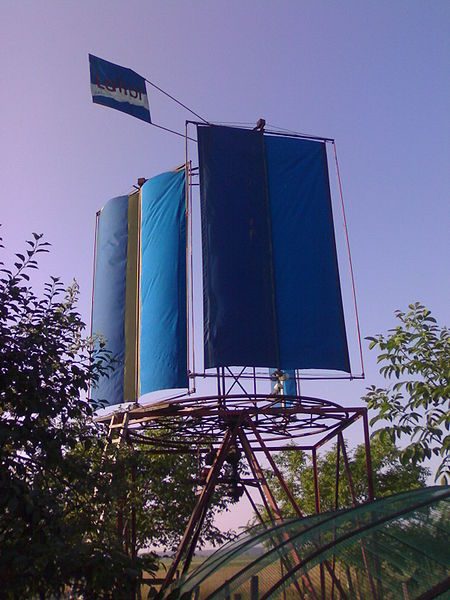
Then there is the vertical-axis wind turbine (VAWT). The axis stands up. The blades rotate around it. They look like eggs beaters. Or giant whisks.
These machines do not need to face the wind. Wind can come from any direction. This is a huge advantage. In urban environments, wind direction changes constantly. A VAWT captures it all. It can be placed closer to the ground. Easier to maintain.
Savonius and Darrieus
Two main types of VAWTs exist. The Savonius uses drag. It has scooped blades. It is tough. It works in turbulent air. The Darrieus uses lift. It has curved blades. It is faster. It is more efficient. It looks sleek. But it requires a mechanism to start.
Other Innovations
The list does not stop there. We have flying kites that generate power in the sky. We have ducted turbines that funnel wind through a shroud. We have helical designs that reduce noise. We have oscillating foils that mimic fish swimming.
Each design has a trade-off. Efficiency. Cost. Durability. Noise. The choice
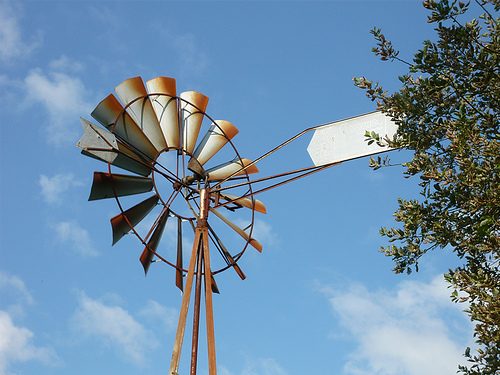
Savonius turbines operate on a simple principle that feels almost archaic compared to modern aviation tech. They rely on drag rather than lift. Think of it as the wind pushing against half-cylinders attached to a vertical shaft. It is the same mechanics found in old-fashioned windmills. The result is lower efficiency. You lose energy here compared to lift-based designs. But there is a trade-off. These machines catch even the slightest breeze. They start spinning when others remain still.
Why Urban Spaces Favor Drag-Based Designs
City living demands quiet. It demands space efficiency. Savonius turbines fit both criteria. Their footprint is small. They do not tower over neighborhoods like their horizontal counterparts. They are also significantly quieter. Noise pollution is a major hurdle for urban wind projects. This design sidesteps it.
“Their footprint is small. They do not tower over neighborhoods like their horizontal counterparts. They are also significantly quieter.”
Performance Realities
Don’t expect a power plant. Expect a steady, low-output generator. The yield is lower. But in a dense city where high-speed winds are rare and obstructed by buildings, that low output might be all you need. It works where traditional turbines fail. It survives the chaotic, turbulent airflow of an urban canyon.
Integration Potential
For rooftop installations or small-scale residential use, the Savonius type offers a practical entry point. It does not require vast open spaces. It does not need complex maintenance routines associated with high-speed gearboxes. It just turns. Slowly. Quietly. Consistently.
Is it the future of grid-scale energy? Probably not. Is it a viable piece of the puzzle for decentralized, city-based power? Absolutely. The technology is not new. Its application in high-density areas is where the real potential lies. You might not see massive towers. You might just see small turbines spinning on your neighbor’s balcony. Or your own.
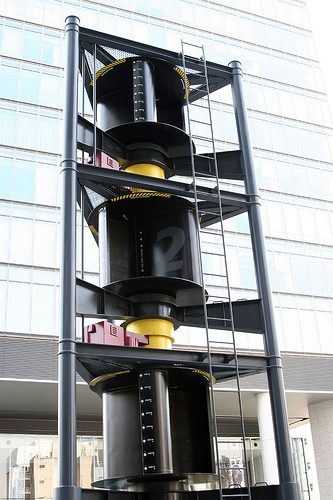
The Vertical Advantage of Darrieus Wind Turbines
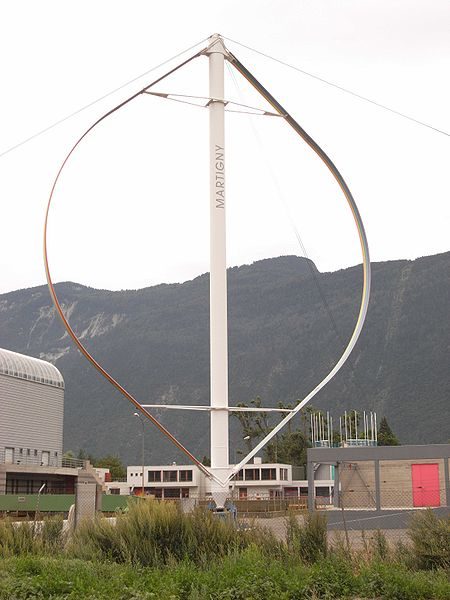
These aren’t your grandfather’s windmills. The Darrieus turbine stands out with vertical blades that can be parabolic or helical.
They rely on lift force from the wind, just like standard horizontal-axis turbines. But there’s a key difference in how they fit into the world around them.
Their footprint is significantly smaller.
This compact design makes integration into landscapes and architectural projects far less intrusive. You can slip them into tight urban spaces where traditional towers would look out of place.
“Their smaller footprint is an advantage for landscape and architectural integration.”
It’s not just about efficiency. It’s about fitting in.
Rotating Wing Turbines: Sailing the Wind
Think about how a sailboat catches the breeze. It doesn’t just sit there taking hits from the wind like a stationary object. It adjusts its sails. It changes angle. It interacts with the air flow dynamically.
Now imagine that same adaptability applied to wind energy.
This is where rotating wing technology enters the chat. These aren’t your standard three-blade giants. They operate on a principle closer to aviation than traditional wind generation. The key is the dynamic orientation of the blades.
Most of us know that traditional horizontal-axis turbines have fixed pitches. They yaw to face the wind. But rotating wings? They change their angle continuously. This allows them to harvest energy from stronger, higher-altitude winds that classic turbines simply can’t reach or utilize efficiently.
The system significantly reduces noise pollution.
Why does this matter? Because noise is the biggest complaint against wind farms. The whoosh of a massive blade cutting through air is distinct. It’s annoying. Rotating wing turbines are quieter. The mechanics of the rotation don’t create that same sweeping sonic boom.
This isn’t just about efficiency. It’s about integration. If you can pull more power from the same wind speed while making less noise, you can place these units closer to population centers. You reduce the “not in my backyard” factor.
The technology mimics a sailing vessel’s ability to tack and adjust. It turns the wind from a force to be endured into a current to be navigated.
We are still seeing early deployments. But the physics are sound. And as battery storage improves, the need for consistent, quiet, high-altitude power sources only grows.
The sky is full of energy. We just need better ways to grab it without waking up the neighbors.
Beyond the Standard Turbine: Flying Kites and Floating Giants
Most people picture wind energy as three massive white blades spinning against a blue sky. That image is stuck in our heads because it’s the status quo. But if you look past the standard utility-scale turbines, the landscape of wind energy gets significantly more weird—and potentially more efficient.
We aren’t just talking about slightly different blade shapes. We are talking about complete paradigm shifts in how we capture kinetic energy from the air. The industry is currently testing prototypes that abandon the traditional tower-and-blade model entirely.
The Rise of Flying Kites
One of the most cited “insolite” (unusual) projects involves kites. Yes, flying kites.
Companies like KitePower and Makani (before its closure, though the tech remains influential) have explored tethered aircraft designs. The logic is simple but counter-intuitive. Why build a massive steel tower that costs millions to transport and install when you can just fly a wing?
“Flying kites allow us to reach higher altitudes where winds are stronger and more consistent, without the weight penalty of a ground-based structure.”
These systems work by flying figure-eight patterns. The crosswind speed of the kite generates more lift and thrust than a traditional turbine at similar wind speeds. The energy is often generated on the ground, pulled by the tether, rather than onboard the kite itself. This reduces the weight of the flying component significantly.
Floating Wind: Going Offshore Without Foundations
Then there is the floating wind turbine.
Traditional offshore turbines require rigid foundations driven deep into the seabed. This limits them to shallow waters. Floating turbines change the geography of wind energy. They sit on semisubmersible platforms, spar buoys, or tension-leg platforms.
This matters because a huge percentage of the world’s strongest, most consistent winds are located in deep offshore waters. If we can’t access them, we leave gigawatts of clean power on the table.
Projects like Hywind in Scotland have proven the concept. The turbines tilt and roll with the waves, but advanced control systems keep the rotor aligned with the wind. It’s complex engineering, but it unlocks vast new zones for generation.
Why Does “Insolite” Matter?
You might ask why we are bothering with kites and floating giants when standard turbines are working fine.
The answer lies in cost and location.
- Lower Material Costs: Kites use less material. No huge concrete towers. No complex blade manufacturing for massive rotors.
- Accessibility: Floating turbines can be deployed in deep waters far from coastlines, avoiding visual pollution and local opposition.
- Higher Capacity Factors: High-altitude wind (for kites) and deep-ocean wind (for floaters) are often more consistent than surface-level wind.
The Reality Check
These technologies are not ready for mass deployment just yet.
Kite systems face regulatory hurdles regarding airspace. Who controls a flying wing at 500 feet? Collision avoidance is a nightmare. And reliability? Tethers can snap. Wings can fail.
Floating turbines face corrosion issues and mooring line fatigue. Maintenance is expensive and difficult. You can’t just call a local technician to climb up 100 meters of rope.
But the potential is undeniable