For decades, Homo erectus has stood as a monumental figure in human evolution—the first ancestor to leave Africa, craft complex tools, and survive for millions of years. Yet, despite its prominence, a critical question remained unanswered: Did this ancient species interbreed with later humans, or were they an isolated branch that simply went extinct?
A breakthrough study published in Nature on May 13 offers the first glimpse into this mystery. By analyzing protein sequences from 400,000-year-old fossils, researchers have uncovered deep genetic links between Homo erectus, modern humans (Homo sapiens ), and the elusive Denisovans. This finding not only bridges a significant gap in our evolutionary timeline but also challenges how scientists define species during the complex “Middle Pleistocene” era.
Unlocking the Past Through Proteins
DNA is fragile. While it can survive for hundreds of thousands of years in cold, dry conditions, it degrades rapidly in warmer climates like those of ancient China. Consequently, no Homo erectus DNA has ever been successfully sequenced. However, proteins are more durable.
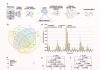
The research team, led by Qiaomei Fu of the Institute of Vertebrate Paleontology and Paleoanthropology in Beijing, turned to paleoproteomics —the study of ancient proteins. They extracted enamel from the teeth of six Homo erectus skeletons found across three sites in China. From this enamel, they isolated 11 different proteins and identified hundreds of amino acid positions.
The results were startling. The analysis revealed two specific amino acid variants that provided a clear signal of connection:
- A Unique Marker: One variant was present in all six Homo erectus individuals but absent in any other known human lineage.
- A Shared Heritage: A second variant was found in all Homo erectus samples and in Denisovans, an archaic human group that lived in Asia until roughly 30,000 years ago.
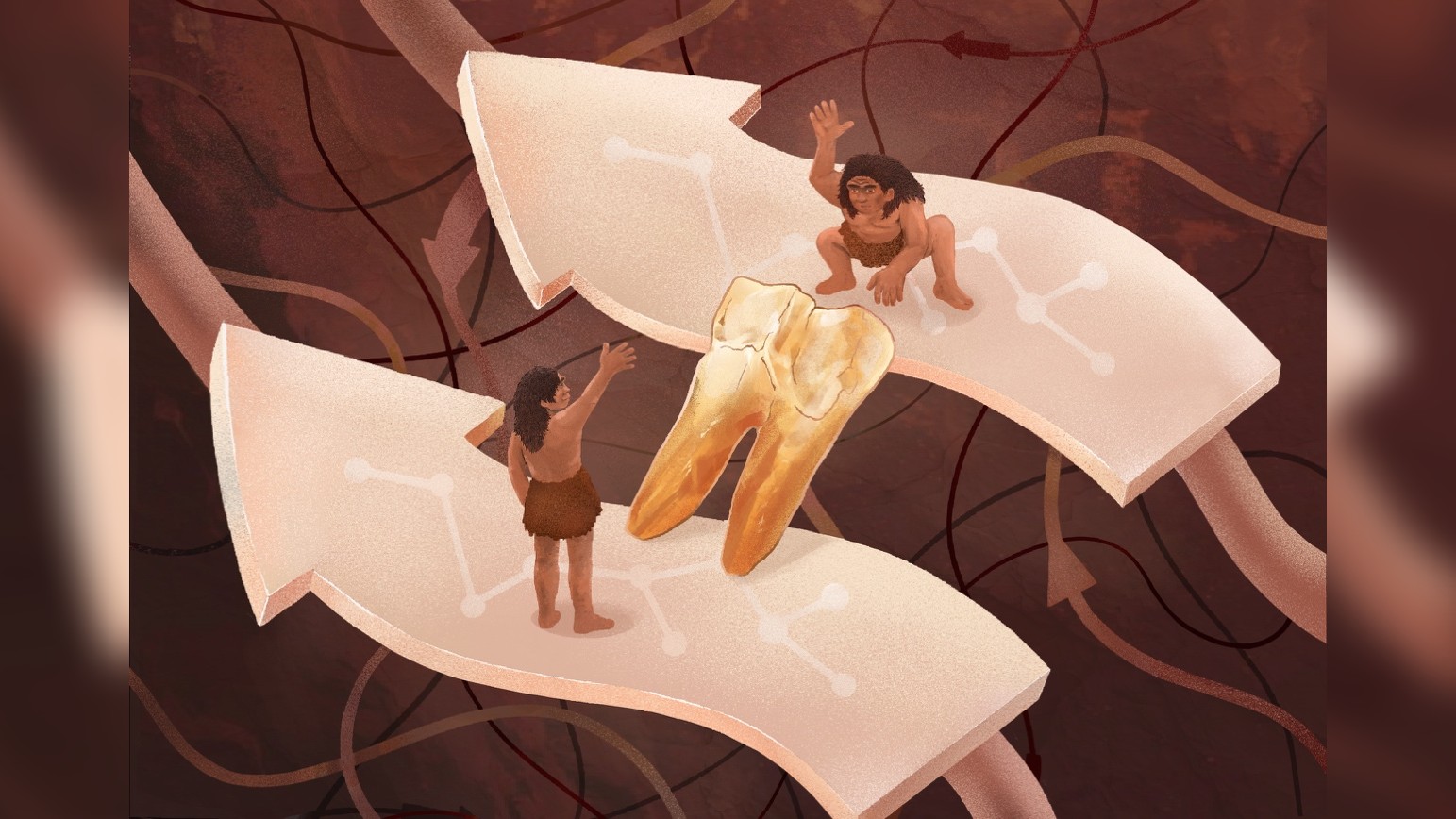
This second variant is particularly significant. It suggests that the genetic trait originated in Homo erectus (or a common ancestor), passed to the Denisovans, and was subsequently passed to modern humans through interbreeding tens of thousands of years ago. As the researchers noted, this provides the first direct evidence of “deep genetic links” between these ancient populations and present-day humans.
Solving the “Muddle in the Middle”
The era these fossils represent, known as the Middle Pleistocene (774,000 to 129,000 years ago), has long been described by paleoanthropologists as the “muddle in the middle.” During this period, multiple human species—Homo erectus, Neanderthals, Denisovans, and early Homo sapiens —coexisted and overlapped across Africa, Europe, and Asia.
Traditionally, scientists defined these groups based on physical features like bone shape and size (the “morphological species concept”). However, genomic studies of more recent fossils (around 50,000 years old) have shown that interbreeding was common, blurring the lines between distinct species.
John Hawks, a paleoanthropologist at the University of Wisconsin-Madison who was not involved in the study, suggests that this new data clarifies that “muddling is just mixing.” The presence of shared amino acid variants implies that different evolutionary branches were not isolated silos but were actively exchanging genetic material much earlier than previously confirmed by DNA evidence.
“It’s tough to look at data like these and not be impressed with the uncertainty of boundaries and the mixing between them in these past people,” Hawks said.
Rethinking Homo Erectus
This discovery raises profound questions about taxonomy and identity. If Homo erectus shared genetic markers with Denisovans and modern humans, does the label “Homo erectus ” accurately describe a single, distinct species?
Hawks argues that paleoanthropologists may have been too quick to categorize diverse Middle Pleistocene fossils from China under the Homo erectus banner. “Many of these fossils are probably Denisovan relatives, or possibly they came from other groups we’ve been calling ‘erectus’ just because we don’t really understand them,” he explained.
The study does not provide a complete family tree—DNA remains the gold standard for such detailed mapping. However, it proves that proteins can serve as a powerful proxy when DNA is unavailable. It confirms that the evolutionary path to modern humans was not a straight line, but a complex web of connections, interbreeding, and shared heritage stretching back hundreds of thousands of years.
Conclusion
This study marks a pivotal moment in paleoanthropology, demonstrating that even without DNA, we can trace deep ancestral connections through ancient proteins. It confirms that Homo erectus was not an isolated dead end but part of a dynamic, interconnected web of human evolution that includes the Denisovans and, ultimately, us. As techniques improve, these “muddles” will likely resolve into a clearer, more intricate story of our shared origins.