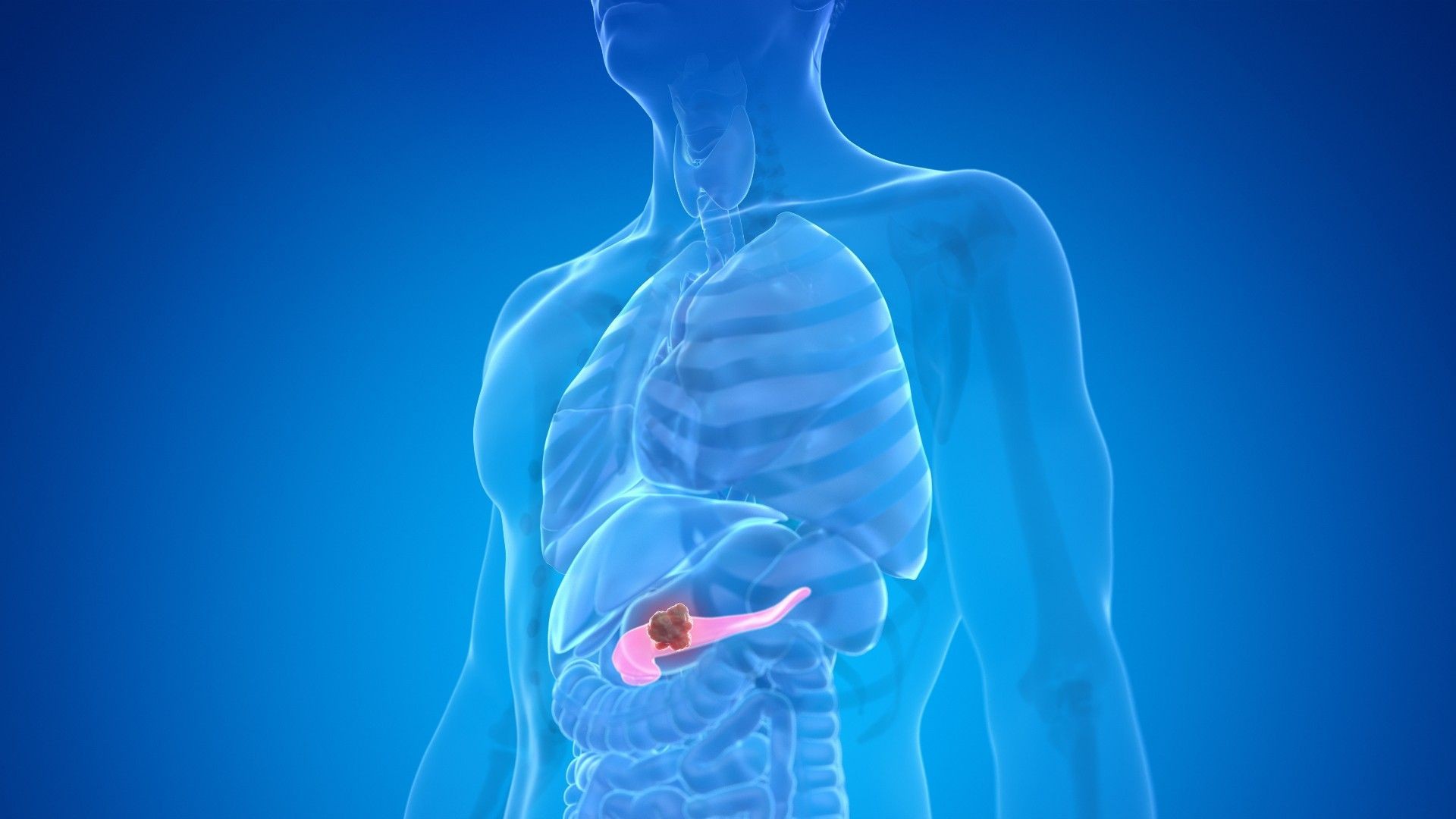
Pancreatic cancer is notoriously difficult to catch early, often remaining silent until it reaches an advanced, untreatable stage. However, a new artificial intelligence (AI) model has demonstrated the ability to detect signs of the disease up to three years before tumors become visible on standard CT scans. This significant leap in early detection could fundamentally change the prognosis for a cancer that currently carries one of the lowest survival rates in oncology.
The Hidden Signal in “Normal” Scans
The study, published in the journal Gut, focused on a tool called REDMOD (Radiomics-based Early Detection Model). The researchers analyzed nearly 2,000 abdominal CT scans that had previously been reviewed by human radiologists and deemed “normal.” Crucially, about one-seventh of these scans belonged to patients who later developed pancreatic cancer.
While human experts saw nothing amiss, the AI identified subtle, microscopic irregularities in the pancreatic tissue. These changes were too faint for the human eye to recognize but represented the early biological shifts that precede tumor formation.
Why this matters:
The core problem with pancreatic cancer is timing. By the time a tumor is large enough to be seen on a standard scan, the disease has often spread. The five-year survival rate in the U.S. hovers around 12% to 13%. If treatment can begin during the pre-tumor or early-tumor phase—when the cancer is still localized and curable—survival outcomes could improve dramatically.
How REDMOD Works
The AI does not “see” like a human. Instead, it translates medical images into complex mathematical data.
- 3D Reconstruction: The model takes 2D CT slices and builds a 3D model of the pancreas.
- Pixel Analysis: It evaluates every pixel, quantifying how each differs from the surrounding healthy tissue.
- Pattern Recognition: It compares these variations against a database of known healthy controls to identify statistical anomalies that suggest early disease processes.
As Dr. Ajit Goenka, a co-author and radiologist at the Mayo Clinic, explained, the process converts the image into a “mathematical puzzle.” The AI extracts features that are invisible to human perception, effectively amplifying a signal that has been present for years but previously undetectable.
Performance: AI vs. Human Radiologists
In the study, REDMOD demonstrated superior sensitivity in detecting early-stage disease:
- Detection Rate: The AI successfully identified 73% of the cases that later progressed to pancreatic cancer.
- Time Advantage: On average, the scans analyzed were taken 16 months before the patients received a formal diagnosis. In some cases, the AI spotted signs more than two years prior.
- Sensitivity Gain: The AI’s sensitivity was nearly twofold higher than that of radiologists across the spectrum. For scans taken more than two years before diagnosis, the performance gap widened to almost threefold.
However, the human element remains critical. While the AI was better at finding potential cases, it was also more prone to false alarms. Human radiologists correctly identified disease-free patients 92.2% of the time, compared to the AI’s 81.1%. This suggests that the most effective approach is not replacing doctors, but augmenting their expertise with AI tools.
Future Implications: Who Gets Screened?
While the results are promising, widespread screening for the general population is not currently feasible. Pancreatic cancer is relatively rare, and scanning everyone would be cost-prohibitive and impractical. Instead, this technology is likely to be deployed for high-risk groups, including:
- Individuals with a strong family history of pancreatic cancer.
- Patients with specific genetic mutations (such as BRCA or PALB2).
- Those with new-onset diabetes, which can sometimes be an early symptom.
“Such early detection would make a huge change in the clinical workup of the patients,” said Tatjana Crnogorac-Jurcevic, a professor at Queen Mary University of London. “There are defined high-risk groups for which surveillance will be possible.”
The Road Ahead
The study authors aim to integrate REDMOD into routine clinical practice within the next five years. Current efforts include ongoing clinical trials to validate the tool in real-world settings.
Looking forward, the potential for combination therapies is exciting. Experts suggest that pairing AI-driven imaging with other diagnostic methods—such as urine-based biomarker tests—could create a multi-layered detection system. This complementary approach could massively increase both the sensitivity and accuracy of early detection, turning a once-fatal diagnosis into a manageable condition for many more patients.
Conclusion:
This AI model represents a pivotal shift in oncology, moving the goalpost from late-stage treatment to early-stage prevention. By identifying cancer years before symptoms appear, REDMOD offers a lifeline to high-risk patients, transforming pancreatic cancer from a largely fatal diagnosis into a potentially curable one.