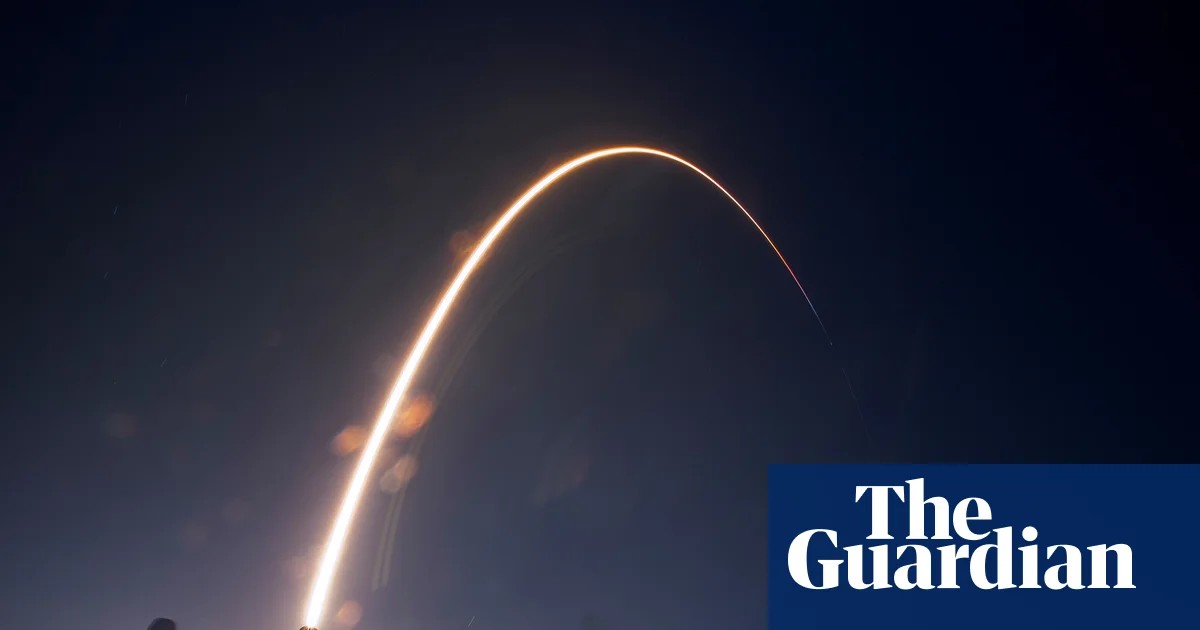
A piece of SpaceX hardware is about to punch the moon.
We aren’t talking about a controlled landing. We aren’t even talking about a mission. This is a collision course, set in motion by a launch that happened over a year ago. The upper stage of the Falcon 9 rocket is drifting, untethered, and moving fast. It will slam into the lunar surface this Wednesday.
For years, space debris has been a background worry. Now, it’s a headline event.
The Collision Details: How Fast Is Too Fast?
Bill Gray, a space tracking expert who watches these things for a living, has the numbers. He expects the stage to hit at 5,400 mph. That is roughly 8,700 kilometers per hour.
To put that in perspective, that is seven times the speed of sound.
The impact point? Near Einstein Crater. This is on the sunlit western limb of the moon. The location matters for visibility. If you are in the United States, Canada, or South America, you are in luck. The eastern portions of North America and much of South America will have the best vantage points in the wee hours of the morning.
The energy released will be significant. Experts estimate the impact packs the punch of three tons of TNT. It’s not enough to crack the planet, but it’s enough to matter locally.
Why This Accidental Moon Crash Is Different
This isn’t the first time a dead rocket has become a lunar crater maker. A Chinese rocket segment hit the moon’s far side in 2020, creating a pair of craters. But that was on the side we never see from Earth. This new smashup is on the near side.
Was it avoidable?
Space experts say yes. If mission control had given that upper stage a small nudge after deployment, it could have escaped Earth’s gravity and entered a safe orbit around the sun instead. It didn’t happen. The stage remained a prisoner of the Earth-moon system until now.
It was never SpaceX’s plan to turn the moon into a junkyard. But space is crowded.
“Things are getting crowded up there,” Gray said from New Brunswick, where he plans to watch.
The growing threat isn’t just about one rocket. It’s about the volume. As more satellites and spent stages clutter low-Earth orbit, the chances of unintended impacts rise. This event highlights a problem that is only going to get worse if we don’t manage end-of-life orbits better.
What Happens After Impact: A Dust Storm in Silence
Will you see a flash from the ground? Probably not. The impact flash lasts less than a second and is too dim for naked-eye viewing.
But the aftermath is visible.
Gravity on the moon is weak. There is no wind to sweep away the mess. When that metal stage hits, it throws up a plume of dust, rubble, and debris. It will stretch for several miles into space.
“Gravity on the moon is low and there are no winds to blow the dust away.”
— Benjamin Fernando, Los Alamos National Laboratory
This is why scientists and amateur astronomers alike are watching. Benjamin Fernando from Los Alamos wants to measure that dust. He wants to see how long it stays suspended. The ejected material could remain visible through telescopes for tens of minutes after the strike.
The goal isn’t just to watch fireworks. It’s data. Fernando notes that understanding debris impacts helps us figure out the hazard they pose to future astronauts. If a small piece of junk can kick up a massive dust cloud, what does that mean for the habitats on the moon’s surface?
The Aftermath: A Crater Nobody Can See
The physical damage will be real, even if we can’t see it from here. Fernando anticipates a crater about 90 feet across and 16 feet deep. That’s 27 meters by 5 meters.
It’s too small to see with the Hubble Telescope, let alone from your backyard. It will require a spacecraft close by to map it out.
But for now, the sky watchers have their job. The eastern US and South America have a front-row seat to a high-speed, high-energy collision. A piece of human technology, lost in space for over a year, returning to the moon to make a mark that will last for millions of years