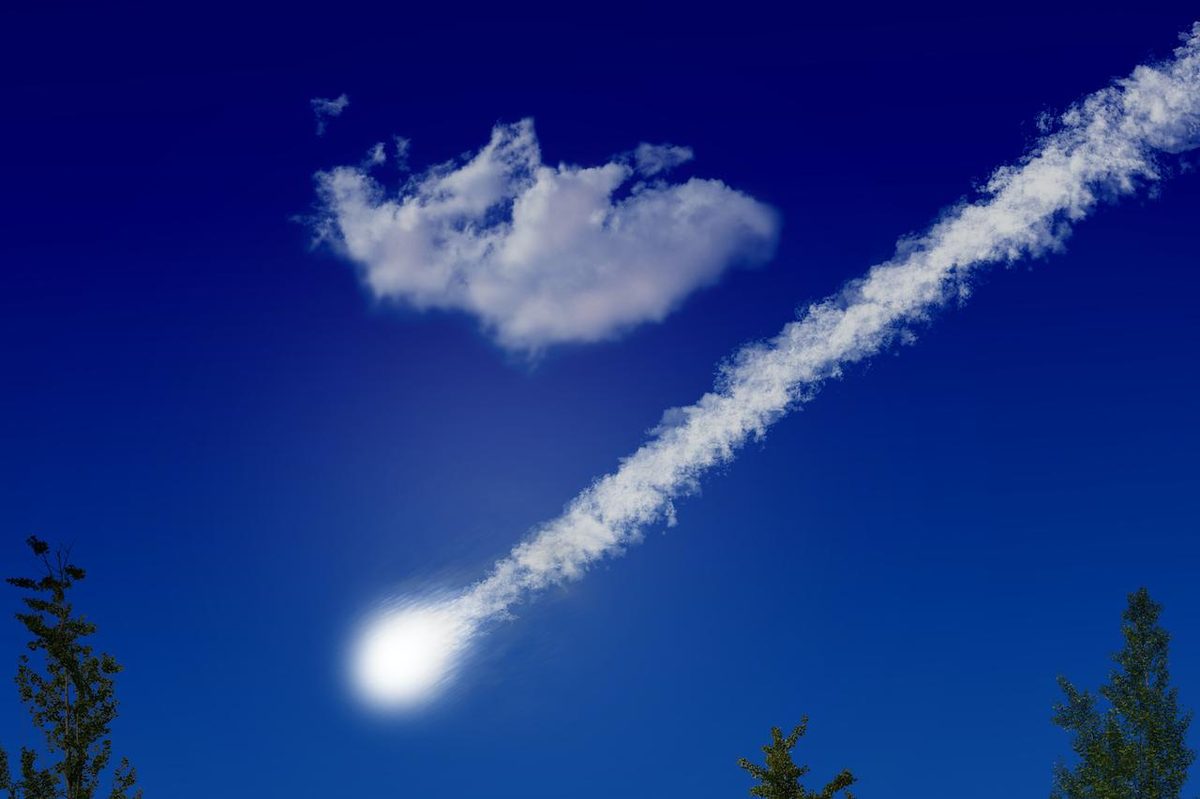
It is just a few inches from the city. On March 7, a space rock the size of a bowling ball streaked across Vermont. It should hit the ground hard. Instead, it crashed. This object may be a fragment of an asteroid that did not survive entry into the Earth’s atmosphere. NASA’s Meteor Observation Program confirmed the event on Facebook. The explosion was so violent that it caused what scientists call a “mini-earthquake.” Infrared sensors pick up seismic waves.
The power of the explosion is more important than you think. NASA calculates the energy released by about 200 tons of TNT. Think about it. This was 10 times more powerful than the 2001 explosion at the AZF plant in Toulouse, France. A chemical disaster on an industrial scale. Now imagine this happening in the atmosphere above the habitable zone.
The physics behind the explosion is brutal. The meteorite enters the air at a speed of 19 kilometers per second. This is 55 times the speed of sound. Pressure is applied to the rock surface. A partial vacuum forms behind it. The difference between the high pressure and the high pressure behind is too great for the stone. It doesn’t come together. Structural integrity was compromised at an altitude of about 50 kilometers. The rock shattered violently.
NASA calculates that the object is only 15 centimeters in diameter. The weight is about 4.5 kg. Small by cosmic standards. Huge in human terms. The kinetic energy to move 4.5 kilograms at this speed is amazing.
An eyewitness saw the whole event at around 17:40. The sky has cleared. Then I heard a voice. One resident described it as a “huge boom”. At that time there was a tremor. The shaking lasted about 15-20 seconds. people are confused. Some believe the plane crashed nearby. Some fear the building will collapse.
This incident highlighted why we track near-Earth objects. Even small pieces can be devastating. Sensors installed in place enable accurate measurement. Without them, there would only be confused witnesses and loud noise. With them we have data. Information that helps us understand how these items behave under extreme pressure.
The rock didn’t hit the ground. But Shockwave did. The ripple spread through the atmosphere. It was recorded on an instrument as far away as Vermont. This incident is a reminder that there is constant invisible traffic in the sky. we are not alone. Sometimes things just fall apart. difficult.

Why the true story has nothing to do with apps
Explanation at the bottom of the page. Follow Futura on WhatsApp and Google News. This is more than just an announcement. This is a signal. Let’s calmly admit that the old door is closing. Centralized feeds are dead. At least it’s loud enough that people need a direct call.
Curious about what’s next in the Science and Technology section? You don’t want to wade through tons of algorithmic sludge using headline bait. I want raw food. signal. It’s not noise.
Cryptocurrency transfer to direct channels
This is not just for convenience. It’s about control. Following sources on WhatsApp takes you out of public view. I’m going to a private room. In terms of technology news, this is important. Complex ideas are downplayed on public timelines. They become memes. De-nuance engagement metrics.
Direct messages are different. It will be soon. This is a non-filter.
Think about how you use information right now. Check out Google News for a broader view of what’s going on. Next, check the depth of WhatsApp. The curator’s approach is different. It’s less about what’s popular and more about what’s important to your circle.
How this changes science communication
Science is often expressed in the form of a monologue. This is a discovery. This is paper. Here’s the quote. But using direct channels changes the conversation. It will be a conversation. At least that’s how it feels.
When major advances occur, such as new quantum computing milestones or CRISPR breakthroughs, the lag between discovery and general understanding shortens. Get the facts first. Before the press release is ready. before the ruckus started.
“The value isn’t in the announcements. It’s in the trust built by sending the same signal directly every time.”
This is why Futura drives this model. They just don’t want you to download the app. They are trying to build this relationship. There are no intermediaries. There is no algorithm that will decide that your interest in AI ethics is less profitable than a celebrity scandal.
Friction enabled
It is not seamless. Telling the truth. We need friction. You have to choose. To be clear, we have to give up privacy. You need to manage your list. But for the curious reader, it’s worth the trade-off.
Avoid echo chambers. You can avoid fueling anger. Get the technology news that really matters. The kind that will change the way you work. how to live How do we understand the world?
What this means for your feed
Google News If you’re tired of fighting algorithms, this is your exit strategy. If you’re tired of guessing which scientific articles are actually reliable, this is your filter.
The future of news is not on the front page. This is a conversation. Here is the list. This is a direct message from someone who knows what they are talking about.
perfection? No, managing multiple sources is confusing. This is not elegant. But it’s true. and,