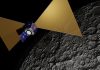
NASA’s recent analysis of a sample collected from the asteroid Bennu confirms that the fundamental building blocks of life—sugars, amino acids, and nucleobases—were prevalent across the early solar system. The findings, published in Nature Geoscience and Nature Astronomy, suggest that these components were not unique to Earth but were widely distributed, increasing the likelihood of life’s emergence elsewhere in the cosmos.
Key Discoveries from Bennu
The OSIRIS-Rex mission successfully delivered a pristine sample of Bennu to Earth in 2023, marking the first U.S. mission to retrieve asteroid material. Analyses have revealed several groundbreaking discoveries:
- Sugars: Researchers identified six types of sugars, including ribose (essential for RNA) and glucose (a primary energy source for living organisms). This marks the first detection of glucose in an asteroid sample.
- “Space Plastic”: An unexpected organic substance, resembling a gummy material, was found. It is composed of nitrogen and oxygen chains and may have acted as a structural scaffold for the formation of life’s building blocks.
- Presolar Grains: The sample contains an unusually high concentration of dust from supernova explosions—six times more than in any other extraterrestrial material studied. This points to Bennu’s formation in a region rich with debris from dying stars.
Implications for the Origin of Life
The absence of deoxyribose—the sugar used to build DNA—in the Bennu sample strengthens the “RNA world” hypothesis. This theory suggests that RNA, not DNA, was the primary genetic material in early life forms, before the evolution of more complex DNA-based systems.
“Maybe the origin of life was just a single strand of RNA,” says astrobiologist Danny Glavin, underscoring the possibility of simpler, RNA-based origins.
The ubiquity of these life-essential compounds suggests that asteroids like Bennu may have played a vital role in seeding early Earth with the necessary ingredients for life. This discovery bolsters the idea that life’s building blocks were not exclusive to our planet, but distributed throughout the solar system, potentially facilitating life’s emergence on other celestial bodies such as Mars or Europa.
The OSIRIS-Rex Mission and Future Research
The $800 million OSIRIS-Rex mission launched in 2016, traveling over 4 billion miles to collect the sample. The half-cup of Bennu material is expected to yield further discoveries for decades. Scientists are optimistic that this research will not only deepen our understanding of life’s origins but also enhance the search for extraterrestrial life within our solar system and beyond.
The Bennu sample provides compelling evidence that the raw materials for life were common in the early solar system, making the possibility of life elsewhere increasingly plausible.