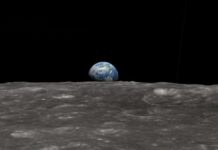
The crew of the Artemis II mission is on the verge of a historic milestone. As they continue their journey around the Moon, astronauts Reid Wiseman, Victor Glover, Christina Koch, and Jeremy Hansen are poised to become the humans to have traveled the farthest from Earth in history, surpassing even the crew of the ill-fated Apollo 13 mission.
While this mission is not a landing attempt, it serves as a critical “pathfinder” for NASA, testing the limits of human endurance, spacecraft systems, and biological resilience in deep space.
A Journey into the Unknown
The mission has transitioned from testing life-support systems in low-Earth orbit to entering the “lunar sphere of influence,” where the Moon’s gravity takes command.
Key milestones for the upcoming lunar flyby include:
– The Far Side Observation: As the crew loops around the Moon, they will witness the lunar far side—a region never observed by human eyes. Unlike the familiar, volcanic near side, the far side is expected to appear brighter and grayer due to its high density of impact craters.
– Radio Blackout: At approximately 6:44 p.m., the Moon will obstruct radio signals, leaving the crew in a 41-minute communications blackout. This is a standard orbital procedure, reminiscent of the Apollo era, and is not a cause for concern.
– Maximum Distance: The crew will reach their furthest point from Earth at 7:07 p.m. before beginning their return loop.
– A Solar Eclipse: Following the flyby, the crew will experience a 53-minute solar eclipse, providing a rare opportunity to observe the solar corona and celestial bodies from a deep-space perspective.
The Human Eye as a Scientific Tool
While robotic orbiters have mapped the Moon extensively, NASA is utilizing the Artemis II crew as “field scientists.”
The crew is tasked with capturing high-resolution photography and noting nuanced details—such as specific textures, colors, and lighting conditions—that sensors might miss. This human perspective is vital for planning future landing sites. By observing the terrain, ancient lava flows, and mountain ranges, the astronauts provide a “physical reality” to the data, helping NASA understand the geological history of the lunar surface more deeply.
Science Beyond the Stars: The Biology of Deep Space
One of the most critical components of this mission is invisible to the naked eye. The crew is carrying AVATAR (A Virtual Astronaut Tissue Analog Response) chips—essentially “organs on a chip.”
These thumb-sized devices contain samples of the astronauts’ bone marrow. Because microgravity and exposure to radiation (outside Earth’s protective magnetic field) can alter DNA and bone density, these chips will allow scientists to study:
– Blood cell formation: How bone marrow develops in deep space.
– DNA integrity: Changes in telomeres, which are linked to the aging process.
“This is a pathfinder mission for NASA,” says Lisa Carnell, director of NASA’s biological and physical sciences division. “It really elevates our power of what we can do.”
The Logistics of Survival: Space Food and Morale
Even in the cutting edge of space exploration, the basics of survival remain essential. The crew’s diet is a highly engineered balance of nutrition, safety, and psychology.
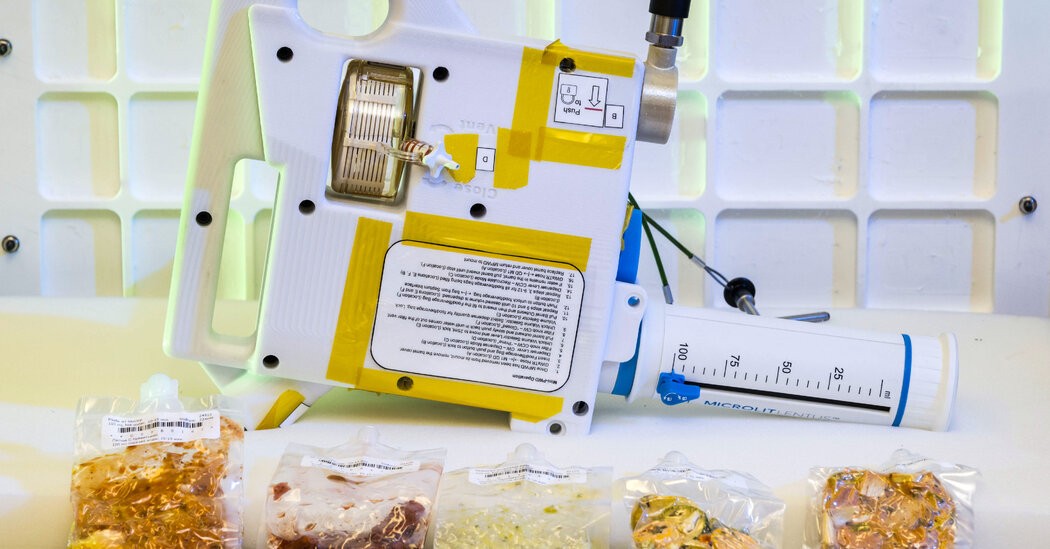
To prevent floating crumbs from damaging sensitive electronics, food is carefully formulated. The menu for their flyby day includes everything from scrambled eggs and mango salad to beef brisket and macaroni and cheese. Beyond mere calories, NASA food scientists emphasize that shared meals are vital for crew morale.
As astronaut Christina Koch noted, sharing a meal in the void of space provides a sense of “togetherness,” making the high-stakes mission feel, in some ways, like a “camping trip.”
Conclusion:
The Artemis II mission is more than a flight of distance; it is a sophisticated scientific laboratory. By testing biological responses to deep space and utilizing human observation to map the Moon, NASA is laying the essential groundwork for the next era of lunar exploration and eventual human arrival on the Moon.