


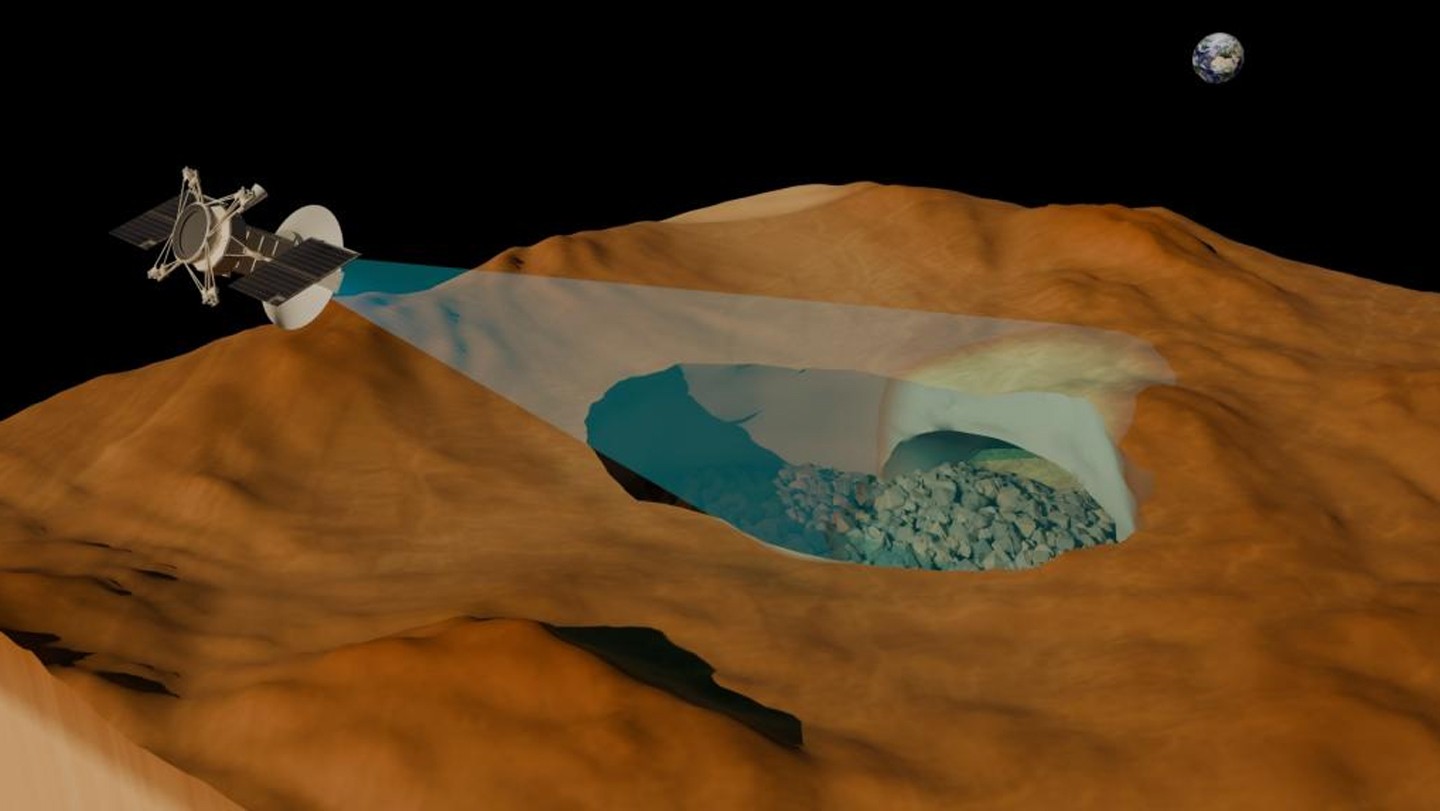
Venus, often called Earth’s sister planet due to its similar size and proximity, continues to surprise scientists with previously hidden geological features. A newly discovered lava tube – the first ever detected on the planet – provides a critical insight into Venus’s formation and volcanic activity. This finding, reported in Nature Communications on February 9th, was made possible through a re-analysis of radar data collected by NASA’s Magellan probe in the early 1990s.
Unveiling Hidden Structures
The discovery centers around a collapsed “skylight” in the roof of a lava tube, revealing an underground cavity beneath the Venusian surface. This skylight was identified near Nyx Mons, a massive shield volcano. The analysis suggests that the collapsed skylight is approximately 150 meters deep, opening into a lava tube at least 375 meters in depth. Researchers estimate that the full lava tube could be significantly wider, potentially reaching up to one kilometer across – making it larger than similar structures found on Earth, Mars, or even Earth’s moon.
Implications for Future Missions
The discovery is poised to influence upcoming missions to Venus, including NASA’s VERITAS and the European Space Agency’s EnVision, both slated to launch before June 2031. These probes will carry advanced radar systems capable of mapping the Venusian surface with greater resolution than previously achievable. This will allow scientists to locate additional lava tubes and further study the planet’s geological history.
Why Lava Tubes Matter
Lava tubes form when the outer layer of a lava flow cools and hardens, while molten rock continues to flow beneath the surface. These tubes can extend for miles, offering stable, sheltered environments. On other bodies like the Moon and Mars, they’re considered potential sites for future human habitats, providing protection from radiation and micrometeorites.
Venus’s environment, however, is far less hospitable; with an atmospheric pressure 93 times greater than Earth’s and surface temperatures hot enough to melt lead, human exploration remains distant. Still, studying the planet’s lava tubes helps us understand the processes that shape rocky planets throughout the solar system.
Lasting Legacy of Magellan
The fact that this discovery came from decades-old data underscores the enduring value of the Magellan mission and the progress in data analysis techniques. Planetary scientist Anna Gülcher notes that “we are still extracting new insights from Magellan data, which was collected more than three decades ago.” This highlights the continued relevance of past explorations and the potential for further discoveries as technology advances.
The detection of this first Venusian lava tube suggests that many more remain hidden beneath the planet’s dense cloud cover, promising a wealth of new insights into Venus’s geological evolution.


