


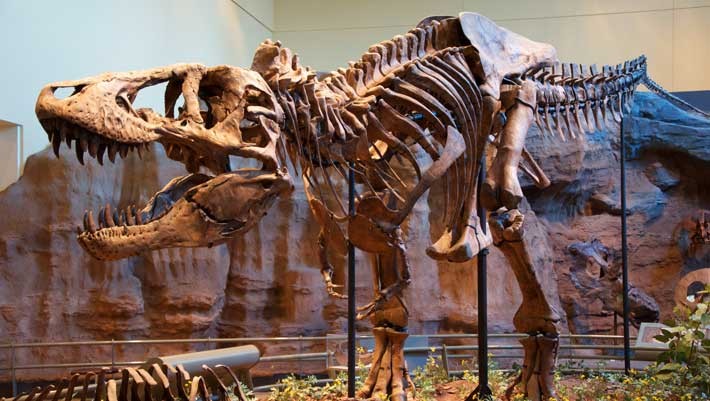
New research suggests that Tyrannosaurus rex did not reach full maturity until around age 40, growing far more slowly and steadily than earlier estimates indicated. This discovery challenges long-held assumptions about the dinosaur’s lifespan and development, suggesting it took nearly four decades for these apex predators to reach their massive, eight-ton size.
Reassessing Growth Models
Prior studies estimated that T. rex reached peak weight within two decades and lived for roughly 30 years. However, a comprehensive analysis of 17 fossil specimens — the largest dataset ever assembled for the species — reveals a substantially different growth pattern. Researchers used advanced statistical algorithms and bone slice examination under specialized light to uncover previously overlooked growth rings.
How The Study Works
Unlike tree rings, which record a specimen’s entire lifespan, T. rex bones only preserve growth records from the last 10 to 20 years of an animal’s life. To compensate, scientists developed a novel statistical approach that combines growth data from multiple fossils, reconstructing a more accurate trajectory across all life stages. This composite curve offers a more realistic view of how T. rex grew and varied in size.
Implications For The Species’ Dominance
The extended growth phase may have allowed younger T. rex individuals to occupy diverse ecological niches, potentially contributing to their dominance as apex predators at the end of the Cretaceous period. The research also suggests that some previously studied specimens may not be true T. rex, but rather related species or misidentified fossils.
“A four-decade growth phase may have allowed younger tyrannosaurs to fill a variety of ecological roles within their environments,” said Dr. Jack Horner, a researcher at Chapman University. “That could be one factor that allowed them to dominate the end of the Cretaceous period as apex carnivores.”
The findings, published in the journal PeerJ, underscore how much remains unknown about even the most iconic dinosaurs. Continued research using these advanced methods will refine our understanding of T. rex and other prehistoric giants.
The slow, steady growth rate of Tyrannosaurus rex suggests a more complex life history than previously understood, altering our perception of how these dinosaurs thrived for millions of years.


