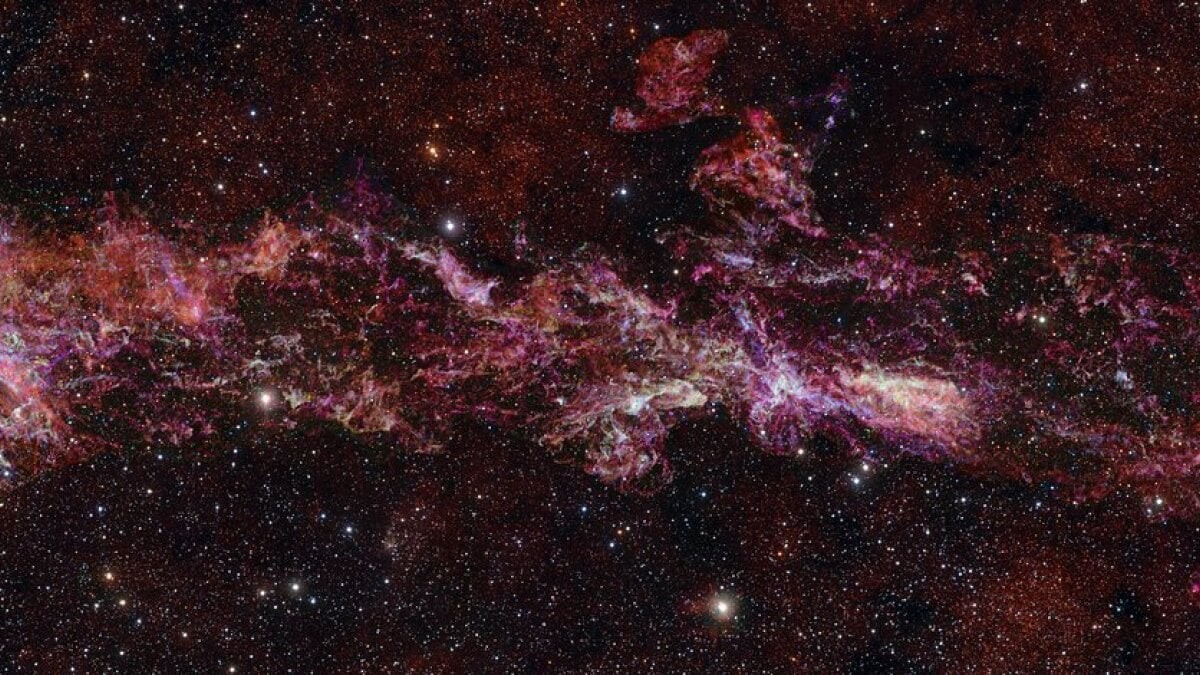
Astronomers have captured the most detailed image to date of the Milky Way’s central region, revealing why star formation occurs at a surprisingly slow rate despite an abundance of gas and dust. The findings, obtained through the ALMA Central Molecular Zone Exploration Survey (ACES), shed light on a long-standing puzzle in galactic astronomy.
The Puzzle of the Slow Star Formation
The galactic core, surrounding the supermassive black hole Sagittarius A*, contains tens of millions of times the sun’s mass in dense material. By conventional standards, this should fuel a robust rate of star birth. Instead, stars form roughly ten times slower than predicted.
Why does this matter? Understanding this discrepancy is crucial because the galactic center offers the closest laboratory for studying the heart of galaxies. The Milky Way’s core, while extreme, provides an unparalleled opportunity to observe processes that occur in distant galaxies, where details are blurred by distance.
ALMA’s Breakthrough: A Comprehensive Survey
The ACES survey leverages the Atacama Large Millimeter/submillimeter Array (ALMA) in Chile to map nearly the entire 650-light-year span of the galactic core. Unlike previous surveys, which either sacrificed detail for broad coverage or zoomed in on small areas, ACES achieves both.
The team measured over 70 chemical fingerprints in the gas – including silicon monoxide, methanol, and acetone – to assess density, temperature, and motion. This allows scientists to trace gas flow, identify shockwaves, and pinpoint areas where star formation either ignites or fails.
Extreme Environments and Early Universe Analogies
The galactic core is characterized by extreme conditions, including massive stars that live fast and die young in hypernovas (sometimes called super-supernovas). These colossal explosions, releasing energy ten times greater than normal supernovas, often lead to black hole formation and are thought to produce long gamma-ray bursts.
Researchers are now using computer simulations, tested against the survey data, to understand how gas streams, clouds, radiation, and explosions interact to either promote or suppress star birth.
“We believe the region shares many features with galaxies in the early universe,” says ACES leader Steve Longmore, “where stars were forming in chaotic, extreme environments.”
This suggests that studying the Milky Way’s core may offer insights into how galaxies evolved in the early cosmos. By probing where star formation switches on and off, scientists aim to unravel the forces controlling the rate of star birth in these turbulent regions.
The new data provides a crucial step toward understanding galactic evolution and the fundamental processes that shape the universe.